Meals
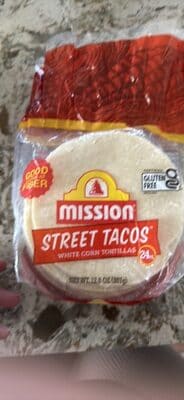
Mission Street Tacos White Corn Tortillas
24 count / 12.6 oz / 357 g
Score
- Ultra-processed
- Contains emulsifiers studied for gut effects
Why it scores 64
Mission Street Tacos White Corn Tortillas scores 64 out of 100 (Good) under GoodSwap’s published rules. What moved the score most:
- minus 18 points Ultra-processed (NOVA 4): Classified NOVA 4: made with industrial ingredients and additives. Strong
- minus 7.5 points Cellulose gum (carboxymethylcellulose): In a small randomized feeding trial, carboxymethylcellulose modestly increased abdominal discomfort and reduced gut microbiota diversity; in mice it promoted low-grade inflammation. Strong
- minus 7.5 points Benzoic acid: Benzoates can form small amounts of benzene in drinks that also contain ascorbic acid (vitamin C), especially with heat or light. Strong
Every line of the math is on The Receipt below, with its evidence tier and sources.
Better tortillas and wraps
-
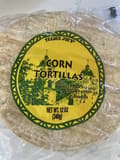 Corn Tortilla Trader Joe's · 12 oz Not ultra-processed · No gut-studied emulsifiers Score 100 out of 100 , 36 points higher
 -
 Corn/Maiz Tortillas El Milagro · 10 oz Not ultra-processed · No gut-studied emulsifiers Score 100 out of 100 , 36 points higher
 -
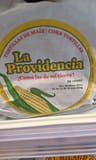 Corn tortillas El Molino · 24 oz Not ultra-processed · No gut-studied emulsifiers Score 100 out of 100 , 36 points higher
 -
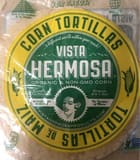 Corn Tortillas Vista Hermosa · 7.2 oz Not ultra-processed · No gut-studied emulsifiers Score 100 out of 100 , 36 points higher
 -
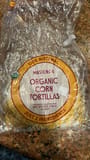 Organic corn tortillas Masienda · 9 oz Not ultra-processed · No gut-studied emulsifiers Score 100 out of 100 , 36 points higher
The same kind of product, at least 10 points higher, sold in the US. Never paid placements.
The Receipt
Street Tacos White Corn Tortillas
Ingredients
- Cellulose gum (carboxymethylcellulose) minus 7.5 points
- Benzoic acid minus 7.5 points
- Guar gum minus 2.5 points
- Propionic acid minus 1.5 points
Processing
- Ultra-processed (NOVA 4) minus 18 points
Nutrition per 100 g
- Energy 222 kcal / 100 g minus 1 points
- Fiber 4.4 g / 100 g plus 2 points
100 − 36 = 64
Nutrition per 100 g
| Energy | 222 kcal |
|---|---|
| Fat | 2.2 g |
| Saturated fat | 0 g |
| Trans fat | 0 g |
| Carbohydrates | 44.4 g |
| Sugars | 4.4 g |
| Added sugars | 0 g |
| Fiber | 4.4 g |
| Protein | 4.4 g |
| Salt | 0.1 g |
Serving: 3 tortillas (45 g)
Ingredients
- CORN MASA FLOUR
- WATER
- CELLULOSE GUM (moderate concern)
- GUAR GUM
- PROPIONIC ACID
- BENZOIC ACID AND PHOSPHORIC ACID (TO MAINTAIN FRESHNESS) (moderate concern)
Label text, as published
CORN MASA FLOUR, WATER, CONTAINS 2% OR LESS OF: CELLULOSE GUM, GUAR GUM, PROPIONIC ACID, BENZOIC ACID AND PHOSPHORIC ACID (TO MAINTAIN FRESHNESS)
Allergens and diets
- Vegan
- Vegetarian
- Gluten-free
- Palm-oil-free
Always check the package: recipes change.
More meals on GoodSwap
-
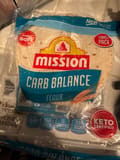
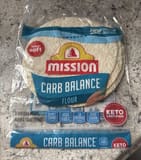 Carb Balance Flour Tortilla Wraps Mission · 340 g Ultra-processedHigh in saltContains non-nutritive sweetenersContains emulsifiers studied for gut effects Score 46 out of 100 Okay
 -
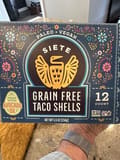 Grain Free Taco Shells Siete · 5.5 oz/156 g Ultra-processedNo additivesSeed-oil free Score 72 out of 100 Good
 -
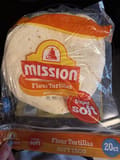
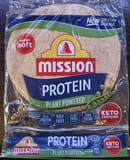 Tortilla Wraps Mission · 9 oz Ultra-processedHigh in saltContains non-nutritive sweetenersContains emulsifiers studied for gut effects Score 30 out of 100 Poor
 -
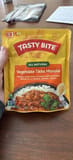 Vegetable Tikka Masala Tasty Bite · 10 oz/285 g Contains seed oilsNo additives Score 92 out of 100 Excellent
 -
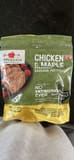 Chicken & Maple Breakfast Sausage Patties Applegate Naturals · 16 oz High in saltContains added sugarsNo additives Score 42 out of 100 Okay
 -
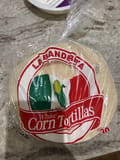 Corn Tortillas La Bonita · 24.9 oz/705 g Score 87 out of 100 Excellent
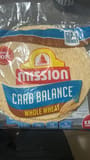
More from Mission
Sources
-
“Relative to control subjects, CMC consumption modestly increased postprandial abdominal discomfort and perturbed gut microbiota composition in a way that reduced its diversity.”
doi.org
-
Dietary emulsifiers impact the mouse gut microbiota promoting colitis and metabolic syndrome
“carboxymethylcellulose and polysorbate-80, induced low-grade inflammation and obesity/metabolic syndrome in wild-type hosts and promoted robust colitis in mice predisposed to this disorder.”
doi.org
-
“This study found positive associations between risk of CVD and intake of five individual and two groups of food additive emulsifiers widely used in industrial foods.”
doi.org
-
“The Panel concluded that there was no need for a numerical ADI and that there would be no safety concern at the reported uses and use levels for the unmodified and modified celluloses”
doi.org
-
11. List of Permitted Preservatives (Lists of Permitted Food Additives)
“B.2 Butylated Hydroxyanisole n/a (a) Active dry yeasts (a) Preservative (a) 1,000 ppm n/a”
canada.ca
-
Dietary Guidelines for Americans, 2025–2030
“Limit foods and beverages that include artificial flavors, petroleum-based dyes, artificial preservatives, and low-calorie non-nutritive sweeteners.”
cdn.realfood.gov
-
“Greater exposure to ultra-processed food was associated with a higher risk of adverse health outcomes, especially cardiometabolic, common mental disorder, and mortality outcomes.”
doi.org