Soups
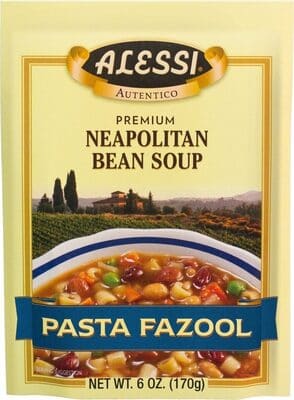
Alessi Pasta fazool soup
6 oz
Score
- Ultra-processed
- High in salt
- Contains added sugars
Why it scores 32
Alessi Pasta fazool soup scores 32 out of 100 (Poor) under GoodSwap’s published rules. What moved the score most:
- minus 20 points Sugar: An added sugar. Strong
- minus 18 points Ultra-processed (NOVA 4): Classified NOVA 4: made with industrial ingredients and additives. Strong
- minus 9 points Salt 4.1 g / 100 g: Very high in salt. Strong
Every line of the math is on The Receipt below, with its evidence tier and sources.
The Receipt
Pasta fazool soup
Ingredients
- Sugar minus 20 points
- Maltodextrin minus 2.5 points
- Modified starch minus 2.5 points
- Monosodium glutamate (MSG) minus 1.5 points
- Hydrolyzed vegetable protein minus 1.5 points
- Disodium inosinate minus 1.5 points
- Disodium guanylate minus 0.5 points
- Sodium aluminosilicate minus 0.5 points
Processing
- Ultra-processed (NOVA 4) minus 18 points
- 4 kinds of ultra-processing markers minus 4.5 points
Nutrition per 100 g
- Sugars 16.7 g / 100 g minus 8 points
- Salt 4.1 g / 100 g minus 9 points
- Energy 333 kcal / 100 g minus 2 points
- Fiber 14.3 g / 100 g plus 4 points
100 − 68 = 32
Can’t score above 79. Contains sugar, an ingredient of high concern. [1][2][3]
Can’t score above 79. High in salt (above the front-of-pack "high" level). [8]
Nutrition per 100 g
| Energy | 333 kcal |
|---|---|
| Fat | 1.2 g |
| Saturated fat | 0 g |
| Trans fat | 0 g |
| Carbohydrates | 69.1 g |
| Sugars | 16.7 g |
| Fiber | 14.3 g |
| Protein | 14.3 g |
| Salt | 4.1 g |
Serving: 0.333 cup (42 g)
Ingredients
- DEHYDRATED BEANS (RED, PINTO, NAVY)
- PASTA (DURUM WHEAT SEMOLINA (NIACIN, FOLIC ACID, FERROUS SULPHATE, RIBOFLAVIN, THIAMINE MONONITRATE))
- DEHYDRATED VEGETABLES (POTATO, TOMATO, ONION, CARROTS, CELERY, PEAS, BROCCOLI, PARSLEY)
- MALTODEXTRIN (FROM CORN)
- SALT
- SUGAR (high concern)
- MODIFIED CORN STARCH
- MONOSODIUM GLUTAMATE
- CORN MEAL
- HYDROLYZED CORN PROTEIN
- GARLIC
- SPICES
- DEHYDRATED CHICKEN
- TURMERIC
- DISODIUM INOSINATE
- DISODIUM GUANYLATE
- SODIUM ALUMINOSILICATE (ANTI-CAKING AGENT)
- CELERY EXTRACT
Label text, as published
DEHYDRATED BEANS (RED, PINTO, NAVY), PASTA (DURUM WHEAT SEMOLINA (NIACIN, FOLIC ACID, FERROUS SULPHATE, RIBOFLAVIN, THIAMINE MONONITRATE)), DEHYDRATED VEGETABLES (POTATO, TOMATO, ONION, CARROTS, CELERY, PEAS, BROCCOLI, PARSLEY), MALTODEXTRIN (FROM CORN), SALT, CONTAINS 2% OR LESS OF: SUGAR, MODIFIED CORN STARCH, MONOSODIUM GLUTAMATE, CORN MEAL, HYDROLYZED CORN PROTEIN, GARLIC, SPICES, DEHYDRATED CHICKEN, TURMERIC, DISODIUM INOSINATE, DISODIUM GUANYLATE, SODIUM ALUMINOSILICATE (ANTI-CAKING AGENT), CELERY EXTRACT
Allergens and diets
Contains: Wheat, Celery
- Not vegan
- Not vegetarian
- Not gluten-free
- Palm-oil-free
Always check the package: recipes change.
More soups on GoodSwap
-
 Cream of Chicken Soup Campbell's · 10.5 oz (298 g) Ultra-processedHigh in saltContains seed oilsNo synthetic dyes Score 55 out of 100 Okay
 -
 Organic roasted chicken base Better Than Bouillon · 8 oz Ultra-processedHigh in saltContains added sugarsCertified organic Score 35 out of 100 Poor
 -
 Sirloin Burger with Country Vegetables Soup Campbell's Chunky · 533 g Ultra-processedNo synthetic dyes Score 47 out of 100 Okay
 -
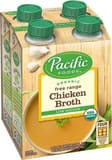 Organic free range chicken broth Pacific · 32 fl oz/960 mL Contains added sugars Score 78 out of 100 Good
 -
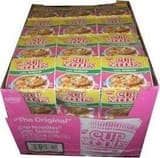 Cup Noodles Shrimp Soup Nissin · 2.25 oz Ultra-processedHigh in saltHigh in saturated fatContains added sugars Score 12 out of 100 Bad
 - Organic Creamy Super Greens Soup Imagine · 32 fl oz/1 Quart/946 mL Contains added sugarsContains seed oilsCertified organicNo additives Score 74 out of 100 Good
More from Alessi
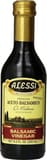
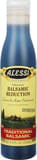
Sources
-
Guideline: sugars intake for adults and children
“In both adults and children, WHO recommends reducing the intake of free sugars to less than 10% of total energy intake”
who.int
-
Dietary Guidelines for Americans, 2025–2030
“Limit foods and beverages that include artificial flavors, petroleum-based dyes, artificial preservatives, and low-calorie non-nutritive sweeteners.”
cdn.realfood.gov
-
Added and free sugars should be as low as possible
“Sugar consumption is a known cause of dental caries.”
efsa.europa.eu
-
Questions and Answers on Monosodium glutamate (MSG)
“FDA considers the addition of MSG to foods to be “generally recognized as safe” (GRAS).”
fda.gov
-
EFSA reviews safety of glutamates added to food
“EFSA re-assessed the safety of glutamates used as food additives and derived a group acceptable daily intake (ADI) of 30 mg/kg body weight per day for all six of these additives.”
efsa.europa.eu
-
“For adults, WHO recommends less than 2000 mg/day of sodium (equivalent to less than 5 g/day salt), or just under a teaspoon.”
who.int
-
“Table 3: Criteria for drinks (per 100ml)”
assets.publishing.service.gov.uk
-
“Greater exposure to ultra-processed food was associated with a higher risk of adverse health outcomes, especially cardiometabolic, common mental disorder, and mortality outcomes.”
doi.org