Dried fruits
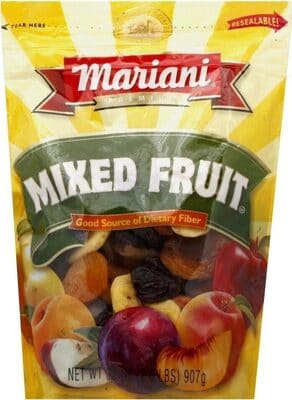
Mariani Mixed fruit value
32 oz/2.0 lb/907 g
Score
- High in sugar
- Contains seed oils
Why it scores 59
Mariani Mixed fruit value scores 59 out of 100 (Okay) under GoodSwap’s published rules. What moved the score most:
- minus 14 points Sugars 42.5 g / 100 g: Very high in sugar. Strong
- minus 8 points Processed (NOVA 3): Classified NOVA 3: processed with added salt, sugar or oil. Emerging
- minus 7.5 points Sulfur dioxide: Sulfites must be declared above 10 mg/kg in the EU and UK and at 10 ppm or more in the US because some people, especially people with asthma, react to them. Regulatory
Every line of the math is on The Receipt below, with its evidence tier and sources.
Better canned fruit and fruit cups
-
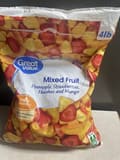 Mixed Fruit Great Value · 64 oz Less sugar · No seed oils Score 97 out of 100 , 38 points higher
 -
 Organic mixed fruit puree apple Paw Patrol · 3.5 oz/99 g Less sugar · No seed oils Score 95 out of 100 , 36 points higher
 -
 Bold blueberry organic mixed fruit puree apple Paw Patrol · 3.5 oz/99 g Less sugar · No seed oils Score 92 out of 100 , 33 points higher
 -
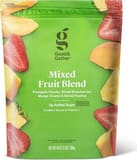 Mixed Fruit Blend Good & Gather · 48 oz Less sugar · No seed oils Score 97 out of 100 , 38 points higher
 -
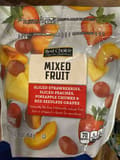 Mixed Fruit Best Choice · 16 oz/1 lb/454 g Less sugar · No seed oils Score 100 out of 100 , 41 points higher
The same kind of product, at least 10 points higher, sold in the US. Never paid placements.
The Receipt
Mixed fruit value
Ingredients
- Sulfur dioxide minus 7.5 points
- Sodium bisulfite minus 7.5 points
- Vegetable oil (unspecified) minus 2.5 points
- Sunflower oil minus 1.5 points
- Canola oil minus 1.5 points
- Potassium sorbate minus 1.5 points
Processing
- Processed (NOVA 3) minus 8 points
Nutrition per 100 g
- Sugars 42.5 g / 100 g minus 14 points
- Energy 275 kcal / 100 g minus 1 points
- Fiber 10 g / 100 g plus 4 points
100 − 41 = 59
Can’t score above 79. High in sugars (above the front-of-pack "high" level). [13]
Nutrition per 100 g
| Energy | 275 kcal |
|---|---|
| Fat | 0 g |
| Saturated fat | 0 g |
| Trans fat | 0 g |
| Carbohydrates | 67.5 g |
| Sugars | 42.5 g |
| Fiber | 10 g |
| Protein | 2.5 g |
| Salt | 0.3 g |
Serving: 0.333 cup (40 g)
Ingredients
- Pitted Prunes
- Dried Apricots
- Dried Peaches
- Dried Pears
- Dried Apples
- Vegetable Oil (Sunflower, Canola)
- Sulfur Dioxide (moderate concern)
- Sodium Bisulfite (moderate concern)
- Potassium Sorbate
Label text, as published
Pitted Prunes, Dried Apricots, Dried Peaches, Dried Pears, Dried Apples, Vegetable Oil (Sunflower and/or Canola), Sulfur Dioxide, Sodium Bisulfite, Potassium Sorbate
Allergens and diets
Contains: Sulphites
- Vegan
- Vegetarian
- Gluten-free
- Palm-oil-free
Always check the package: recipes change.
More dried fruits on GoodSwap
-
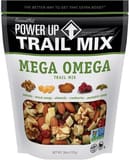 Mega Omega Power Up Premium Trail Mix · 737 g High in sugarContains added sugarsContains seed oils Score 57 out of 100 Okay
 -
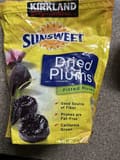 Dried Plums Kirkland Signature · 3.5 lb High in sugar Score 79 out of 100 Good
 -
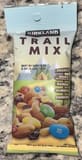 Trail Mix Kirkland Signature · 57 g (2 oz) Dye with an EU warning labelContains synthetic dyesUltra-processedContains added sugars Score 19 out of 100 Bad
 -
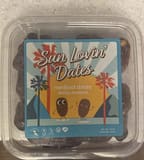 Medjool Dates Sun Lovin' · 454 g High in sugarNo additives Score 79 out of 100 Good
 -
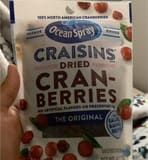 Craisins Dried Cranberries Ocean Spray High in sugarContains added sugarsContains seed oilsNo additives Score 54 out of 100 Okay
 -
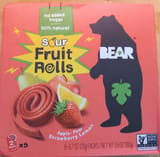 Gently dried fruit rolls Bear · 3.5 oz No synthetic dyes Score 96 out of 100 Excellent
More from Mariani

Sources
-
Regulation (EU) No 1169/2011 of 25 October 2011 on the provision of food information to consumers
“ANNEX II SUBSTANCES OR PRODUCTS CAUSING ALLERGIES OR INTOLERANCES 1. Cereals containing gluten, namely: wheat, rye, barley, oats, spelt, kamut or their hybridised strains”
eur-lex.europa.eu
-
“1. Cereals containing gluten, namely: wheat (such as spelt and khorasan wheat), rye, barley, oats or their hybridised strains, and products thereof”
legislation.gov.uk
-
“replacement of saturated fat in the diet with linoleic acid effectively lowers serum cholesterol but does not support the hypothesis that this translates to a lower risk of death from coronary heart disease or all causes.”
doi.org
-
“These data provide support for current recommendations to replace saturated fat with polyunsaturated fat for primary prevention of CHD.”
doi.org
-
“By applying a default uncertainty factor of 100, the Panel established a group ADI expressed as 11 mg sorbic acid/kg bw per day for sorbic acid (E 200) and its potassium salt (E 202).”
doi.org
-
21 CFR 182.3640 Potassium sorbate
ecfr.gov
-
Guideline: sugars intake for adults and children
“In both adults and children, WHO recommends reducing the intake of free sugars to less than 10% of total energy intake”
who.int
-
Dietary Guidelines for Americans, 2025–2030
“Limit foods and beverages that include artificial flavors, petroleum-based dyes, artificial preservatives, and low-calorie non-nutritive sweeteners.”
cdn.realfood.gov
-
“Table 3: Criteria for drinks (per 100ml)”
assets.publishing.service.gov.uk