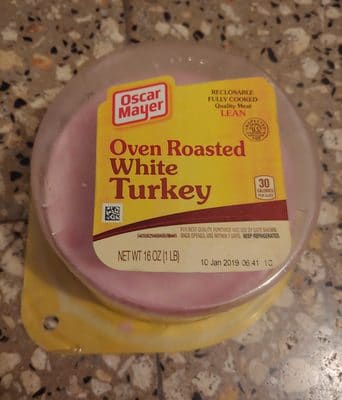
Turkeys
Oscar Mayer Lean White Turkey Oven Roasted
16 oz
Score
- High in salt
- Contains nitrites or nitrates
- Contains added sugars
Why it scores 37
Oscar Mayer Lean White Turkey Oven Roasted scores 37 out of 100 (Poor) under GoodSwap’s published rules. What moved the score most:
- minus 20 points Sugar: An added sugar. Strong
- minus 20 points Sodium nitrite: IARC classifies ingested nitrate or nitrite under conditions that result in endogenous nitrosation as Group 2A; it classifies processed meat as Group 1. Regulatory
- minus 8 points Processed (NOVA 3): Classified NOVA 3: processed with added salt, sugar or oil. Emerging
Every line of the math is on The Receipt below, with its evidence tier and sources.
Better deli meat
-
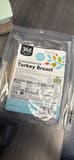 Oven-Roasted Turkey Breast 365 Whole Foods Market · 6 oz No nitrites or nitrates · No added sugars Score 77 out of 100 , 40 points higher
 -
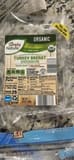 Oven Roasted Turkey Breast Simply Nature · 6 oz Less salt · No nitrites or nitrates Score 96 out of 100 , 59 points higher
 -
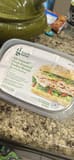 Oven-Roasted Turkey Breast Good & Gather · 14 oz No nitrites or nitrates · No sodium nitrite Score 77 out of 100 , 40 points higher
 -
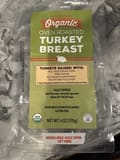 Organic Oven Roasted Turkey Breast Trader Joe's · 6 oz No nitrites or nitrates · No added sugars Score 79 out of 100 , 42 points higher
 -
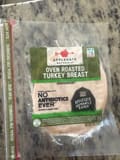 Oven Roasted Turkey Breast Applegate Naturals · 7 oz Less salt · No nitrites or nitrates Score 93 out of 100 , 56 points higher
The same kind of product, at least 10 points higher, sold in the US. Never paid placements.
The Receipt
Lean White Turkey Oven Roasted
Ingredients
- Sugar minus 20 points
- Sodium nitrite minus 20 points
- Sodium benzoate minus 7.5 points
- Modified starch minus 1.5 points
- Sodium phosphate minus 1 points
Processing
- Processed (NOVA 3) minus 8 points
Nutrition per 100 g
- Salt 2 g / 100 g minus 7 points
- Protein 10.7 g / 100 g plus 2 points
100 − 63 = 37
Can’t score above 79. Contains sugar, an ingredient of high concern. [1][2][3][4][5][6][7][8]
Can’t score above 79. High in salt (above the front-of-pack "high" level). [15]
Nutrition per 100 g
| Energy | 125 kcal |
|---|---|
| Fat | 7.1 g |
| Saturated fat | 0 g |
| Trans fat | 0 g |
| Carbohydrates | 3.6 g |
| Added sugars | 0 g |
| Protein | 10.7 g |
| Salt | 2 g |
Serving: 1 slice (28 g)
Ingredients
- WHITE TURKEY
- WATER
- MODIFIED FOOD STARCH
- SALT
- SODIUM PHOSPHATES
- SUGAR (high concern)
- SODIUM PROPIONATE
- SODIUM DIACETATE
- SODIUM BENZOATE (moderate concern)
- LEMON JUICE SOLIDS
- SODIUM ASCORBATE
- SODIUM NITRITE (high concern)
Label text, as published
WHITE TURKEY, WATER, MODIFIED FOOD STARCH, CONTAINS LESS THAN 2% OF: SALT, SODIUM PHOSPHATES, SUGAR, SODIUM PROPIONATE, SODIUM DIACETATE, SODIUM BENZOATE, LEMON JUICE SOLIDS, SODIUM ASCORBATE, SODIUM NITRITE.
Allergens and diets
- Not vegan
- Not vegetarian
- Palm-oil-free
Always check the package: recipes change.
More turkeys on GoodSwap
-
 Turkey Bacon Original Oscar Mayer · 12 oz Ultra-processedHigh in saltHigh in saturated fatContains nitrites or nitrates Score 21 out of 100 Poor
 -
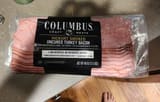 Hickory Smoked Uncured Turkey Bacon Columbus · 40 oz High in saltContains nitrites or nitratesContains added sugarsNo additives Score 60 out of 100 Good
 -
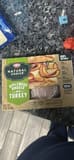 Applewood Smoked deli Turkey Hormel Natural Choice · 8 oz/227 g Ultra-processedHigh in saltContains nitrites or nitratesContains added sugars Score 43 out of 100 Okay
 -
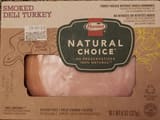 Smoked deli Turkey Hormel Natural Choice · 8 oz Ultra-processedHigh in saltContains nitrites or nitratesContains added sugars Score 43 out of 100 Okay
 -
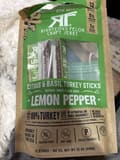 Lemon pepper Righteous Felon Craft Jerky · 28 g High in saltContains nitrites or nitratesContains added sugars Score 55 out of 100 Okay
 -
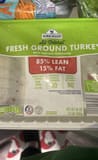 Fresh Ground Turkey Kirkwood · 4 oz Ultra-processedNo additives Score 85 out of 100 Excellent
More from Oscar Mayer

Sources
-
Guideline: sugars intake for adults and children
“In both adults and children, WHO recommends reducing the intake of free sugars to less than 10% of total energy intake”
who.int
-
Dietary Guidelines for Americans, 2025–2030
“Limit foods and beverages that include artificial flavors, petroleum-based dyes, artificial preservatives, and low-calorie non-nutritive sweeteners.”
cdn.realfood.gov
-
Added and free sugars should be as low as possible
“Sugar consumption is a known cause of dental caries.”
efsa.europa.eu
-
Agents Classified by the IARC Monographs, Volumes 1–142 (List of Classifications)
monographs.iarc.who.int
-
“the presence of nitrites and nitrates in foods can give rise to the formation of nitrosamines some of which are carcinogenic.”
eur-lex.europa.eu
-
EFSA confirms safe levels for nitrites and nitrates added to food
“They concluded that when nitrites are used at approved levels, their contribution to overall exposure to nitrosamines is of low concern for health.”
efsa.europa.eu
-
Nitrosamines in food raise a health concern
“Nitrosamines in food raise a health concern”
efsa.europa.eu
-
“Artificial colours or a sodium benzoate preservative (or both) in the diet result in increased hyperactivity in 3-year-old and 8/9-year-old children in the general population.”
doi.org
-
Re-evaluation of benzyl alcohol (E 1519) as food additive (records the 2016 benzoate re-evaluation)
“derived a group ADI of 5 mg/kg bw per day (expressed as benzoic acid) in accordance with the ADI previously derived by SCF and JECFA”
doi.org
-
EFSA issues new advice on phosphates
“We estimated that dietary exposure to phosphates may exceed the new ADI for infants, toddlers and children with average consumption of phosphates in their diet.”
efsa.europa.eu
-
“For adults, WHO recommends less than 2000 mg/day of sodium (equivalent to less than 5 g/day salt), or just under a teaspoon.”
who.int
-
“Table 3: Criteria for drinks (per 100ml)”
assets.publishing.service.gov.uk