Turkey breasts
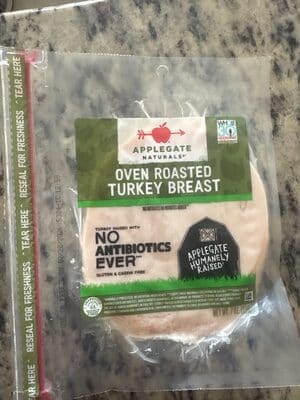
Applegate Naturals Oven Roasted Turkey Breast
7 oz
Score
Why it scores 93
Applegate Naturals Oven Roasted Turkey Breast scores 93 out of 100 (Excellent) under GoodSwap’s published rules. What moved the score most:
- minus 8 points Processed (NOVA 3): Classified NOVA 3: processed with added salt, sugar or oil. Emerging
- plus 4 points Protein 20 g / 100 g: A good source of protein. Info
- minus 3 points Salt 1.1 g / 100 g: High in salt. Strong
Every line of the math is on The Receipt below, with its evidence tier and sources.
The Receipt
Oven Roasted Turkey Breast
Processing
- Processed (NOVA 3) minus 8 points
Nutrition per 100 g
- Salt 1.1 g / 100 g minus 3 points
- Protein 20 g / 100 g plus 4 points
100 − 7 = 93
Nutrition per 100 g
| Energy | 91 kcal |
|---|---|
| Fat | 0 g |
| Saturated fat | 0 g |
| Trans fat | 0 g |
| Carbohydrates | 1.8 g |
| Sugars | 0 g |
| Added sugars | 0 g |
| Fiber | 0 g |
| Protein | 20 g |
| Salt | 1.1 g |
Serving: 2 slices (55 g)
Ingredients
- TURKEY BREAST
- WATER
- SEA SALT
- POTATO STARCH
- SALT
- TURKEY BROTH
- ROSEMARY EXTRACT
- TURKEY NEVER ADMINISTERED ANTIBIOTICS
- ADDED GROWTH HORMONES (not recognized)
- OR FED ANIMAL BY-PRODUCTS (not recognized)
Label text, as published
TURKEY BREAST***, WATER, CONTAINS LESS THAN 2% OF THE FOLLOWING: SEA SALT, POTATO STARCH, SALT, TURKEY BROTH, ROSEMARY EXTRACT, ***TURKEY NEVER ADMINISTERED ANTIBIOTICS, ADDED GROWTH HORMONES, OR FED ANIMAL BY-PRODUCTS
Allergens and diets
- Not vegan
- Not vegetarian
- Palm-oil-free
Always check the package: recipes change.
More turkey breasts on GoodSwap
-
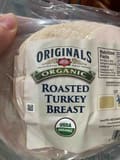 Roasted Turkey Breast ORIGINALS Organic · 9 oz High in saltCertified organicNo additives Score 79 out of 100 Good
 -
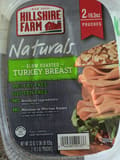 Slow Roasted Turkey Breast Hillshire Farm · 33 oz Ultra-processedHigh in saltContains nitrites or nitratesContains added sugars Score 41 out of 100 Okay
 -
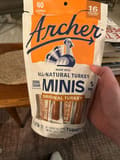 Minis Original Turkey Archer · 46 oz High in saltContains nitrites or nitrates Score 75 out of 100 Good
 -
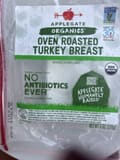 Oven Roasted Turkey Breast Applegate · 6 oz High in saltCertified organic Score 79 out of 100 Good
 -
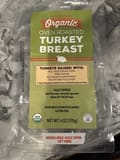 Organic Oven Roasted Turkey Breast Trader Joe's · 6 oz High in saltCertified organic Score 79 out of 100 Good
 -
 Oven Roasted Turkey Breast Hillshire Farm · 9 oz Ultra-processedHigh in saltContains emulsifiers studied for gut effects Score 62 out of 100 Good
More from Applegate Naturals
-
 Natural Uncured Beef Hot Dog Applegate Naturals · 10 oz Score 74 out of 100 Good
 -
 Black Forest Uncured Ham Applegate Naturals · 56 g Score 69 out of 100 Good
 -
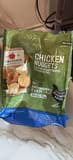 Chicken Nuggets Applegate Naturals · 88 g Score 55 out of 100 Okay
 -
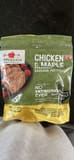 Chicken & Maple Breakfast Sausage Patties Applegate Naturals · 16 oz Score 42 out of 100 Okay
Sources
-
“For adults, WHO recommends less than 2000 mg/day of sodium (equivalent to less than 5 g/day salt), or just under a teaspoon.”
who.int
-
Dietary Guidelines for Americans, 2025–2030
“Limit foods and beverages that include artificial flavors, petroleum-based dyes, artificial preservatives, and low-calorie non-nutritive sweeteners.”
cdn.realfood.gov