Seafood
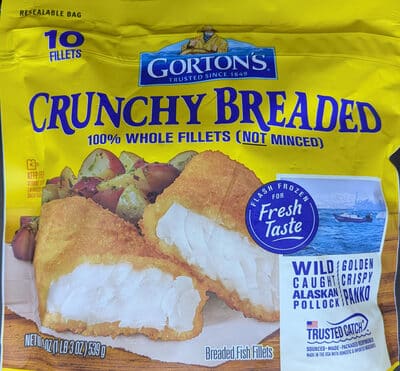
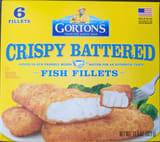
Gorton's Breaded Fish Filet
539 g
Score
- Ultra-processed
- Contains added sugars
- Contains seed oils
- No synthetic dyes
Why it scores 27
Gorton's Breaded Fish Filet scores 27 out of 100 (Poor) under GoodSwap’s published rules. What moved the score most:
- minus 20 points Sugar: An added sugar. Strong
- minus 20 points Dextrose: An added sugar. Strong
- minus 18 points Ultra-processed (NOVA 4): Classified NOVA 4: made with industrial ingredients and additives. Strong
Every line of the math is on The Receipt below, with its evidence tier and sources.
Better fish sticks and frozen fish
-
 Breaded Shrimp Trader Joe's · 12 oz (340 g) No added sugars · No sugar Score 61 out of 100 , 34 points higher
 -
 filets de saumon rose sauvage Seaquest SeaQuest · 1 kg Not ultra-processed · No added sugars Score 100 out of 100 , 73 points higher
 -
 Breaded Fish Sticks Trader Joe's · 1 lb (454 g) No dextrose · No caramel color Score 53 out of 100 , 26 points higher
 -
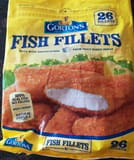 Crunchy Breaded Fish Portions Gorton's · 26 Fillets (50 oz) (1.42 kg) No dextrose · No caramel color Score 52 out of 100 , 25 points higher
 -
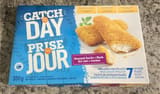 Roasted Garlic & Herb Breaded Fish Fillets, Roasted Garlic & Herb Catch of the Day · 350 g Not ultra-processed · No dextrose Score 69 out of 100 , 42 points higher
The same kind of product, at least 10 points higher, sold in the US. Never paid placements.
The Receipt
Breaded Fish Filet
Ingredients
- Sugar minus 20 points
- Dextrose minus 20 points
- Caramel color minus 10 points
Processing
- Ultra-processed (NOVA 4) minus 18 points
- 3 kinds of ultra-processing markers minus 3 points
Nutrition per 100 g
- Salt 1.2 g / 100 g minus 3 points
- Energy 222 kcal / 100 g minus 1 points
- Protein 9.3 g / 100 g plus 2 points
100 − 73 = 27
Can’t score above 79. Contains sugar, an ingredient of high concern. [1][2][3][4][5][6][7]
Nutrition per 100 g
| Energy | 222 kcal |
|---|---|
| Fat | 10.2 g |
| Saturated fat | 0.5 g |
| Trans fat | 0 g |
| Carbohydrates | 23.1 g |
| Sugars | 2.8 g |
| Added sugars | 0.9 g |
| Fiber | 1.9 g |
| Protein | 9.3 g |
| Salt | 1.2 g |
Serving: 2 pieces (108 g)
Ingredients
- ALASKA POLLOCK
- ENRICHED BLEACHED WHEAT FLOUR (FLOUR, NIACIN, IRON, THIAMIN MONONITRATE, RIBOFLAVIN, FOLIC ACID)
- VEGETABLE OIL (COTTONSEED, SOYBEAN)
- WATER
- YELLOW CORN FLOUR
- SUGAR (high concern)
- SALT
- WHEY
- DEXTROSE (high concern)
- YEAST
- BAKING POWDER (BAKING SODA, SODIUM ALUMINUM PHOSPHATE)
- CARAMEL COLOR (high concern)
- ONION POWDER
- COLORED WITH PAPRIKA
- ANNATTO AND TURMERIC EXTRACTS
- NATURAL FLAVOR
- SODIUM TRIPOLYPHOSPHATE (TO RETAIN FISH MOISTURE)
- TBHQ (TO PROTECT FLAVOR)
Label text, as published
ALASKA POLLOCK, ENRICHED BLEACHED WHEAT FLOUR (FLOUR, NIACIN, IRON, THIAMIN MONONITRATE, RIBOFLAVIN, FOLIC ACID), VEGETABLE OIL (COTTONSEED AND/OR SOYBEAN), WATER, YELLOW CORN FLOUR, LESS THAN 2% OF: SUGAR, SALT, WHEY, DEXTROSE, YEAST, BAKING POWDER (BAKING SODA, SODIUM ALUMINUM PHOSPHATE), CARAMEL COLOR, ONION POWDER, COLORED WITH PAPRIKA, ANNATTO AND TURMERIC EXTRACTS, NATURAL FLAVOR, SODIUM TRIPOLYPHOSPHATE (TO RETAIN FISH MOISTURE), TBHQ (TO PROTECT FLAVOR).
Allergens and diets
Contains: Milk, Soy, Wheat, Gluten, Fish
- Not vegan
- Not vegetarian
- Not gluten-free
- Palm-oil-free
Always check the package: recipes change.
More seafood on GoodSwap
-
 Chunk Light Tuna Chicken Of The Sea · 56 g Contains seed oilsNo additives Score 94 out of 100 Excellent
 -
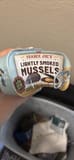 Lightly Smoked Mussels Trader Joe's No additivesSeed-oil free Score 92 out of 100 Excellent
 -
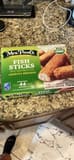 Fish Sticks Mrs. Paul's · 95 g Ultra-processedContains added sugarsContains seed oils Score 30 out of 100 Poor
 -
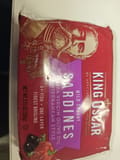 Wild Caught Sardine in Extra Virgin Olive Oil Mediterranean Style King Oscar · 85 g High in saltHigh in saturated fatNo additivesSeed-oil free Score 79 out of 100 Good
 -
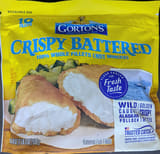 Crispy Battered 100% Whole Fillets (Not Minced) Gorton's · 539 g Ultra-processedContains added sugarsContains seed oilsNo synthetic dyes Score 21 out of 100 Poor
 -
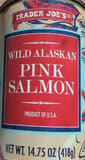 Wild Alaskan Pink Salmon Restaurant Item · 14.75 oz (418 g) No additives Score 95 out of 100 Excellent
More from Gorton's
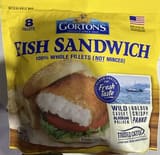
Sources
-
Guideline: sugars intake for adults and children
“In both adults and children, WHO recommends reducing the intake of free sugars to less than 10% of total energy intake”
who.int
-
Dietary Guidelines for Americans, 2025–2030
“Limit foods and beverages that include artificial flavors, petroleum-based dyes, artificial preservatives, and low-calorie non-nutritive sweeteners.”
cdn.realfood.gov
-
Added and free sugars should be as low as possible
“Sugar consumption is a known cause of dental caries.”
efsa.europa.eu
-
Questions & Answers About 4-MEI
“Based on current science, the FDA has no reason to believe that there are any immediate or short-term health risks presented by 4-MEI at the levels expected in food.”
fda.gov
-
Agents Classified by the IARC Monographs, Volumes 1–142 (List of Classifications)
monographs.iarc.who.int
-
Proposition 65 List of Chemicals Known to the State to Cause Cancer or Reproductive Toxicity
“The date refers to the initial appearance of the chemical on the list.”
oehha.ca.gov
-
“For adults, WHO recommends less than 2000 mg/day of sodium (equivalent to less than 5 g/day salt), or just under a teaspoon.”
who.int
-
“Greater exposure to ultra-processed food was associated with a higher risk of adverse health outcomes, especially cardiometabolic, common mental disorder, and mortality outcomes.”
doi.org
-
“replacement of saturated fat in the diet with linoleic acid effectively lowers serum cholesterol but does not support the hypothesis that this translates to a lower risk of death from coronary heart disease or all causes.”
doi.org
-
“These data provide support for current recommendations to replace saturated fat with polyunsaturated fat for primary prevention of CHD.”
doi.org