Meals
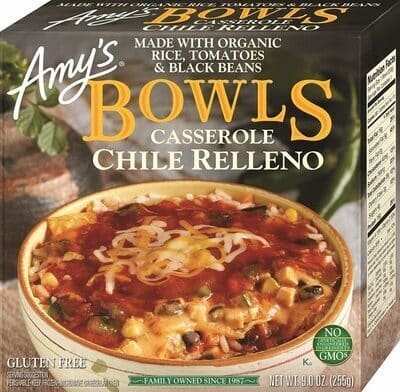
Amy's Bowls Casserole Chile Relleno
255 g
Score
- Ultra-processed
- Contains seed oils
- No synthetic dyes
Why it scores 71
Amy's Bowls Casserole Chile Relleno scores 71 out of 100 (Good) under GoodSwap’s published rules. What moved the score most:
- minus 18 points Ultra-processed (NOVA 4): Classified NOVA 4: made with industrial ingredients and additives. Strong
- minus 3 points Saturated fat 3.5 g / 100 g: High in saturated fat. Strong
- minus 3 points Salt 0.7 g / 100 g: High in salt. Strong
Every line of the math is on The Receipt below, with its evidence tier and sources.
Better frozen meals
-
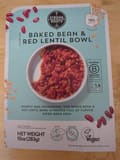 Baked Bean & Red Lentil Bowl Strong Roots · 10 oz Not ultra-processed · No seed oils Score 100 out of 100 , 29 points higher
 -
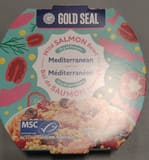 gold seal wild salmon bowl, Mediterranean Gold Seal · 160 g Not ultra-processed Score 100 out of 100 , 29 points higher
 -
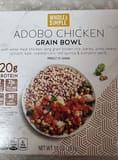 Adodo Chicken Grain Bowl Whole & Simple · 10 oz Not ultra-processed · No seed oils Score 99 out of 100 , 28 points higher
 -
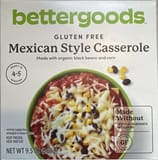 Mexican Style Casserole Bettergoods Not ultra-processed Score 97 out of 100 , 26 points higher
 -
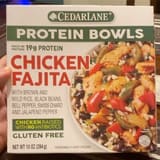 Chicken Fajita Protein Bowl Cedarlane Not ultra-processed Score 97 out of 100 , 26 points higher
The same kind of product, at least 10 points higher, sold in the US. Never paid placements.
The Receipt
Bowls Casserole Chile Relleno
Ingredients
- Safflower oil minus 2.5 points
- Sunflower oil minus 2.5 points
Processing
- Ultra-processed (NOVA 4) minus 18 points
Nutrition per 100 g
- Saturated fat 3.5 g / 100 g minus 3 points
- Salt 0.7 g / 100 g minus 3 points
100 − 29 = 71
Nutrition per 100 g
| Energy | 157 kcal |
|---|---|
| Fat | 7.8 g |
| Saturated fat | 3.5 g |
| Trans fat | 0 g |
| Carbohydrates | 14.5 g |
| Sugars | 1.6 g |
| Added sugars | 0 g |
| Fiber | 0.8 g |
| Protein | 6.7 g |
| Salt | 0.7 g |
Serving: 1 bowl (255 g)
Ingredients
- FILTERED WATER
- ORGANIC RICE
- MONTEREY JACK AND WHITE CHEDDAR CHEESES (PASTEURIZED MILK, CULTURE, SALT, ENZYMES)
- ORGANIC TOMATO PURÉE
- ORGANIC FIRE ROASTED POBLANO PEPPERS
- ORGANIC CORN
- ORGANIC ZUCCHINI
- ORGANIC ONIONS
- ORGANIC TOFU (FILTERED WATER, ORGANIC SOYBEANS, MAGNESIUM CHLORIDE)
- ORGANIC BLACK BEANS
- ORGANIC TORTILLA CHIPS (ORGANIC YELLOW CORN, ORGANIC EXPELLER PRESSED SAFFLOWER OIL, SUNFLOWER OIL, SEA SALT, TRACE OF LIME)
- ORGANIC BELL PEPPERS
- ORGANIC CARROTS
- ORGANIC HIGH OLEIC SAFFLOWER
- SUNFLOWER OIL
- CHEDDAR CHEESE (PASTEURIZED MILK, CULTURE, SALT, ANNATTO, ENZYMES)
- ORGANIC CORNSTARCH
- SEA SALT
- ORGANIC TAPIOCA STARCH
- OLIVES
- ORGANIC BUTTER (ORGANIC CREAM, SALT)
- ORGANIC GARLIC
- SPICES
- ORGANIC JALAPEÑO PEPPERS
- ORGANIC SWEET RICE FLOUR
- ORGANIC CILANTRO
- ORGANIC GREEN CHILES
Label text, as published
FILTERED WATER, ORGANIC RICE, MONTEREY JACK AND WHITE CHEDDAR CHEESES (PASTEURIZED MILK, CULTURE, SALT, ENZYMES), ORGANIC TOMATO PURÉE, ORGANIC FIRE ROASTED POBLANO PEPPERS, ORGANIC CORN, ORGANIC ZUCCHINI, ORGANIC ONIONS, ORGANIC TOFU (FILTERED WATER, ORGANIC SOYBEANS, MAGNESIUM CHLORIDE), ORGANIC BLACK BEANS, ORGANIC TORTILLA CHIPS (ORGANIC YELLOW CORN, ORGANIC EXPELLER PRESSED SAFFLOWER OIL AND/OR SUNFLOWER OIL, SEA SALT, TRACE OF LIME), ORGANIC BELL PEPPERS, ORGANIC CARROTS, ORGANIC HIGH OLEIC SAFFLOWER AND/OR SUNFLOWER OIL, CHEDDAR CHEESE (PASTEURIZED MILK, CULTURE, SALT, ANNATTO, ENZYMES), ORGANIC CORNSTARCH, SEA SALT, ORGANIC TAPIOCA STARCH, OLIVES, ORGANIC BUTTER (ORGANIC CREAM, SALT), ORGANIC GARLIC, SPICES, ORGANIC JALAPEÑO PEPPERS, ORGANIC SWEET RICE FLOUR, ORGANIC CILANTRO, ORGANIC GREEN CHILES. CONTAINS MILK AND SOY.
Allergens and diets
Contains: Milk, Soy, Wheat
May contain: Tree nuts, Gluten
- Not vegan
- Not gluten-free
- Palm-oil-free
Always check the package: recipes change.
Packaging
Plastic, Paper
Context only: no points in v1.
More meals on GoodSwap
-
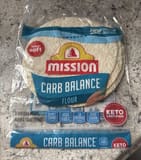 Carb Balance Flour Tortilla Wraps Mission · 340 g Ultra-processedHigh in saltContains non-nutritive sweetenersContains emulsifiers studied for gut effects Score 46 out of 100 Okay
 -
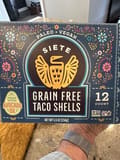 Grain Free Taco Shells Siete · 5.5 oz/156 g Ultra-processedNo additivesSeed-oil free Score 72 out of 100 Good
 -
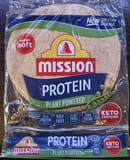 Tortilla Wraps Mission · 9 oz Ultra-processedHigh in saltContains non-nutritive sweetenersContains emulsifiers studied for gut effects Score 30 out of 100 Poor
 -
 9 Grains And Super Seeds Tumaro's · 11.2 oz/320 g Ultra-processedContains added sugarsContains emulsifiers studied for gut effectsContains seed oils Score 47 out of 100 Okay
 -
 Diced Hash Browns Ore-Ida · 32 oz Ultra-processedContains added sugars Score 60 out of 100 Good
 -
 Café Steamers Four-Cheese Ravioli & Chicken Marinara Healthy Choice · 10 oz Ultra-processedContains added sugarsContains emulsifiers studied for gut effectsSeed-oil free Score 24 out of 100 Poor
More from Amy's
-
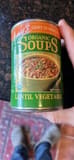 Lentil Vegetable Soup Amy's · 14.5 oz Score 79 out of 100 Good
 -
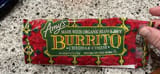 Burrito Cheddar Cheese Amy's · 6.0 oz Score 72 out of 100 Good
 -
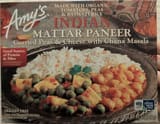 INDIAN MATTAR PANEER Curried Peas & Cheese with Chana Masala Amy's · 10 oz (283 g) Score 84 out of 100 Excellent
 -
 Rustic Italian Vegetable Amy's · 14.0 oz Score 92 out of 100 Excellent
Sources
-
“replacement of saturated fat in the diet with linoleic acid effectively lowers serum cholesterol but does not support the hypothesis that this translates to a lower risk of death from coronary heart disease or all causes.”
doi.org
-
“These data provide support for current recommendations to replace saturated fat with polyunsaturated fat for primary prevention of CHD.”
doi.org
-
Saturated fatty acid and trans-fatty acid intake for adults and children: WHO guideline
“WHO recommends that adults and children reduce saturated fatty acid intake to 10% of total energy intake (strong recommendation).”
who.int
-
“For adults, WHO recommends less than 2000 mg/day of sodium (equivalent to less than 5 g/day salt), or just under a teaspoon.”
who.int
-
“Greater exposure to ultra-processed food was associated with a higher risk of adverse health outcomes, especially cardiometabolic, common mental disorder, and mortality outcomes.”
doi.org