Salad dressings
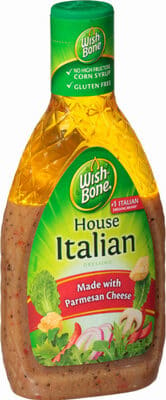
Wish-Bone House Italian Dressing
15 fl oz (444 mL)
Score
- Ultra-processed
- High in salt
- Contains added sugars
- Contains seed oils
- No synthetic dyes
Why it scores 16
Wish-Bone House Italian Dressing scores 16 out of 100 (Bad) under GoodSwap’s published rules. What moved the score most:
- minus 20 points Sugar: An added sugar. Strong
- minus 20 points Caramel color: The FDA says classes III and IV, which can contain 4-MEI, are the most commonly used food color additives by volume. Regulatory
- minus 18 points Ultra-processed (NOVA 4): Classified NOVA 4: made with industrial ingredients and additives. Strong
Every line of the math is on The Receipt below, with its evidence tier and sources.
Better vinaigrettes and Italian dressings
-
 House Vinaigrette Specially Selected Not ultra-processed · Less salt Score 50 out of 100 , 34 points higher
 -
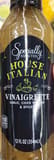 House Italian Vinaigrette Specially Selected · 12 fl oz (354 mL) Less salt · No caramel color Score 40 out of 100 , 24 points higher
 -
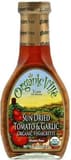 Organic Sundried Tomato and Garlic Vinaigrette (57379) Organic Ville · 8 fl oz/236 mL No added sugars · No sugar Score 66 out of 100 , 50 points higher
 -
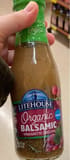 Organic Balsamic Vinaigrette (57141) Litehouse · 11.25 fl oz/332 mL Not ultra-processed · Less salt Score 79 out of 100 , 63 points higher
 -
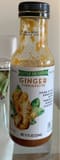 Ginger Vinaigrette Little Salad Bar · 11 fl oz Not ultra-processed · Less salt Score 79 out of 100 , 63 points higher
The same kind of product, at least 10 points higher, sold in the US. Never paid placements.
The Receipt
House Italian Dressing
Ingredients
- Sugar minus 20 points
- Caramel color minus 20 points
- Soybean oil minus 2.5 points
- Xanthan gum minus 1.5 points
- Natural flavors minus 1.5 points
- Potassium sorbate minus 1.5 points
Processing
- Ultra-processed (NOVA 4) minus 18 points
- 3 kinds of ultra-processing markers minus 3 points
Nutrition per 100 g
- Sugars 6.7 g / 100 g minus 3 points
- Saturated fat 3.3 g / 100 g minus 3 points
- Salt 2.7 g / 100 g minus 9 points
- Energy 233 kcal / 100 g minus 1 points
100 − 84 = 16
Can’t score above 79. Contains sugar, an ingredient of high concern. [1][2][3][4][5][6][7]
Can’t score above 79. High in fat and salt (above the front-of-pack "high" level). [18]
Nutrition per 100 g
| Energy | 233 kcal |
|---|---|
| Fat | 23.3 g |
| Saturated fat | 3.3 g |
| Trans fat | 0 g |
| Carbohydrates | 10 g |
| Sugars | 6.7 g |
| Added sugars | 6.7 g |
| Fiber | 0 g |
| Protein | 0 g |
| Salt | 2.7 g |
Serving: 2 tbsp (2 tbsp)
Ingredients
- Water
- Soybean Oil
- Distilled Vinegar
- Sugar (high concern)
- Salt
- Garlic
- Parmesan Cheese (Pasteurized Part Skim Milk, Cheese Cultures, Salt, Enzymes)
- Egg Yolks
- Spices
- Red Bell Pepper
- Xanthan Gum
- Onion
- Natural Flavor
- Caramel Color (high concern)
- Annatto Extract (Color)
- Potassium Sorbate and Sodium Benzoate and Calcium Disodium EDTA (To Protect Quality)
Label text, as published
Water, Soybean Oil, Distilled Vinegar, Sugar, Salt, Less than 2% of: Garlic*, Parmesan Cheese (Pasteurized Part Skim Milk, Cheese Cultures, Salt, Enzymes), Egg Yolks*, Spices, Red Bell Pepper*, Xanthan Gum, Onion*, Natural Flavor, Caramel Color, Annatto Extract (Color), Potassium Sorbate and Sodium Benzoate and Calcium Disodium EDTA (To Protect Quality). *Dried CONTAINS: EGG, MILK
Allergens and diets
Contains: Milk, Soy, Egg
- Not vegan
- Palm-oil-free
Always check the package: recipes change.
Packaging
Plastic
Context only: no points in v1.
More salad dressings on GoodSwap
-
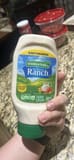 The Original Ranch Condiment & Dressing Hidden Valley · 16 fl oz Ultra-processedHigh in saltHigh in saturated fatContains added sugars Score 27 out of 100 Poor
 -
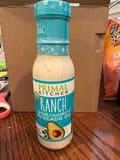 Ranch Dressing & Marinade Primal Kitchen · 8 oz Ultra-processedHigh in saltSeed-oil free Score 70 out of 100 Good
 -
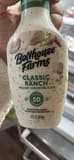 Classic Ranch Yogurt Dressing & Dip Bolthouse Farms · 12 fl oz/355 mL Ultra-processedHigh in saltContains added sugarsContains seed oils Score 34 out of 100 Poor
 -
 Sweet Vidalia Onion Dressing Ken's Steak House · 33 g Ultra-processedHigh in sugarContains added sugarsContains seed oils Score 30 out of 100 Poor
 -
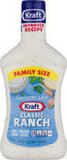 Classic Ranch Dressing Kraft · 24 fl oz Ultra-processedHigh in saltHigh in saturated fatContains added sugars Score 30 out of 100 Poor
 -
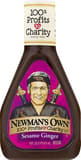 Sesame Ginger Low Fat Dressing Newman's Own Inc. · 30 g Ultra-processedHigh in saltContains added sugarsContains seed oils Score 20 out of 100 Poor
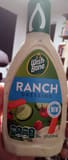
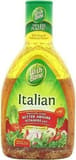
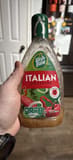
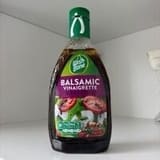
More from Wish-Bone
Sources
-
Guideline: sugars intake for adults and children
“In both adults and children, WHO recommends reducing the intake of free sugars to less than 10% of total energy intake”
who.int
-
Dietary Guidelines for Americans, 2025–2030
“Limit foods and beverages that include artificial flavors, petroleum-based dyes, artificial preservatives, and low-calorie non-nutritive sweeteners.”
cdn.realfood.gov
-
Added and free sugars should be as low as possible
“Sugar consumption is a known cause of dental caries.”
efsa.europa.eu
-
Questions & Answers About 4-MEI
“Based on current science, the FDA has no reason to believe that there are any immediate or short-term health risks presented by 4-MEI at the levels expected in food.”
fda.gov
-
Agents Classified by the IARC Monographs, Volumes 1–142 (List of Classifications)
monographs.iarc.who.int
-
Proposition 65 List of Chemicals Known to the State to Cause Cancer or Reproductive Toxicity
“The date refers to the initial appearance of the chemical on the list.”
oehha.ca.gov
-
“replacement of saturated fat in the diet with linoleic acid effectively lowers serum cholesterol but does not support the hypothesis that this translates to a lower risk of death from coronary heart disease or all causes.”
doi.org
-
“These data provide support for current recommendations to replace saturated fat with polyunsaturated fat for primary prevention of CHD.”
doi.org
-
21 CFR 101.22 Foods; labeling of spices, flavorings, colorings and chemical preservatives
“whose significant function in food is flavoring rather than nutritional.”
ecfr.gov
-
“By applying a default uncertainty factor of 100, the Panel established a group ADI expressed as 11 mg sorbic acid/kg bw per day for sorbic acid (E 200) and its potassium salt (E 202).”
doi.org
-
21 CFR 182.3640 Potassium sorbate
ecfr.gov
-
Saturated fatty acid and trans-fatty acid intake for adults and children: WHO guideline
“WHO recommends that adults and children reduce saturated fatty acid intake to 10% of total energy intake (strong recommendation).”
who.int
-
“For adults, WHO recommends less than 2000 mg/day of sodium (equivalent to less than 5 g/day salt), or just under a teaspoon.”
who.int
-
“Table 3: Criteria for drinks (per 100ml)”
assets.publishing.service.gov.uk
-
“Greater exposure to ultra-processed food was associated with a higher risk of adverse health outcomes, especially cardiometabolic, common mental disorder, and mortality outcomes.”
doi.org