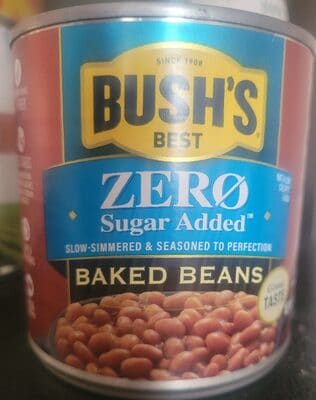
Common beans
Bush's Baked Beans
15.8 oz
Score
- Ultra-processed
Why it scores 70
Bush's Baked Beans scores 70 out of 100 (Good) under GoodSwap’s published rules. What moved the score most:
- minus 18 points Ultra-processed (NOVA 4): Classified NOVA 4: made with industrial ingredients and additives. Strong
- minus 4.5 points 4 kinds of ultra-processing markers: Industrial additive classes found: bulking agent, flavor enhancer, flavoring and modified starch. Emerging
- plus 4 points Fiber 9.2 g / 100 g: A good source of fiber. Strong
Every line of the math is on The Receipt below, with its evidence tier and sources.
The Receipt
Baked Beans
Ingredients
- Soluble corn fiber (resistant dextrin) minus 2.5 points
- Modified starch minus 2.5 points
- Yeast extract minus 2.5 points
- Natural flavors minus 1.5 points
Processing
- Ultra-processed (NOVA 4) minus 18 points
- 4 kinds of ultra-processing markers minus 4.5 points
Nutrition per 100 g
- Salt 1.2 g / 100 g minus 3 points
- Fiber 9.2 g / 100 g plus 4 points
100 − 30.5 = 69.5 → 70
Nutrition per 100 g
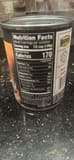
| Energy | 85 kcal |
|---|---|
| Fat | 0.4 g |
| Saturated fat | 0 g |
| Trans fat | 0 g |
| Carbohydrates | 20 g |
| Sugars | 0.8 g |
| Added sugars | 0 g |
| Fiber | 9.2 g |
| Protein | 5.4 g |
| Salt | 1.2 g |
Serving: 0.5 cup (130 g)
Ingredients
- prepared navy beans
- water
- soluble corn fiber
- salt
- mustard (water, vinegar, mustard beo, back paprika, turmeric)
- modified corn starch
- onion powder
- yeast extract
- caramel color. natural flavors. spices metal can halose
- garlic powder. vegetarian gluten free bush brothers & company p.o. box 52330 depl knoxville
- tn 37950 2130 usa www.bushbeans.com 1-800 500 17 please refer to the code on end of can (not recognized)
Label text, as published
prepared navy beans, water, soluble corn fiber contains 2% or less of: salt, mustard (water, vinegar, mustard beo, back paprika, turmeric), modified corn starch, onion powder, yeast extract, caramel color. natural flavors. spices metal can halose, garlic powder. vegetarian gluten free bush brothers & company p.o. box 52330 depl knoxville, tn 37950 2130 usa www.bushbeans.com 1-800 500 17 please refer to the code on end of can
Allergens and diets
Contains: Mustard
- Palm-oil-free
Always check the package: recipes change.
More common beans on GoodSwap
-
 ZERO Sugar Added Baked Beans Bush's Best · 780 g Ultra-processedContains non-nutritive sweetenersNo synthetic dyes Score 41 out of 100 Okay
 -
 Organic Black Beans Eden · 130 g Certified organicNo additives Score 100 out of 100 Excellent
 -
 Seasoned Black Beans Great Value · 15 oz Ultra-processedNo additives Score 82 out of 100 Excellent
 -
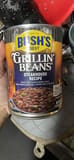 Grillin' Beans Steakhouse Recipe Bush's Best · 624 g Ultra-processedContains added sugarsNo synthetic dyes Score 26 out of 100 Poor
 -
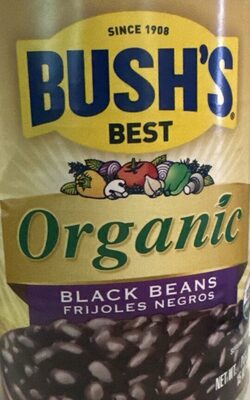 Organic Black Beans Bush's Best · 130 g Certified organicNo additives Score 100 out of 100 Excellent
 -
 White Kidney Beans Goya · 439 g Score 89 out of 100 Excellent
More from Bush's
Sources
-
21 CFR 101.22 Foods; labeling of spices, flavorings, colorings and chemical preservatives
“whose significant function in food is flavoring rather than nutritional.”
ecfr.gov
-
“For adults, WHO recommends less than 2000 mg/day of sodium (equivalent to less than 5 g/day salt), or just under a teaspoon.”
who.int
-
Dietary Guidelines for Americans, 2025–2030
“Limit foods and beverages that include artificial flavors, petroleum-based dyes, artificial preservatives, and low-calorie non-nutritive sweeteners.”
cdn.realfood.gov
-
“Greater exposure to ultra-processed food was associated with a higher risk of adverse health outcomes, especially cardiometabolic, common mental disorder, and mortality outcomes.”
doi.org