Food
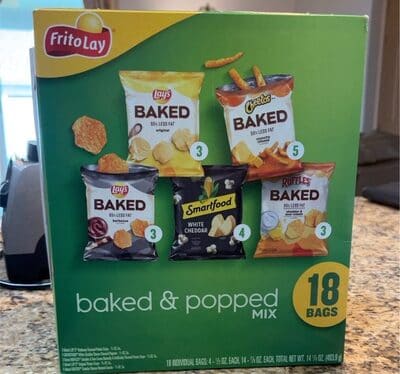
Lay's Baked Popped Mix
Score
- Ultra-processed
- Contains seed oils
Why it scores 69
Lay's Baked Popped Mix scores 69 out of 100 (Good) under GoodSwap’s published rules. What moved the score most:
- minus 18 points Ultra-processed (NOVA 4): Classified NOVA 4: made with industrial ingredients and additives. Strong
- minus 2.5 points Vegetable oil (unspecified): High in omega-6 linoleic acid. Emerging
- minus 2.5 points Corn oil: High in omega-6 linoleic acid. Emerging
Every line of the math is on The Receipt below, with its evidence tier and sources.
Better potato chips
-
 Sea Salt Kettle Cooked Potato Chips 365 Whole Foods Market Not ultra-processed · No maltodextrin Score 93 out of 100 , 24 points higher
 -
 Premium Potato Chips Litys Not ultra-processed · No seed oils Score 100 out of 100 , 31 points higher
 -
 Avocado oil kettle chips Not ultra-processed · No seed oils Score 100 out of 100 , 31 points higher
 -
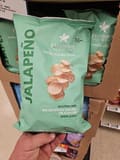 Kettle Potato Chips Jalapeño Freedom's Choice Not ultra-processed · No maltodextrin Score 98 out of 100 , 29 points higher
 -
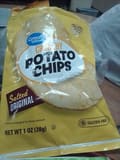 GV Original Potato Chips Great Value Cruchy Potato Chips · 1 oz (28 g) Not ultra-processed · No maltodextrin Score 89 out of 100 , 20 points higher
The same kind of product, at least 10 points higher, sold in the US. Never paid placements.
The Receipt
Baked Popped Mix
Ingredients
- Vegetable oil (unspecified) minus 2.5 points
- Corn oil minus 2.5 points
- Canola oil minus 2.5 points
- Sunflower oil minus 1.5 points
- Natural flavors minus 1.5 points
- Maltodextrin minus 1.5 points
Processing
- Ultra-processed (NOVA 4) minus 18 points
- 2 kinds of ultra-processing markers minus 1.5 points
Nutrition
- Nutrition facts unavailable no points
100 − 31.5 = 68.5 → 69
Can’t score above 79. No nutrition facts on file, so we can't confirm excellent.
Ingredients
- Popcorn
- Vegetable Oil
- Corn Oil
- Canola Oil
- Sunflower Oil
- Natural Flavors
- Whey
- Maltodextrin Made From Corn
- Buttermilk
- Cheddar Cheese
- Milk
- Cheese Cultures
- Salt
- Enzymes
- Salt
Label text, as published
Popcorn, Vegetable Oil, Corn Oil, And/or Canola Oil, And/or Sunflower Oil, Natural Flavors, Whey, Maltodextrin Made From Corn, Buttermilk, Cheddar Cheese, Milk, Cheese Cultures, Salt, Enzymes, Salt
Allergens and diets
Contains: Milk
- Not vegan
- Palm-oil-free
Always check the package: recipes change.
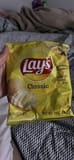
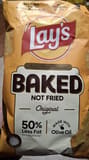
More from Lay's
Sources
-
“replacement of saturated fat in the diet with linoleic acid effectively lowers serum cholesterol but does not support the hypothesis that this translates to a lower risk of death from coronary heart disease or all causes.”
doi.org
-
“These data provide support for current recommendations to replace saturated fat with polyunsaturated fat for primary prevention of CHD.”
doi.org
-
21 CFR 101.22 Foods; labeling of spices, flavorings, colorings and chemical preservatives
“whose significant function in food is flavoring rather than nutritional.”
ecfr.gov
-
“Greater exposure to ultra-processed food was associated with a higher risk of adverse health outcomes, especially cardiometabolic, common mental disorder, and mortality outcomes.”
doi.org