Barbecue sauces
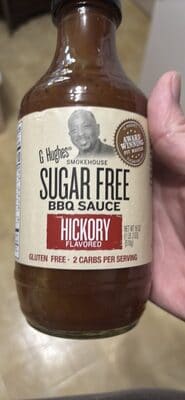
G Hughes BBQ Sauce
30 g
Score
- Ultra-processed
- High in salt
- Contains non-nutritive sweeteners
- No synthetic dyes
Why it scores 38
G Hughes BBQ Sauce scores 38 out of 100 (Poor) under GoodSwap’s published rules. What moved the score most:
- minus 20 points Caramel color: The FDA says classes III and IV, which can contain 4-MEI, are the most commonly used food color additives by volume. Regulatory
- minus 18 points Ultra-processed (NOVA 4): Classified NOVA 4: made with industrial ingredients and additives. Strong
- minus 7.5 points Sucralose: In a 2022 randomized study, sucralose and saccharin altered the gut microbiome and impaired glucose responses in some people; a 2023 lab study raised questions about its by-product sucralose-6-acetate. Strong
Every line of the math is on The Receipt below, with its evidence tier and sources.
Better barbecue sauce
-
 BBQ Sauce (low calorie) Good Food For Good · 9.5 oz/270 g Not ultra-processed · Less salt Score 96 out of 100 , 58 points higher
 -
 Chipotle bbq sauce Fody · 11 oz/311 g Not ultra-processed · No non-nutritive sweeteners Score 79 out of 100 , 41 points higher
 -
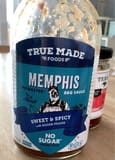 Memphis bbq sauce True Made Foods Not ultra-processed · No non-nutritive sweeteners Score 75 out of 100 , 37 points higher
 -
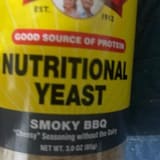 Smokey bbq Bragg · 3.0 oz/85 g Not ultra-processed · No non-nutritive sweeteners Score 79 out of 100 , 41 points higher
 -
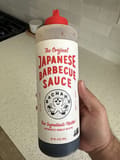 The original Japanese barbecue sauce Bachan's · 34 oz Not ultra-processed · Less salt Score 68 out of 100 , 30 points higher
The same kind of product, at least 10 points higher, sold in the US. Never paid placements.
The Receipt
BBQ Sauce
Ingredients
- Caramel color minus 20 points
- Sucralose minus 7.5 points
- Modified starch minus 2.5 points
- Natural flavors minus 1.5 points
- Xanthan gum minus 1.5 points
Processing
- Ultra-processed (NOVA 4) minus 18 points
- 5 kinds of ultra-processing markers minus 6 points
Nutrition per 100 g
- Salt 1.6 g / 100 g minus 5 points
100 − 62 = 38
Can’t score above 79. Contains caramel color, an ingredient of high concern. [1][2][3][4]
Can’t score above 79. High in salt (above the front-of-pack "high" level). [13]
Nutrition per 100 g
| Energy | 33 kcal |
|---|---|
| Fat | 0 g |
| Saturated fat | 0 g |
| Trans fat | 0 g |
| Carbohydrates | 6.7 g |
| Sugars | 0 g |
| Added sugars | 0 g |
| Fiber | 0 g |
| Protein | 0 g |
| Salt | 1.6 g |
Serving: 2 tbsp (30 g)
Ingredients
- CRUSHED TOMATOES (WATER, CONCENTRATED CRUSHED TOMATOES)
- APPLE CIDER VINEGAR
- WHITE VINEGAR
- MODIFIED CORNSTARCH
- SALT
- MINCED ONION
- LEMON JUICE (FROM CONCENTRATE)
- GARLIC POWDER
- BLACK PEPPER
- GROUND CINNAMON
- NATURAL HICKORY SMOKE
- SPICES
- NATURAL HICKORY SMOKE FLAVOR
- NATURAL CARAMEL COLOR (high concern)
- XANTHAN GUM
- SUCRALOSE (moderate concern)
Label text, as published
CRUSHED TOMATOES (WATER, CONCENTRATED CRUSHED TOMATOES), APPLE CIDER VINEGAR, WHITE VINEGAR, MODIFIED CORNSTARCH, SALT, LESS THAN 2% OF: MINCED ONION, LEMON JUICE (FROM CONCENTRATE), GARLIC POWDER, BLACK PEPPER, GROUND CINNAMON, NATURAL HICKORY SMOKE, SPICES, NATURAL HICKORY SMOKE FLAVOR, NATURAL CARAMEL COLOR, XANTHAN GUM, SUCRALOSE.
Allergens and diets
- Palm-oil-free
Always check the package: recipes change.
More barbecue sauces on GoodSwap
-
 Barbecue Sauce Sweet Baby Ray's · 18 oz Ultra-processedHigh in sugarHigh in saltContains added sugars Score 6 out of 100 Bad
 -
 Barbecue Sauce Sweet Baby Ray's · 37 g Ultra-processedHigh in sugarHigh in saltContains added sugars Score 6 out of 100 Bad
 -
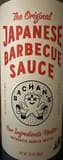 Japanese Barbecue Sauce Bachan's · 34 oz Contains added sugarsNo additivesSeed-oil free Score 69 out of 100 Good
 -
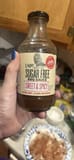 Sweet & Spicy BBQ Sauce G Hughes · 510 g Ultra-processedHigh in saltContains non-nutritive sweetenersContains added sugars Score 21 out of 100 Poor
 - Kinders Hickory Brown Sugar BBQ Sauce Kinder's Ultra-processedHigh in sugarHigh in saltContains added sugars Score 6 out of 100 Bad
-
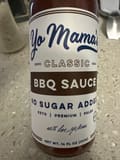 Yo Mama's Classic BBQ sauce Buffalo Wild Wings · 14 oz Ultra-processedHigh in saltHigh in saturated fatContains non-nutritive sweeteners Score 58 out of 100 Okay
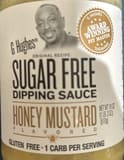
More from G Hughes


Sources
-
Questions & Answers About 4-MEI
“Based on current science, the FDA has no reason to believe that there are any immediate or short-term health risks presented by 4-MEI at the levels expected in food.”
fda.gov
-
Agents Classified by the IARC Monographs, Volumes 1–142 (List of Classifications)
monographs.iarc.who.int
-
Proposition 65 List of Chemicals Known to the State to Cause Cancer or Reproductive Toxicity
“The date refers to the initial appearance of the chemical on the list.”
oehha.ca.gov
-
Personalized microbiome-driven effects of non-nutritive sweeteners on human glucose tolerance
“As groups, each administered NNS distinctly altered stool and oral microbiome and plasma metabolome, whereas saccharin and sucralose significantly impaired glycemic responses.”
doi.org
-
“Sucralose-6-acetate significantly increased the expression of genes associated with inflammation, oxidative stress, and cancer”
doi.org
-
“EFSA’s experts concluded that the sweetener sucralose (E 955) continues to be safe for consumers for its currently authorised uses as a food additive.”
efsa.europa.eu
-
WHO advises not to use non-sugar sweeteners for weight control in newly released guideline
“The recommendation is based on the findings of a systematic review of the available evidence which suggests that use of NSS does not confer any long-term benefit in reducing body fat in adults or children.”
who.int
-
Dietary Guidelines for Americans, 2025–2030
“Limit foods and beverages that include artificial flavors, petroleum-based dyes, artificial preservatives, and low-calorie non-nutritive sweeteners.”
cdn.realfood.gov
-
21 CFR 101.22 Foods; labeling of spices, flavorings, colorings and chemical preservatives
“whose significant function in food is flavoring rather than nutritional.”
ecfr.gov
-
“For adults, WHO recommends less than 2000 mg/day of sodium (equivalent to less than 5 g/day salt), or just under a teaspoon.”
who.int
-
“Table 3: Criteria for drinks (per 100ml)”
assets.publishing.service.gov.uk
-
“Greater exposure to ultra-processed food was associated with a higher risk of adverse health outcomes, especially cardiometabolic, common mental disorder, and mortality outcomes.”
doi.org