Dips
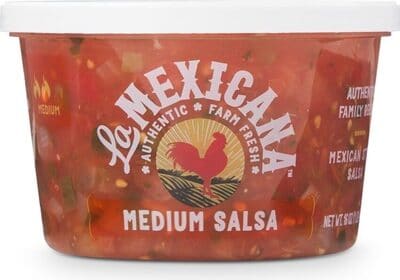
La Mexicana Medium Salsa
16 oz/1 lb/453 g
Score
Why it scores 72
La Mexicana Medium Salsa scores 72 out of 100 (Good) under GoodSwap’s published rules. What moved the score most:
- minus 8 points Processed (NOVA 3): Classified NOVA 3: processed with added salt, sugar or oil. Emerging
- minus 7.5 points Sodium metabisulfite: Sulfites must be declared above 10 mg/kg in the EU and UK and at 10 ppm or more in the US because some people, especially people with asthma, react to them. Regulatory
- minus 7.5 points Sodium benzoate: Benzoates can form small amounts of benzene in drinks that also contain ascorbic acid (vitamin C), especially with heat or light. Strong
Every line of the math is on The Receipt below, with its evidence tier and sources.
Better salsa
-
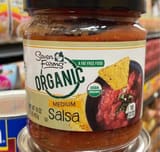 Organic Medium Salsa Seven Farms · 16 oz No sodium metabisulfite · No sodium benzoate Score 100 out of 100 , 28 points higher
 -
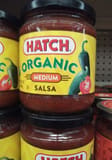 Organic medium salsa Hatch · 16 oz/1 lb/454 g No sodium metabisulfite · No sodium benzoate Score 97 out of 100 , 25 points higher
 -
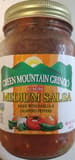 Medium Salsa Green Mountain Gringo · 454 g No sodium metabisulfite · No sodium benzoate Score 92 out of 100 , 20 points higher
 -
 Pico de Gallo Medium Street Deli No sodium metabisulfite · No sodium benzoate Score 94 out of 100 , 22 points higher
 -
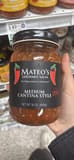 Medium Cantina Style Mateo's · 16 oz No sodium metabisulfite · No sodium benzoate Score 92 out of 100 , 20 points higher
The same kind of product, at least 10 points higher, sold in the US. Never paid placements.
The Receipt
Medium Salsa
Ingredients
- Sodium metabisulfite minus 7.5 points
- Sodium benzoate minus 7.5 points
- Potassium sorbate minus 2.5 points
Processing
- Processed (NOVA 3) minus 8 points
Nutrition per 100 g
- Salt 0.6 g / 100 g minus 3 points
100 − 28.5 = 71.5 → 72
Nutrition per 100 g
| Energy | 33 kcal |
|---|---|
| Fat | 0 g |
| Saturated fat | 0 g |
| Trans fat | 0 g |
| Carbohydrates | 3.3 g |
| Sugars | 3.3 g |
| Added sugars | 0 g |
| Fiber | 0 g |
| Protein | 0 g |
| Salt | 0.6 g |
Serving: 2 tbsp (30 g)
Ingredients
- FRESH DICED TOMATOES
- FRESH CHOPPED ASSORTED PEPPERS
- FRESH DICED ONIONS
- FRESH CHOPPED CILANTRO
- SALT
- CRUSHED GARLIC
- ASSORTED SPICES
- CITRIC ACID
- SODIUM METABISULFITE (moderate concern)
- ASCORBIC ACID
- POTASSIUM SORBATE
- SODIUM BENZOATE (TO MAINTAIN FRESHNESS) (moderate concern)
Label text, as published
FRESH DICED TOMATOES, FRESH CHOPPED ASSORTED PEPPERS, FRESH DICED ONIONS, FRESH CHOPPED CILANTRO, SALT, CRUSHED GARLIC, ASSORTED SPICES, CITRIC ACID, SODIUM METABISULFITE, ASCORBIC ACID, POTASSIUM SORBATE, SODIUM BENZOATE (TO MAINTAIN FRESHNESS).
Allergens and diets
Contains: Sulphites
- Vegan
- Vegetarian
- Gluten-free
- Palm-oil-free
Always check the package: recipes change.
More dips on GoodSwap
-
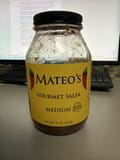 Gourmet Salsa Medium Mateo's · 32 oz High in saltNo additives Score 79 out of 100 Good
 -
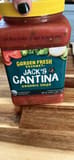 Jack's Cantina Organic Salsa Garden Fresh Gourmet · 48 oz High in saltContains added sugarsCertified organic Score 67 out of 100 Good
 -
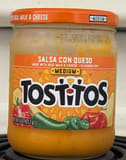 Chunky Salsa Medium Tostitos · 15 oz (425.2 g) Dye with an EU warning labelContains synthetic dyesUltra-processedHigh in salt Score 14 out of 100 Bad
 -
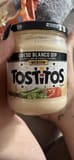 Queso Blanco Dip Tostitos · 15 oz/425.2 g Ultra-processedHigh in saltContains emulsifiers studied for gut effectsContains seed oils Score 53 out of 100 Okay
 -
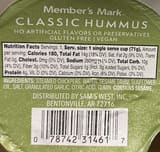 Classic Hummus Member's Mark · 2.5 Ultra-processedContains seed oils Score 72 out of 100 Good
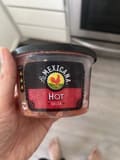
More from La Mexicana
Sources
-
Regulation (EU) No 1169/2011 of 25 October 2011 on the provision of food information to consumers
“ANNEX II SUBSTANCES OR PRODUCTS CAUSING ALLERGIES OR INTOLERANCES 1. Cereals containing gluten, namely: wheat, rye, barley, oats, spelt, kamut or their hybridised strains”
eur-lex.europa.eu
-
“1. Cereals containing gluten, namely: wheat (such as spelt and khorasan wheat), rye, barley, oats or their hybridised strains, and products thereof”
legislation.gov.uk
-
“Artificial colours or a sodium benzoate preservative (or both) in the diet result in increased hyperactivity in 3-year-old and 8/9-year-old children in the general population.”
doi.org
-
Re-evaluation of benzyl alcohol (E 1519) as food additive (records the 2016 benzoate re-evaluation)
“derived a group ADI of 5 mg/kg bw per day (expressed as benzoic acid) in accordance with the ADI previously derived by SCF and JECFA”
doi.org
-
“By applying a default uncertainty factor of 100, the Panel established a group ADI expressed as 11 mg sorbic acid/kg bw per day for sorbic acid (E 200) and its potassium salt (E 202).”
doi.org
-
21 CFR 182.3640 Potassium sorbate
ecfr.gov
-
“For adults, WHO recommends less than 2000 mg/day of sodium (equivalent to less than 5 g/day salt), or just under a teaspoon.”
who.int