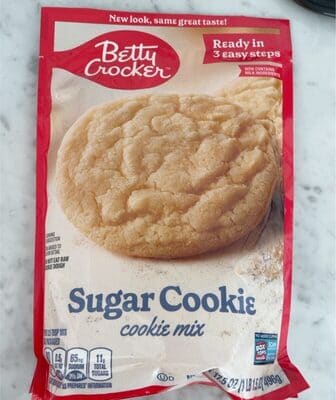
Cooking helpers
Betty Crocker Sugar cookie mix imp
496
Score
- High in sugar
- Contains added sugars
- Contains palm oil
- Seed-oil free
Why it scores 45
Betty Crocker Sugar cookie mix imp scores 45 out of 100 (Okay) under GoodSwap’s published rules. What moved the score most:
- minus 20 points Sugar: An added sugar. Strong
- minus 14 points Sugars 47.8 g / 100 g: Very high in sugar. Strong
- minus 8 points Processed (NOVA 3): Classified NOVA 3: processed with added salt, sugar or oil. Emerging
Every line of the math is on The Receipt below, with its evidence tier and sources.
Better cake, brownie and cookie mixes
-
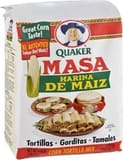 Quaker de maiz corn tortilla mix ounce paper bag Quaker · 200 g Less sugar · No added sugars Score 100 out of 100 , 55 points higher
 -
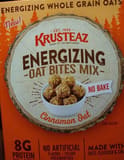 Energizing oat bites mix Krusteaz · 12 oz/340 g Less sugar · No added sugars Score 100 out of 100 , 55 points higher
 -
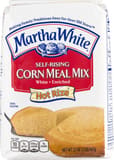 Self-rising corn meal mix Martha White · 32 oz Less sugar · No added sugars Score 79 out of 100 , 34 points higher
 -
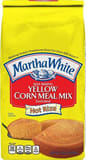 Self-rising enriched yellow corn meal mix Martha White · 32 oz/2 lb/907 g Less sugar · No added sugars Score 79 out of 100 , 34 points higher
 -
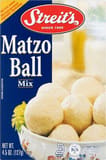 Matzo ball mix Streit's · 4.5 oz Less sugar · No added sugars Score 79 out of 100 , 34 points higher
The same kind of product, at least 10 points higher, sold in the US. Never paid placements.
The Receipt
Betty Crocker Sugar cookie mix imp
Ingredients
- Sugar minus 20 points
- Palm oil minus 2.5 points
- Sodium aluminum phosphate minus 2.5 points
Processing
- Processed (NOVA 3) minus 8 points
Nutrition per 100 g
- Sugars 47.8 g / 100 g minus 14 points
- Saturated fat 2.2 g / 100 g minus 3 points
- Salt 0.7 g / 100 g minus 3 points
- Energy 391 kcal / 100 g minus 2 points
100 − 55 = 45
Can’t score above 79. Contains sugar, an ingredient of high concern. [1][2][3]
Can’t score above 79. High in sugars (above the front-of-pack "high" level). [10]
Nutrition per 100 g
| Energy | 391 kcal |
|---|---|
| Fat | 4.4 g |
| Saturated fat | 2.2 g |
| Trans fat | 0 g |
| Carbohydrates | 82.6 g |
| Sugars | 47.8 g |
| Added sugars | 47.8 g |
| Fiber | 0 g |
| Protein | 4.4 g |
| Salt | 0.7 g |
Serving: 2 tbsp (20 g)
Ingredients
- Sugar (high concern)
- Enriched Flour Bleached (wheat flour, niacin, iron, thiamin mononitrate, riboflavin, folic acid)
- Palm Oil
- Leavening (baking soda, sodium aluminum phosphate) (not recognized)
- Salt
- Nonfat Milk
Label text, as published
Sugar, Enriched Flour Bleached (wheat flour, niacin, iron, thiamin mononitrate, riboflavin, folic acid), Palm Oil, Leavening (baking soda, sodium aluminum phosphate), Salt, Nonfat Milk.
Allergens and diets
Contains: Milk, Wheat, Gluten
- Not vegan
- Vegetarian
- Not gluten-free
- Not palm-oil-free
Always check the package: recipes change.
More cooking helpers on GoodSwap
-
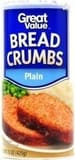 Plain Bread Crumbs Great Value · 15 oz/425 g Ultra-processedHigh in saltContains added sugarsContains seed oils Score 43 out of 100 Okay
 -
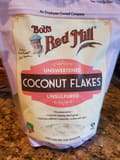 Coconut Flakes Bob's Red Mill · 10 oz/284 g High in saturated fatNo additives Score 79 out of 100 Good
 -
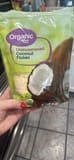 Unsweetened Coconut Flakes Organic Great Value · 7 oz High in saturated fatCertified organicNo additives Score 79 out of 100 Good
 -
 Rich & Creamy frosting Vanilla Betty Crocker · 453 g Dye with an EU warning labelContains synthetic dyesUltra-processedHigh in sugar Score 4 out of 100 Bad
 -
 Baking Powder Davis Baking Powder · 0.6 g High in salt Score 78 out of 100 Good
 -
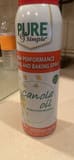 High Performance Baking and Baking Spray Pure & Simple · 17 oz Ultra-processedContains seed oils Score 77 out of 100 Good
More from Betty Crocker
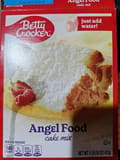
Sources
-
Guideline: sugars intake for adults and children
“In both adults and children, WHO recommends reducing the intake of free sugars to less than 10% of total energy intake”
who.int
-
Dietary Guidelines for Americans, 2025–2030
“Limit foods and beverages that include artificial flavors, petroleum-based dyes, artificial preservatives, and low-calorie non-nutritive sweeteners.”
cdn.realfood.gov
-
Added and free sugars should be as low as possible
“Sugar consumption is a known cause of dental caries.”
efsa.europa.eu
-
Saturated fatty acid and trans-fatty acid intake for adults and children: WHO guideline
“WHO recommends that adults and children reduce saturated fatty acid intake to 10% of total energy intake (strong recommendation).”
who.int
-
Process contaminants in vegetable oils and foods
“The highest levels of GE, as well as 3-MCPD and 2-MCPD (including esters) were found in palm oils and palm fats, followed by other oils and fats.”
efsa.europa.eu
-
“Glycidyl fatty acid esters, expressed as glycidol”
eur-lex.europa.eu
-
EFSA issues new advice on phosphates
“We estimated that dietary exposure to phosphates may exceed the new ADI for infants, toddlers and children with average consumption of phosphates in their diet.”
efsa.europa.eu
-
“For adults, WHO recommends less than 2000 mg/day of sodium (equivalent to less than 5 g/day salt), or just under a teaspoon.”
who.int
-
“Table 3: Criteria for drinks (per 100ml)”
assets.publishing.service.gov.uk