Microwave meals
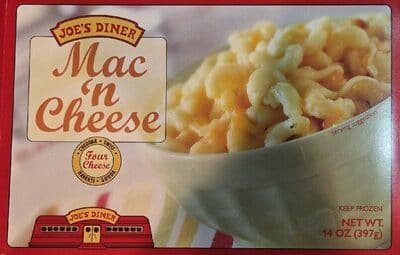
Joe's Diner Mac 'n Cheese
14 oz (397 g)
Score
- Ultra-processed
- Seed-oil free
- No synthetic dyes
Why it scores 69
Joe's Diner Mac 'n Cheese scores 69 out of 100 (Good) under GoodSwap’s published rules. What moved the score most:
- minus 18 points Ultra-processed (NOVA 4): Classified NOVA 4: made with industrial ingredients and additives. Strong
- minus 3 points 3 kinds of ultra-processing markers: Industrial additive classes found: color (added), firming agent and modified starch. Emerging
- minus 3 points Saturated fat 4 g / 100 g: High in saturated fat. Strong
Every line of the math is on The Receipt below, with its evidence tier and sources.
Better macaroni and cheese
-
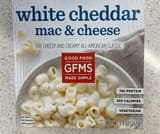 White cheddar Mac n cheese Good Food Made Simple · 9.4 oz/267 g Not ultra-processed · No calcium chloride Score 94 out of 100 , 25 points higher
 -
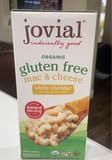 Gluten Free White Cheddar Mac & Cheese Jovial · 6 oz Not ultra-processed · No calcium chloride Score 87 out of 100 , 18 points higher
 -
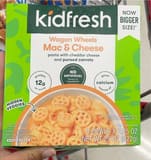 Mac and Cheese Kidfresh · 29 oz Not ultra-processed · No calcium chloride Score 94 out of 100 , 25 points higher
 -
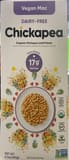 Vegan Mac Chickapea Not ultra-processed · No calcium chloride Score 96 out of 100 , 27 points higher
 -
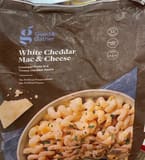 White cheddar mac & cheese Good & Gather · 22 oz/624 g Not ultra-processed · No calcium chloride Score 93 out of 100 , 24 points higher
The same kind of product, at least 10 points higher, sold in the US. Never paid placements.
The Receipt
Mac 'n Cheese
Ingredients
- Calcium chloride minus 2.5 points
- Modified starch minus 2.5 points
Processing
- Ultra-processed (NOVA 4) minus 18 points
- 3 kinds of ultra-processing markers minus 3 points
Nutrition per 100 g
- Saturated fat 4 g / 100 g minus 3 points
- Salt 0.8 g / 100 g minus 3 points
- Energy 162 kcal / 100 g minus 1 points
- Protein 8.1 g / 100 g plus 2 points
100 − 31 = 69
Nutrition per 100 g
| Energy | 162 kcal |
|---|---|
| Fat | 7.6 g |
| Saturated fat | 4 g |
| Carbohydrates | 21.2 g |
| Sugars | 1.5 g |
| Added sugars | 0 g |
| Fiber | 0 g |
| Protein | 8.1 g |
| Salt | 0.8 g |
Serving: 0.5 container (198 g)
Ingredients
- COOKED ELBOW MACARONI (WATER, ENRICHED SEMOLINA)
- MILK
- CHEDDAR CHEESE (PASTEURIZED COW'S MILK, CHEESE CULTURE, SALT RENNET, CALCIUM CHLORIDE)
- IMPORTED GOUDA CHEESE (PASTEURIZED COW'S MILK, CHEESE CULTURES, RENNET, SALTS, CAROTENE [COLOR])
- IMPORTED SWISS CHEESE (PART SKIM COW'S MILK, CHEESE CULTURES, SALT, ENZYMES)
- UNBLEACHED FLOUR (UNBLEACHED WHEAT FLOUR, NIACIN, REDUCED IRON, THIAMINE MONONITRATE, RIBOFLAVIN, FOLIC ACID)
- BUTTER (PASTEURIZED CREAM, SALT, ANNATTO [COLOR])
- MODIFIED RICE STARCH
- SALT
- SPICES
Label text, as published
COOKED ELBOW MACARONI (WATER, ENRICHED SEMOLINA [DURUM WHEAT, SEMOLINA, NIACIN, FERROUS SULFATE, THIAMINE MONONITRATE, RIBOFLAVIN, FOLIC ACID]), MILK, CHEDDAR CHEESE (PASTEURIZED COW'S MILK, CHEESE CULTURE, SALT RENNET, CALCIUM CHLORIDE), IMPORTED GOUDA CHEESE (PASTEURIZED COW'S MILK, CHEESE CULTURES, RENNET, SALTS, CAROTENE [COLOR]), IMPORTED SWISS CHEESE (PART SKIM COW'S MILK, CHEESE CULTURES, SALT, ENZYMES), UNBLEACHED FLOUR (UNBLEACHED WHEAT FLOUR, NIACIN, REDUCED IRON, THIAMINE MONONITRATE, RIBOFLAVIN, FOLIC ACID), BUTTER (PASTEURIZED CREAM, SALT, ANNATTO [COLOR]), MODIFIED RICE STARCH, SALT, SPICES
Allergens and diets
Contains: Milk, Wheat, Gluten
May contain: Peanuts, Tree nuts, Soy, Egg, Fish
- Not vegan
- Not gluten-free
- Palm-oil-free
Always check the package: recipes change.
More microwave meals on GoodSwap
-
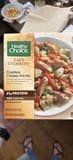 Crustless Chicken Pot Pie Healthy Choice CAFÉ STEAMERS · 272 g Ultra-processedContains added sugarsContains emulsifiers studied for gut effectsContains seed oils Score 36 out of 100 Poor
 -
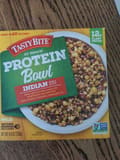 Indian Protein Bowl Tasty Bite · 8.8 oz/250 g Ultra-processedContains added sugarsContains seed oilsContains whole grains Score 55 out of 100 Okay
 -
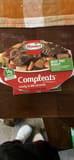 Beef Pot Roast Hormel Compleats · 9 oz Ultra-processedContains added sugarsSeed-oil freeNo synthetic dyes Score 24 out of 100 Poor
 -
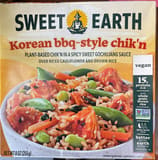 Korean bbq-style chik’n Sweet Earth · 9 oz (255 g) Ultra-processedContains added sugarsContains seed oilsNo synthetic dyes Score 19 out of 100 Bad
Sources
-
Saturated fatty acid and trans-fatty acid intake for adults and children: WHO guideline
“WHO recommends that adults and children reduce saturated fatty acid intake to 10% of total energy intake (strong recommendation).”
who.int
-
“For adults, WHO recommends less than 2000 mg/day of sodium (equivalent to less than 5 g/day salt), or just under a teaspoon.”
who.int
-
Dietary Guidelines for Americans, 2025–2030
“Limit foods and beverages that include artificial flavors, petroleum-based dyes, artificial preservatives, and low-calorie non-nutritive sweeteners.”
cdn.realfood.gov
-
“Greater exposure to ultra-processed food was associated with a higher risk of adverse health outcomes, especially cardiometabolic, common mental disorder, and mortality outcomes.”
doi.org