Open Beauty Facts
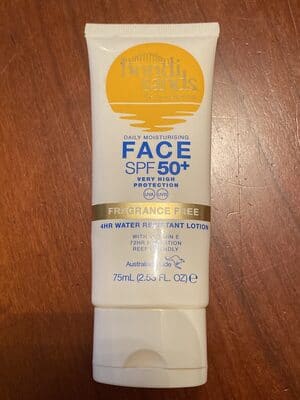
Bondi Sands Daily Moisturising face SPF 50+
75 mL
Score
- Contains chemical UV filters
- May contain traces of 1,4-dioxane
- Contains cyclic silicones (D4/D5/D6)
- Contains ethanolamines (MEA/DEA/TEA)
Why it scores 73
Bondi Sands Daily Moisturising face SPF 50+ scores 73 out of 100 (Good) under GoodSwap’s published rules. What moved the score most:
- minus 12 points Homosalate: The EU's scientific committee found homosalate not safe up to 10% and safe only up to 7.34% in face products. Regulatory
- minus 5 points Octocrylene: The EU reviewed octocrylene for potential endocrine-disrupting properties and set new limits in 2022. Regulatory
- minus 5 points Cyclopentasiloxane (D5): Restricted in the EU (0.1%) in wash-off cosmetics since 2020 and in other cosmetics from 6 June 2027 because they persist and build up in the environment. Regulatory
Every line of the math is on The Receipt below, with its evidence tier and sources.
Better sunscreen
-
 Cetaphil Oil-Free Facial Moisturizer with Sunscreen SPF 35 Cetaphil · 3 fl oz No chemical UV filters · No ethoxylated ingredients Score 99 out of 100 , 26 points higher
 -
 Daily Mineral Sunscreen with Zinc Oxide, SPF 30 Badger · 4 oz No chemical UV filters · No ethoxylated ingredients Score 100 out of 100 , 27 points higher
 -
 Zinc Oxide 23.4% Sunscreen SPF 50 Thinkkids No chemical UV filters · No ethoxylated ingredients Score 95 out of 100 , 22 points higher
 -
 Solar Mate Daily Mineral Sunscreen Broad Spectrum SPF 40 Bubble Beauty No ethoxylated ingredients · No D4, D5 or D6 Score 99 out of 100 , 26 points higher
 -
 Sensitive Mineral Sunscreen Blue Lizard No ethoxylated ingredients · No D4, D5 or D6 Score 100 out of 100 , 27 points higher
The same kind of product, at least 10 points higher, sold in the US. Never paid placements.
The Receipt
Daily Moisturising face SPF 50+
Ingredients
- Homosalate minus 12 points
- Octocrylene minus 5 points
- Cyclopentasiloxane (D5) minus 5 points
- Cyclohexasiloxane (D6) minus 2.5 points
- Octisalate minus 0.5 points
- Polyethylene glycols (PEG) and ethoxylates minus 0.5 points
- Avobenzone minus 0.5 points
- Benzyl alcohol minus 0.5 points
- Phenoxyethanol minus 0.5 points
- Triethanolamine (TEA) minus 0.5 points
100 − 27.5 = 72.5 → 73
Nutrition per 100 g
| Energy | 0 kcal |
|---|---|
| Fat | 0 g |
| Saturated fat | 0 g |
| Carbohydrates | 0 g |
| Sugars | 0 g |
| Fiber | 0 g |
| Protein | 0 g |
| Salt | 0 g |
Ingredients
- AQUA (WATER)
- HOMOSALATE (high concern)
- CERA ALBA (BEESWAX)
- ALOE BARBADENSIS LEAF JUICE
- OCTOCRYLENE (moderate concern)
- ETHYLHEXYL SALICYLATE
- ISOPROPYL PALMITATE
- CETEARYL ALCOHOL
- CYCLOPENTASILOXANE (moderate concern)
- CYCLOHEXASILOXANE (moderate concern)
- CETEARETH-20
- BUTYL METHOXYDIBENZOYLMETHANE
- HYDROXYACETOPHENONE
- CARBOMER
- BENZYL ALCOHOL SACCHARIDE ISOMERATE
- PHENOXYETHANOL
- SODIUM STEAROYL GLUTAMATE
- TRIETHANOLAMINE
- TOCOPHERYL ACETATE
- CITRIC ACID
- SODIUM CITRATE
Label text, as published
AQUA (WATER), HOMOSALATE, CERA ALBA (BEESWAX), ALOE BARBADENSIS LEAF JUICE, OCTOCRYLENE, ETHYLHEXYL SALICYLATE, ISOPROPYL PALMITATE, CETEARYL ALCOHOL, CYCLOPENTASILOXANE, CYCLOHEXASILOXANE, CETEARETH-20, BUTYL METHOXYDIBENZOYLMETHANE, HYDROXYACETOPHENONE, CARBOMER, BENZYL ALCOHOL SACCHARIDE ISOMERATE, PHENOXYETHANOL, SODIUM STEAROYL GLUTAMATE, TRIETHANOLAMINE, TOCOPHERYL ACETATE, CITRIC ACID, SODIUM CITRATE
Allergens and diets
- Palm-oil-free
Always check the package: recipes change.
More open beauty facts on GoodSwap
-
 Crema Manos S'nonas · 150 mL Contains a formaldehyde-releasing preservativeContains parabensContains fragranceContains sulfate surfactants Score 72 out of 100 Good
 -
 Essentials with NATURAL DEODORIZERS JUNIPER BERRY DEODORANT Arm & Hammer · 2.5 oz (71 g) Contains fragrance Score 93 out of 100 Excellent
 -
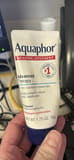 Healing ointment Aquaphor Score 99 out of 100 Excellent
 -
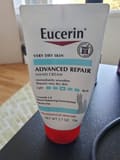 Advanced Repair Hand Cream Eucerin Contains sulfate surfactants Score 94 out of 100 Excellent
 -
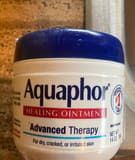 Healing ointment Aquaphor · 14 oz Score 99 out of 100 Excellent
 -
 Sport Face Oil-Free Lotion Sunscreen 70 Neutrogena Contains chemical UV filters Score 86 out of 100 Excellent
Sources
-
“the use of Homosalate should be restricted to face products (non-spray and pump spray products) only, up to a maximum concentration of 7,34 %.”
eur-lex.europa.eu
-
“Benzophenone-3 is not safe for the consumer when used as a UV filter up to the current maximum concentration of 6 % in sunscreen products”
eur-lex.europa.eu
-
“Shall not be placed on the market in wash-off cosmetic products in a concentration equal to or greater than 0,1 % by weight of either substance, after 31 January 2020.”
eur-lex.europa.eu
-
“for all cosmetic products other than the ones mentioned in paragraph 3(a), paragraph 1 shall apply after 6 June 2027”
eur-lex.europa.eu
-
Regulation (EC) No 1223/2009 of 30 November 2009 on cosmetic products
“cosmetic products shall not contain any of the following: (a) prohibited substances — prohibited substances listed in Annex II”
eur-lex.europa.eu
-
1,4-Dioxane in Cosmetics: A Manufacturing Byproduct
“1,4-dioxane forms as a byproduct during the manufacturing process of certain cosmetic ingredients.”
fda.gov
-
Agents Classified by the IARC Monographs, Volumes 1–142 (List of Classifications)
monographs.iarc.who.int
-
“when their concentration exceeds 0,001 % in leave-on products and 0,01 % in rinse-off products.”
eur-lex.europa.eu
-
“The NTP study did not establish a link between DEA and the risk of cancer in humans.”
fda.gov