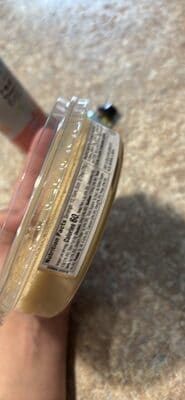
Hummus
Park Street Deli Hummus Classic
10 oz
Score
- Ultra-processed
- Contains added sugars
- Seed-oil free
Why it scores 48
Park Street Deli Hummus Classic scores 48 out of 100 (Okay) under GoodSwap’s published rules. What moved the score most:
- minus 20 points Sugar: An added sugar. Strong
- minus 18 points Ultra-processed (NOVA 4): Classified NOVA 4: made with industrial ingredients and additives. Strong
- minus 7.5 points Sodium benzoate: Benzoates can form small amounts of benzene in drinks that also contain ascorbic acid (vitamin C), especially with heat or light. Strong
Every line of the math is on The Receipt below, with its evidence tier and sources.
Better hummus
-
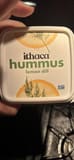 Hummus Lemon Dill Ithaca · 10 oz Not ultra-processed · No added sugars Score 93 out of 100 , 45 points higher
 -
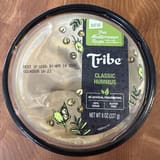 Tribe, Classic Hummus Tribe Mediterranean Foods · 8 oz Not ultra-processed · No added sugars Score 88 out of 100 , 40 points higher
 -
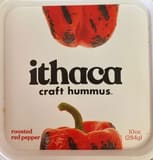 Hummus Roasted Red Pepper Ithaca · 10 oz Not ultra-processed · No added sugars Score 93 out of 100 , 45 points higher
 -
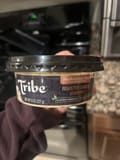 Roasted Garlic Hummus Tribe Mediterranean Foods · 8 oz Not ultra-processed · No added sugars Score 88 out of 100 , 40 points higher
 -
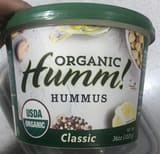 Organic hummus Humm · 1020 g Not ultra-processed · No added sugars Score 98 out of 100 , 50 points higher
The same kind of product, at least 10 points higher, sold in the US. Never paid placements.
The Receipt
Hummus Classic
Ingredients
- Sugar minus 20 points
- Sodium benzoate minus 7.5 points
- Guar gum minus 2.5 points
- Potassium sorbate minus 1.5 points
Processing
- Ultra-processed (NOVA 4) minus 18 points
Nutrition per 100 g
- Saturated fat 1.8 g / 100 g minus 1 points
- Salt 1 g / 100 g minus 3 points
- Energy 214 kcal / 100 g minus 1 points
- Fiber 3.6 g / 100 g plus 2 points
100 − 52.5 = 47.5 → 48
Can’t score above 79. Contains sugar, an ingredient of high concern. [1][2][3]
Nutrition per 100 g
| Energy | 214 kcal |
|---|---|
| Fat | 16.1 g |
| Saturated fat | 1.8 g |
| Carbohydrates | 14.3 g |
| Sugars | 3.6 g |
| Added sugars | 0 g |
| Fiber | 3.6 g |
| Protein | 7.1 g |
| Salt | 1 g |
Serving: 1 serving (28 g)
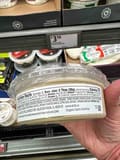
Ingredients
- fresh steamed chickpeas
- nos smgs 10 (not recognized)
- serv (not recognized)
- size: 2 1ibsp (289) (not recognized)
- | sunelower oil (not recognized)
- olive oil
- sesame tahini
- discard seal rinse tub (not recognized)
- replace lid aldi twice as nice water (not recognized)
- salt
- citric acid
- garlic
- guar gum
- cumin
- contains 1% or less preservatives mdiun 15mg (5% dv) (not recognized)
- total (sodium benzoate, potassium sorbate) (not recognized)
- sgas ig (ncl, og added sugars) (not recognized)
Label text, as published
fresh steamed chickpeas, nos smgs 10, serv, size: 2 1ibsp (289), | sunelower oil, olive oil, sesame tahini, discard seal rinse tub , replace lid aldi twice as nice water, salt, citric acid, garlic, guar gum, cumin, contains 1% or less preservatives mdiun 15mg (5% dv), total (sodium benzoate, potassium sorbate), sgas ig (ncl, og added sugars
Allergens and diets
Contains: Sesame
Always check the package: recipes change.
More hummus on GoodSwap
-
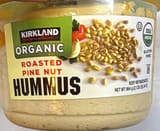 Roasted Pine Nut Hummus Kirkland Organic · 964 g Contains seed oilsCertified organic Score 79 out of 100 Good
 -
 Roasted Red Pepper Hummus Sabra · 28 g Ultra-processedContains seed oils Score 70 out of 100 Good
 -
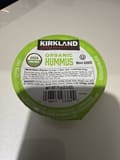 Organic Hummus Kirkland Signature · 71 g Contains seed oilsCertified organicNo additives Score 79 out of 100 Good
 -
 Original Hommus Cedar's · 16 oz/454 g/1 lb Contains seed oilsCertified organic Score 79 out of 100 Good
 -
 Garlic Hummus Simply Nature · 8 oz Ultra-processedCertified organicSeed-oil free Score 80 out of 100 Excellent
More from Park Street Deli
Sources
-
Guideline: sugars intake for adults and children
“In both adults and children, WHO recommends reducing the intake of free sugars to less than 10% of total energy intake”
who.int
-
Dietary Guidelines for Americans, 2025–2030
“Limit foods and beverages that include artificial flavors, petroleum-based dyes, artificial preservatives, and low-calorie non-nutritive sweeteners.”
cdn.realfood.gov
-
Added and free sugars should be as low as possible
“Sugar consumption is a known cause of dental caries.”
efsa.europa.eu
-
“Artificial colours or a sodium benzoate preservative (or both) in the diet result in increased hyperactivity in 3-year-old and 8/9-year-old children in the general population.”
doi.org
-
Re-evaluation of benzyl alcohol (E 1519) as food additive (records the 2016 benzoate re-evaluation)
“derived a group ADI of 5 mg/kg bw per day (expressed as benzoic acid) in accordance with the ADI previously derived by SCF and JECFA”
doi.org
-
“By applying a default uncertainty factor of 100, the Panel established a group ADI expressed as 11 mg sorbic acid/kg bw per day for sorbic acid (E 200) and its potassium salt (E 202).”
doi.org
-
21 CFR 182.3640 Potassium sorbate
ecfr.gov
-
Saturated fatty acid and trans-fatty acid intake for adults and children: WHO guideline
“WHO recommends that adults and children reduce saturated fatty acid intake to 10% of total energy intake (strong recommendation).”
who.int
-
“For adults, WHO recommends less than 2000 mg/day of sodium (equivalent to less than 5 g/day salt), or just under a teaspoon.”
who.int
-
“Greater exposure to ultra-processed food was associated with a higher risk of adverse health outcomes, especially cardiometabolic, common mental disorder, and mortality outcomes.”
doi.org