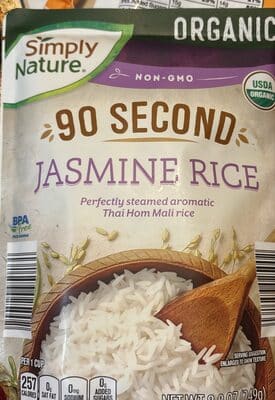
Long grain rices
Jasmine Rice Aldis Aldis Jasmines rice
1 unit
Score
- Ultra-processed
- Contains seed oils
Why it scores 77
Jasmine Rice Aldis Aldis Jasmines rice scores 77 out of 100 (Good) under GoodSwap’s published rules. What moved the score most:
- minus 18 points Ultra-processed (NOVA 4): Classified NOVA 4: made with industrial ingredients and additives. Strong
- minus 2.5 points Sunflower oil: High in omega-6 linoleic acid. Emerging
- minus 2.5 points Sunflower lecithin: An additive class typical of ultra-processed foods (NOVA group 4). Info
Every line of the math is on The Receipt below, with its evidence tier and sources.
Better rice
-
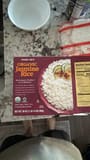 Jasmine Rice Trader Joe's · 30 oz Not ultra-processed · No seed oils Score 100 out of 100 , 23 points higher
 -
 Steamed Jasmine Rice Grain Trust · 30 oz Not ultra-processed · No seed oils Score 100 out of 100 , 23 points higher
 -
 Jasmine Rice Lundberg Family Farms · 8 oz Not ultra-processed · No seed oils Score 100 out of 100 , 23 points higher
 -
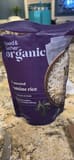 Jasmine Rice Good & Gather organic · 8.8 oz/249 g Not ultra-processed · No sunflower lecithin Score 100 out of 100 , 23 points higher
 -
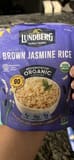 Brown Jasmine Rice Lundberg Family Farms · 8 oz/227 g Not ultra-processed · No seed oils Score 100 out of 100 , 23 points higher
The same kind of product, at least 10 points higher, sold in the US. Never paid placements.
The Receipt
Aldis Jasmines rice
Ingredients
- Sunflower oil minus 2.5 points
- Sunflower lecithin minus 2.5 points
Processing
- Ultra-processed (NOVA 4) minus 18 points
100 − 23 = 77
Nutrition per 100 g
| Energy | 103 kcal |
|---|---|
| Fat | 1.8 g |
| Saturated fat | 0 g |
| Trans fat | 0 g |
| Carbohydrates | 22.1 g |
| Sugars | 0 g |
| Added sugars | 0 g |
| Fiber | 0.4 g |
| Protein | 2.8 g |
| Salt | 0 g |
Serving: 249g
Ingredients
Label text, as published
WATER, ORGANIC LONG GRAIN RICE, ORGANIC SUNFLOWER OIL, ORGANIC SUNFLOWER LECITHIN. MAY CONTAIN WHEAT.
Allergens and diets
May contain: Gluten
- Vegan
- Vegetarian
- Gluten-free
- Palm-oil-free
Always check the package: recipes change.
More long grain rices on GoodSwap
-
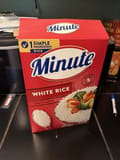 White Rice Minute · 46 g No additives Score 100 out of 100 Excellent
 -
 Premium Long Grain Rice Sarita · 2 lb/32 oz/907 g No additives Score 100 out of 100 Excellent
 -
 Extra Long Enriched Rice Mahatma · 32 oz No additives Score 100 out of 100 Excellent
 -
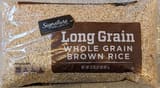 Long Grain Whole Grain Brown Rice Signature Select · 32 oz No additivesContains whole grains Score 100 out of 100 Excellent
 -
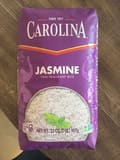 Jasmine Thai Fragrant Long Grain Rice Carolina · 32 oz No additives Score 100 out of 100 Excellent
 -
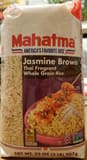 Jasmine Brown Thai Fragrant Whole Grain Rice Mahatma · 32 oz (2 lb) 907 g No additivesContains whole grains Score 100 out of 100 Excellent
Sources
-
“replacement of saturated fat in the diet with linoleic acid effectively lowers serum cholesterol but does not support the hypothesis that this translates to a lower risk of death from coronary heart disease or all causes.”
doi.org
-
“These data provide support for current recommendations to replace saturated fat with polyunsaturated fat for primary prevention of CHD.”
doi.org
-
“Greater exposure to ultra-processed food was associated with a higher risk of adverse health outcomes, especially cardiometabolic, common mental disorder, and mortality outcomes.”
doi.org