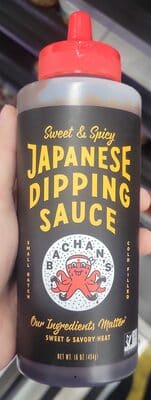
Hot sauces
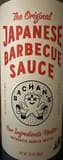
Bachan's Japanese Dipping Sauce Sweet
16 oz
Score
- High in sugar
- High in salt
- Contains added sugars
- No additives
- Seed-oil free
Why it scores 47
Bachan's Japanese Dipping Sauce Sweet scores 47 out of 100 (Okay) under GoodSwap’s published rules. What moved the score most:
- minus 20 points Sugar: An added sugar. Strong
- minus 14 points Sugars 33.3 g / 100 g: Very high in sugar. Strong
- minus 9 points Salt 4.2 g / 100 g: Very high in salt. Strong
Every line of the math is on The Receipt below, with its evidence tier and sources.
Better marinades and cooking sauces
-
 Dipping Sauce Tuscan Herb Everyday Gourmet by Sutter Buttes Less sugar · Less salt Score 79 out of 100 , 32 points higher
 -
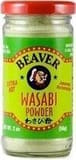 Japanese Horseradish Wasabi Powder Beaver · 2 oz/56 g Less sugar · Less salt Score 98 out of 100 , 51 points higher
 -
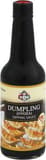 Dumpling Dipping Sauce Rhee Bros. Inc. · 10 fl oz/296 mL Less sugar · No added sugars Score 73 out of 100 , 26 points higher
 -
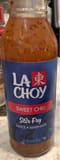 Sweet chili marinade La Choy · 15 oz Less salt Score 63 out of 100 , 16 points higher
 -
 Buffalo dipping sauce French's Less sugar · Less salt Score 72 out of 100 , 25 points higher
The same kind of product, at least 10 points higher, sold in the US. Never paid placements.
The Receipt
Japanese Dipping Sauce Sweet
Ingredients
- Sugar minus 20 points
- Wine minus 2.5 points
Processing
- Processed (NOVA 3) minus 8 points
Nutrition per 100 g
- Sugars 33.3 g / 100 g minus 14 points
- Salt 4.2 g / 100 g minus 9 points
- Energy 333 kcal / 100 g minus 2 points
- Fiber 5.6 g / 100 g plus 2 points
100 − 53.5 = 46.5 → 47
Can’t score above 79. Contains sugar, an ingredient of high concern. [1][2][3]
Can’t score above 79. High in sugars and salt (above the front-of-pack "high" level). [8]
Nutrition per 100 g
| Energy | 333 kcal |
|---|---|
| Fat | 13.9 g |
| Saturated fat | 0 g |
| Trans fat | 0 g |
| Carbohydrates | 44.4 g |
| Sugars | 33.3 g |
| Fiber | 5.6 g |
| Protein | 11.1 g |
| Salt | 4.2 g |
Serving: 18g
Ingredients
- Cane Sugar (high concern)
- Sesame Paste
- Non-GMO Soy Sauce (Water, Soybeans, Wheat, Salt)
- Organic Rice Vinegar
- White Miso (Rice, Filtered Water, Non-GMO Soybeans, Sea Salt)
- Red Habanero Puree (Red Habanero Peppers, Salt, Vinegar)
- Crushed Sesame Seeds
- Organic Toasted Sesame Oil
- Organic Ginger
- Mirin (Water, Rice, Koji Seed, Sea Salt)
- Organic Garlic
- Tomato Paste
- Sea Salt
Label text, as published
Cane Sugar, Sesame Paste, Non-GMO Soy Sauce (Water, Soybeans, Wheat, Salt), Organic Rice Vinegar, White Miso (Rice, Filtered Water, Non-GMO Soybeans, Sea Salt), Red Habanero Puree (Red Habanero Peppers, Salt, Vinegar), Crushed Sesame Seeds, Organic Toasted Sesame Oil, Organic Ginger, Mirin (Water, Rice, Koji Seed, Sea Salt), Organic Garlic, Tomato Paste, Sea Salt
Allergens and diets
Contains: Soy, Wheat, Gluten, Sesame
- Vegan
- Vegetarian
- Not gluten-free
- Palm-oil-free
Always check the package: recipes change.
More hot sauces on GoodSwap
-
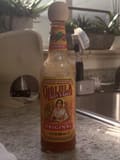 Hot Sauce Cholula · 360 mL Ultra-processedHigh in salt Score 71 out of 100 Good
 -
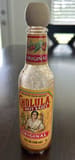 Hot Sauce Cholula · 150 mL High in salt Score 79 out of 100 Good
 -
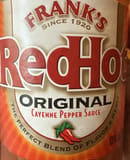 Original Cayenne Pepper Sauce Frank's Redhot · 12 oz High in saltNo additives Score 79 out of 100 Good
 -
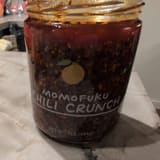 Chili Crunch Momofuku Contains added sugarsContains seed oils Score 66 out of 100 Good
 -
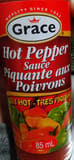 Grace, hot pepper sauce, very hot Grace · 85 mL High in saltNo additives Score 79 out of 100 Good
 -
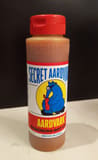 Aardvark Habanero Hot Sauce Secret Aardvark Trading Co. · 8 fl oz/236 mL Ultra-processedHigh in saltContains added sugarsContains seed oils Score 49 out of 100 Okay
More from Bachan's
Sources
-
Guideline: sugars intake for adults and children
“In both adults and children, WHO recommends reducing the intake of free sugars to less than 10% of total energy intake”
who.int
-
Dietary Guidelines for Americans, 2025–2030
“Limit foods and beverages that include artificial flavors, petroleum-based dyes, artificial preservatives, and low-calorie non-nutritive sweeteners.”
cdn.realfood.gov
-
Added and free sugars should be as low as possible
“Sugar consumption is a known cause of dental caries.”
efsa.europa.eu
-
About Alcohol Use During Pregnancy
“There is no known safe amount of alcohol use during pregnancy.”
cdc.gov
-
Agents Classified by the IARC Monographs, Volumes 1–142 (List of Classifications)
monographs.iarc.who.int
-
“For adults, WHO recommends less than 2000 mg/day of sodium (equivalent to less than 5 g/day salt), or just under a teaspoon.”
who.int
-
“Table 3: Criteria for drinks (per 100ml)”
assets.publishing.service.gov.uk