Food
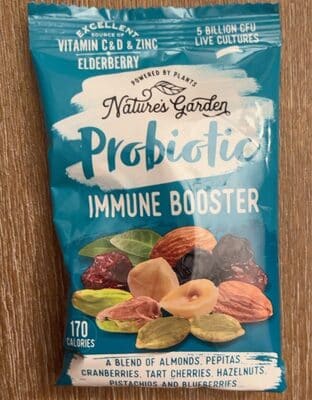
Nature's Garden Probiotic Immune Snack Packs
1
Score
- High in sugar
- Contains added sugars
- Contains seed oils
- No additives
Why it scores 61
Nature's Garden Probiotic Immune Snack Packs scores 61 out of 100 (Good) under GoodSwap’s published rules. What moved the score most:
- minus 20 points Sugar: An added sugar. Strong
- minus 11 points Sugars 26.5 g / 100 g: Very high in sugar. Strong
- minus 5 points Saturated fat 4.4 g / 100 g: High in saturated fat. Strong
Every line of the math is on The Receipt below, with its evidence tier and sources.
The Receipt
Probiotic Immune Snack Packs
Ingredients
- Sugar minus 20 points
- Sunflower oil minus 2.5 points
Nutrition per 100 g
- Sugars 26.5 g / 100 g minus 11 points
- Saturated fat 4.4 g / 100 g minus 5 points
- Energy 529 kcal / 100 g minus 3 points
- Fiber 5.9 g / 100 g plus 2 points
100 − 39.5 = 60.5 → 61
Can’t score above 79. Contains sugar, an ingredient of high concern. [1][2][3]
Can’t score above 79. High in fat and sugars (above the front-of-pack "high" level). [9]
Nutrition per 100 g
| Energy | 529 kcal |
|---|---|
| Fat | 38.2 g |
| Saturated fat | 4.4 g |
| Carbohydrates | 38.2 g |
| Sugars | 26.5 g |
| Fiber | 5.9 g |
| Protein | 11.8 g |
| Salt | 0 g |
Serving: 1g
Ingredients
- Sweete (Cranberries, Sugar S Almonds, Sweet) (not recognized)
Label text, as published
Sweetened Dried Cranberries (Cranberries, Sugar, Sunflower Oil), Walnuts, Pepitas, Roasted CashewS (Cashews, Peanut Oil), Hazelnuts, Sweetened Dried Cherries (Dried Cherries, Sugar, Sunflower Oil), Dried Ginger (Ginger, Sugar, Sodium Dioxide [A Preservativel), Dry Roasted Almonds, Amla Fruit Extract (Vitamin C), Elderberry Extract, MCT Oil (from Coconut and/or Palm), Microencapsulated Probiotic Lactobacillus Rhamnosus GG, Zinc Citrate. Algae Sourced Cholecalciferol (Vitamin D3). Ingredients: Sweete (Cranberries, Sugar S Almonds (Almonds, Peam Sweetened Dried Che Sunflower Oil), Sweet (Blueberries Sugar Sunfic Fruit Extract (itamin C) COConut and/or Pa Lactobacillus Rham Oil Aigae Sourced Cholecal Contains sta (Almonds, Ha Contains: Tree Nuts (Almonds, Cashews, Hazelnuts, Walnut Ma In rom Canada, China, Germany, Folowe, No
Allergens and diets
Contains: Tree nuts
- Not palm-oil-free
Always check the package: recipes change.
More from Nature's Garden
-
 Probiotic Apricots Nature's Garden Score 73 out of 100 Good
 -
 Probiotic Strawberry Yoggies Nature's Garden · 21 oz Score 14 out of 100 Bad
 -
 Garden roasted hazelnuts Nature's Garden · 26 oz Score 100 out of 100 Excellent
 -
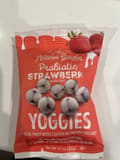 Probiotic Stwarberry Yoggies Nature's Garden · 0.7 oz (20 g) Score 46 out of 100 Okay
Sources
-
Guideline: sugars intake for adults and children
“In both adults and children, WHO recommends reducing the intake of free sugars to less than 10% of total energy intake”
who.int
-
Dietary Guidelines for Americans, 2025–2030
“Limit foods and beverages that include artificial flavors, petroleum-based dyes, artificial preservatives, and low-calorie non-nutritive sweeteners.”
cdn.realfood.gov
-
Added and free sugars should be as low as possible
“Sugar consumption is a known cause of dental caries.”
efsa.europa.eu
-
“replacement of saturated fat in the diet with linoleic acid effectively lowers serum cholesterol but does not support the hypothesis that this translates to a lower risk of death from coronary heart disease or all causes.”
doi.org
-
“These data provide support for current recommendations to replace saturated fat with polyunsaturated fat for primary prevention of CHD.”
doi.org
-
Saturated fatty acid and trans-fatty acid intake for adults and children: WHO guideline
“WHO recommends that adults and children reduce saturated fatty acid intake to 10% of total energy intake (strong recommendation).”
who.int
-
“Table 3: Criteria for drinks (per 100ml)”
assets.publishing.service.gov.uk