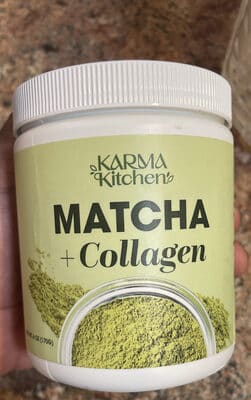
Dietary supplements
Karma Kitchen Matcha + Collagen
6 oz
Score
- Contains non-nutritive sweeteners
- Contains caffeine
Why it scores 96
Karma Kitchen Matcha + Collagen scores 96 out of 100 (Excellent) under GoodSwap’s published rules. What moved the score most:
- minus 1 points Collagen: An ingredient typical of ultra-processed foods (NOVA group 4). Info
- minus 1 points Modified starch: An additive class typical of ultra-processed foods (NOVA group 4). Info
- minus 1 points Silicon dioxide: An additive class typical of ultra-processed foods (NOVA group 4). Info
Every line of the math is on The Receipt below, with its evidence tier and sources.
The Receipt
Matcha + Collagen
Ingredients
- Collagen minus 1 points
- Modified starch minus 1 points
- Silicon dioxide minus 1 points
- Natural flavors minus 0.5 points
- Stevia (steviol glycosides) minus 0.5 points
100 − 4 = 96
Nutrition per 100 g
| Energy | 357 kcal |
|---|---|
| Fat | 0 g |
| Saturated fat | 0 g |
| Trans fat | 0 g |
| Carbohydrates | 42.9 g |
| Sugars | 0 g |
| Added sugars | 0 g |
| Fiber | 7.1 g |
| Protein | 50 g |
| Salt | 0.3 g |
Serving: 2 tbsp (14 g)
Ingredients
- Collagen Peptides
- Modified Food Starch
- Matcha Green Tea Powder
- Silicon Dioxide (flow agent)
- Natural Flavor
- Stevia Leaf Extract
Label text, as published
Collagen Peptides, Modified Food Starch, Matcha Green Tea Powder, Silicon Dioxide (flow agent), Natural Flavor, Stevia Leaf Extract
Allergens and diets
- Not vegan
- Not vegetarian
- Palm-oil-free
Always check the package: recipes change.
More dietary supplements on GoodSwap
-
 Organic Supergreens Fruits & Vegetables Zena Greens Contains non-nutritive sweetenersContains caffeineCertified organicContains whole grains Score 95 out of 100 Excellent
 -
 Super Orange Flavored Fizzy Drink Mix Emergen-C · 9.1 g Contains added sugarsNo synthetic dyes Score 86 out of 100 Excellent
 -
 Greens and superfoods Bloom · 10.24 oz Contains non-nutritive sweetenersContains caffeineContains whole grains Score 97 out of 100 Excellent
 -
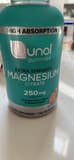 Magnesium Citrate Gummies Qunol Contains added sugarsNo synthetic dyes Score 74 out of 100 Good
 -
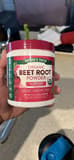 Organic Beet Root Powder Nature's Truth · 6.1 oz Certified organic Score 100 out of 100 Excellent
 -
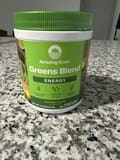 Greens Blend ENERGY Amazing Grass Contains non-nutritive sweeteners Score 97 out of 100 Excellent
Sources
-
21 CFR 101.22 Foods; labeling of spices, flavorings, colorings and chemical preservatives
“whose significant function in food is flavoring rather than nutritional.”
ecfr.gov
-
WHO advises not to use non-sugar sweeteners for weight control in newly released guideline
“The recommendation is based on the findings of a systematic review of the available evidence which suggests that use of NSS does not confer any long-term benefit in reducing body fat in adults or children.”
who.int
-
Dietary Guidelines for Americans, 2025–2030
“Limit foods and beverages that include artificial flavors, petroleum-based dyes, artificial preservatives, and low-calorie non-nutritive sweeteners.”
cdn.realfood.gov
-
Spilling the Beans: How Much Caffeine is Too Much?
“For most adults, the FDA has cited 400 milligrams* a day — that's about two to three 12-fluid-ounce cups of coffee — as an amount not generally associated with negative effects.”
fda.gov
-
Regulation (EU) No 1169/2011, Annex III point 4.1 (beverages with high caffeine content)
“‘High caffeine content. Not recommended for children or pregnant or breast-feeding women’”
eur-lex.europa.eu