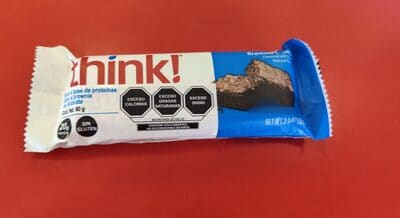
Protein bars
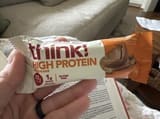
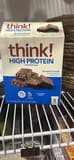
Think! High Protein Protein Bar
141603637
Score
- Contains sugar alcohols
- Contains seed oils
Why it scores 94
Think! High Protein Protein Bar scores 94 out of 100 (Excellent) under GoodSwap’s published rules. What moved the score most:
- minus 1 points Protein blend (unspecified): An ingredient typical of ultra-processed foods (NOVA group 4). Info
- minus 1 points Soy protein isolate / concentrate: An ingredient typical of ultra-processed foods (NOVA group 4). Info
- minus 1 points Caseinate: An ingredient typical of ultra-processed foods (NOVA group 4). Info
Every line of the math is on The Receipt below, with its evidence tier and sources.
The Receipt
High Protein Protein Bar
Ingredients
- Protein blend (unspecified) minus 1 points
- Soy protein isolate / concentrate minus 1 points
- Caseinate minus 1 points
- Whey protein concentrate / isolate minus 0.5 points
- Maltitol minus 0.5 points
- Glycerin minus 0.5 points
- Sunflower oil minus 0.5 points
- Lecithin minus 0.5 points
- Natural flavors minus 0.5 points
100 − 6 = 94
Nutrition per 100 g
| Energy | 383 kcal |
|---|---|
| Fat | 13.3 g |
| Saturated fat | 5 g |
| Trans fat | 0 g |
| Carbohydrates | 38.3 g |
| Sugars | 0 g |
| Added sugars | 0 g |
| Fiber | 1.7 g |
| Protein | 33.3 g |
| Salt | 0.8 g |
Serving: 1 bar (60 g)
Ingredients
- PROTEIN BLEND (SOY PROTEIN ISOLATE, CALCIUM CASEINATE, WHEY PROTEIN ISOLATE)
- MALTITOL SYRUP
- VEGETABLE GLYCERIN
- WATER
- ALMOND BUTTER
- COCOA BUTTER
- ALKALIZED COCOA
- CHOCOLATE
- SUNFLOWER OIL
- LECITHIN
- SODIUM CASEINATE
- NATURAL FLAVOR
- TAPIOCA STARCH
- MILK FAT
- SALT
Label text, as published
PROTEIN BLEND (SOY PROTEIN ISOLATE, CALCIUM CASEINATE, WHEY PROTEIN ISOLATE), MALTITOL SYRUP, VEGETABLE GLYCERIN, WATER, ALMOND BUTTER, COCOA BUTTER, ALKALIZED COCOA, CHOCOLATE, SUNFLOWER OIL, LECITHIN, SODIUM CASEINATE, NATURAL FLAVOR, TAPIOCA STARCH, MILK FAT, SALT.
Allergens and diets
Contains: Milk, Tree nuts, Soy
- Not vegan
- Not palm-oil-free
Always check the package: recipes change.
More protein bars on GoodSwap
-
 Blueberry RXBAR RXBAR · 52 g Ultra-processedHigh in sugarNo additives Score 64 out of 100 Good
 -
 Iq Bar 18 Protein Bar Variety Pack IQ Bar · 816 g Seed-oil free Score 97 out of 100 Excellent
 -
 Protein Bars RXBAR Score 99 out of 100 Excellent
 -
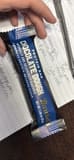 Chocolate Dough Barebells · 55 g Contains non-nutritive sweetenersContains sugar alcoholsContains seed oils Score 90 out of 100 Excellent
 -
 Peanut Butter Dark Chocolate Kind · 1 bar (40 g) Ultra-processedHigh in saturated fatContains added sugarsContains palm oil Score 9 out of 100 Bad
 -
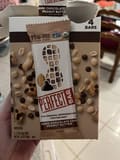 Perfect Bar Perfect Bar · 2.3 oz/65 g Contains added sugarsCertified organicSeed-oil free Score 71 out of 100 Good
More from Think!

Sources
-
Regulation (EU) No 1169/2011, Annex III point 2.4 (foods with more than 10 % added polyols)
“‘excessive consumption may produce laxative effects’.”
eur-lex.europa.eu
-
“replacement of saturated fat in the diet with linoleic acid effectively lowers serum cholesterol but does not support the hypothesis that this translates to a lower risk of death from coronary heart disease or all causes.”
doi.org
-
“These data provide support for current recommendations to replace saturated fat with polyunsaturated fat for primary prevention of CHD.”
doi.org
-
21 CFR 101.22 Foods; labeling of spices, flavorings, colorings and chemical preservatives
“whose significant function in food is flavoring rather than nutritional.”
ecfr.gov