Canned vegetables
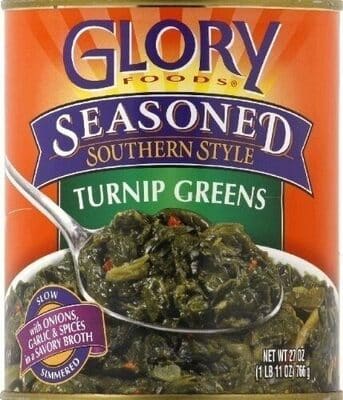
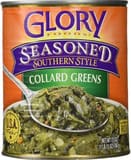
Glory Foods Greens turnip
27 oz/1.11 lb/766 g
Score
- Ultra-processed
- Contains added sugars
Why it scores 26
Glory Foods Greens turnip scores 26 out of 100 (Poor) under GoodSwap’s published rules. What moved the score most:
- minus 20 points Sugar: An added sugar. Strong
- minus 20 points Bacon: IARC classifies processed meat (cured, salted, smoked or fermented) as Group 1, based on colorectal cancer; each 50 g eaten daily is linked to an 18% higher risk. Regulatory
- minus 18 points Ultra-processed (NOVA 4): Classified NOVA 4: made with industrial ingredients and additives. Strong
Every line of the math is on The Receipt below, with its evidence tier and sources.
Better canned vegetables
-
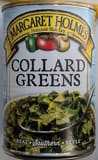 Real Southern Style Collard Greens Margaret Holmes · 397 g Not ultra-processed · No added sugars Score 100 out of 100 , 74 points higher
 -
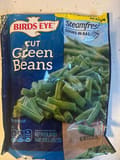 Cut Green Beans Birds Eye · 81 g Not ultra-processed · No added sugars Score 100 out of 100 , 74 points higher
 -
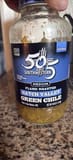 Flame Roasted Hatch Valley Green Chile 505 Southwestern · 40 oz Not ultra-processed · No added sugars Score 79 out of 100 , 53 points higher
 -
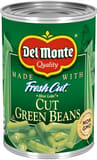 Fresh Cut cut green beans Del Monte · 14.5 oz (411 g) Not ultra-processed · No added sugars Score 94 out of 100 , 68 points higher
 -
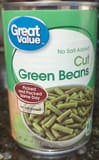 Cut green beans Great Value · 2 Not ultra-processed · No added sugars Score 100 out of 100 , 74 points higher
The same kind of product, at least 10 points higher, sold in the US. Never paid placements.
The Receipt
Greens turnip
Ingredients
- Sugar minus 20 points
- Bacon minus 20 points
- Brown sugar minus 10 points
Processing
- Ultra-processed (NOVA 4) minus 18 points
- 2 kinds of ultra-processing markers minus 1.5 points
Nutrition per 100 g
- Salt 1.4 g / 100 g minus 5 points
100 − 74.5 = 25.5 → 26
Can’t score above 79. Contains sugar, an ingredient of high concern. [1][2][3][4][5]
Nutrition per 100 g
| Energy | 31 kcal |
|---|---|
| Fat | 0.8 g |
| Saturated fat | 0 g |
| Trans fat | 0 g |
| Carbohydrates | 5.5 g |
| Sugars | 3.1 g |
| Added sugars | 2.3 g |
| Fiber | 2.3 g |
| Protein | 0.8 g |
| Salt | 1.4 g |
Serving: 0.5 cup (128 g)
Ingredients
- TURNIP GREENS
- WATER
- SUGAR (high concern)
- SALT
- HYDROLYZED SOY PROTEIN
- DRIED ONION
- SPICE
- NATURAL FLAVOR
- DRIED RED BELL PEPPER
- BACON FAT (high concern)
- SODIUM DIACETATE FOR VINEGAR FLAVOR
- NATURAL SMOKE FLAVOR
- GARLIC POWDER
- CARMEL COLOR (not recognized)
- PORK BROTH
- COUNTRY HAM BROTH
- BROWN SUGAR (high concern)
- PORK
- YEAST EXTRACT
Label text, as published
TURNIP GREENS, WATER, LESS THAN 2% OF: SUGAR, SALT, HYDROLYZED SOY PROTEIN, DRIED ONION, SPICE, NATURAL FLAVOR, DRIED RED BELL PEPPER, BACON FAT, SODIUM DIACETATE FOR VINEGAR FLAVOR, NATURAL SMOKE FLAVOR, GARLIC POWDER, CARMEL COLOR, PORK BROTH, COUNTRY HAM BROTH, BROWN SUGAR, PORK, YEAST EXTRACT.
Allergens and diets
Contains: Soy
- Not vegan
- Not vegetarian
- Palm-oil-free
Always check the package: recipes change.
More canned vegetables on GoodSwap
-
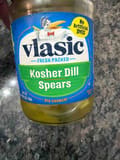 Kosher Dill Spears Vlasic · 24 fl oz Ultra-processedHigh in saltContains emulsifiers studied for gut effectsMay contain traces of 1,4-dioxane Score 58 out of 100 Okay
 - Green Chiles Fire Roasted & Peeled Great Value · 4 oz/113 g Score 87 out of 100 Excellent
-
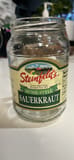 Home Style Sauerkraut Steinfeld's High in salt Score 65 out of 100 Good
 -
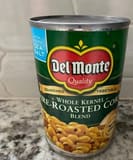 Fire-Roasted Corn Blend Del Monte · 14.75 oz/418 g Ultra-processed Score 70 out of 100 Good
 -
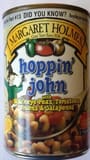 Hoppin' John with Blackeye Peas, Peppers and Onions Margaret Holmes · 14.5 oz/411 g Contains added sugars Score 71 out of 100 Good
More from Glory Foods
Sources
-
Guideline: sugars intake for adults and children
“In both adults and children, WHO recommends reducing the intake of free sugars to less than 10% of total energy intake”
who.int
-
Dietary Guidelines for Americans, 2025–2030
“Limit foods and beverages that include artificial flavors, petroleum-based dyes, artificial preservatives, and low-calorie non-nutritive sweeteners.”
cdn.realfood.gov
-
Added and free sugars should be as low as possible
“Sugar consumption is a known cause of dental caries.”
efsa.europa.eu
-
IARC Monographs evaluate consumption of red meat and processed meat (Press Release No. 240)
“Processed meat was classified as carcinogenic to humans (Group 1), based on sufficient evidence in humans that the consumption of processed meat causes colorectal cancer.”
iarc.who.int
-
“For adults, WHO recommends less than 2000 mg/day of sodium (equivalent to less than 5 g/day salt), or just under a teaspoon.”
who.int
-
“Greater exposure to ultra-processed food was associated with a higher risk of adverse health outcomes, especially cardiometabolic, common mental disorder, and mortality outcomes.”
doi.org