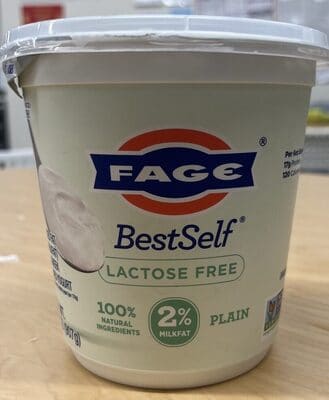
Greek-style yogurts
FAGE BestSelf Plain Yogurt
Score
Why it scores 100
FAGE BestSelf Plain Yogurt scores 100 out of 100 (Excellent) under GoodSwap’s published rules. What moved the score most:
- plus 5 points Simple whole food: A few low-concern ingredients, minimally processed. Info
- plus 4 points Protein 17 g / 100 g: A good source of protein. Info
- minus 1.5 points Saturated fat 2.5 g / 100 g: Contains some saturated fat. Counted at half for this whole-food category. Strong
Every line of the math is on The Receipt below, with its evidence tier and sources.
The Receipt
Plain Yogurt
Nutrition per 100 g
- Saturated fat 2.5 g / 100 g minus 1.5 points
- Protein 17 g / 100 g plus 4 points
Bonuses
- Simple whole food plus 5 points
100 + 7.5 = 107.5 → 100
Nutrition per 100 g
| Energy | 120 kcal |
|---|---|
| Fat | 3.5 g |
| Saturated fat | 2.5 g |
| Trans fat | 0 g |
| Carbohydrates | 6 g |
| Sugars | 6 g |
| Added sugars | 0 g |
| Fiber | 0 g |
| Protein | 17 g |
| Salt | 0.1 g |
Serving: 0.75 cup (170 g)
Ingredients
- Grade A Pasteurized Skimmed Milk and Cream
- Cultures
- Lactase Enzyme ( Ingredient Not in Regular Yogurt)
- Live Active Yogurt Cultures (L. Bulgaricus, S. Thermophilus, L. Acidophilus, Bifidus, L. Casei)
Label text, as published
Grade A Pasteurized Skimmed Milk and Cream, Cultures, Lactase Enzyme ( Ingredient Not in Regular Yogurt). Live Active Yogurt Cultures (L. Bulgaricus, S. Thermophilus, L. Acidophilus, Bifidus, L. Casei).
Allergens and diets
Contains: Milk
- Not vegan
- Palm-oil-free
Always check the package: recipes change.
More Greek-style yogurts on GoodSwap
-
 Greek Yogurt Nonfat Plain Chobani · 32 oz Score 100 out of 100 Excellent
 -
 organic GREEK YOGURT plain Kirkland Signature · 1.36 kg (48 oz) Certified organic Score 100 out of 100 Excellent
 -
 Total 2% Milkfat Fage · 32 oz Score 100 out of 100 Excellent
 -
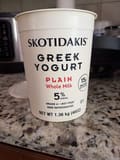 Greek Yogurt Plain Whole Milk Skotidakis · 480 oz Score 100 out of 100 Excellent
 -
 Greek Yogurt Plain Traditional The Greek Gods · 24 oz Ultra-processedHigh in saturated fat Score 77 out of 100 Good
 -
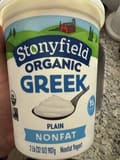 Organic Greek Plain Nonfat Stonyfield Certified organicNo additives Score 100 out of 100 Excellent
Sources
-
Saturated fatty acid and trans-fatty acid intake for adults and children: WHO guideline
“WHO recommends that adults and children reduce saturated fatty acid intake to 10% of total energy intake (strong recommendation).”
who.int
-
Dietary Guidelines for Americans, 2025–2030
“Limit foods and beverages that include artificial flavors, petroleum-based dyes, artificial preservatives, and low-calorie non-nutritive sweeteners.”
cdn.realfood.gov