Candies
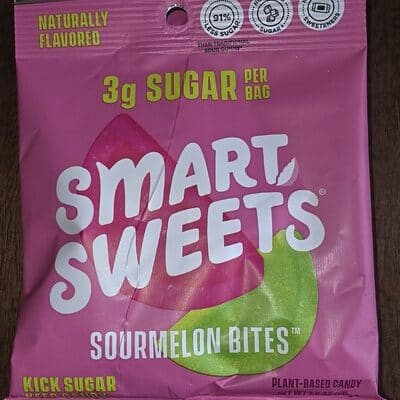
Smart Sweets Sourmelon Bites
50 g
Score
- Ultra-processed
- Contains non-nutritive sweeteners
- Seed-oil free
- No synthetic dyes
Why it scores 61
Smart Sweets Sourmelon Bites scores 61 out of 100 (Good) under GoodSwap’s published rules. What moved the score most:
- minus 18 points Ultra-processed (NOVA 4): Classified NOVA 4: made with industrial ingredients and additives. Strong
- minus 7.5 points 6 kinds of ultra-processing markers: Industrial additive classes found: bulking agent, color (added), flavoring, glazing agent, modified starch and non-nutritive sweetener. Emerging
- plus 4 points Fiber 26 g / 100 g: A good source of fiber. Strong
Every line of the math is on The Receipt below, with its evidence tier and sources.
The Receipt
Sourmelon Bites
Ingredients
- Soluble corn fiber (resistant dextrin) minus 2.5 points
- Allulose minus 2.5 points
- Inulin (chicory root fiber) minus 2.5 points
- Modified starch minus 1.5 points
- Natural flavors minus 1.5 points
- Carnauba wax minus 1.5 points
- Stevia (steviol glycosides) minus 0.5 points
- Monk fruit extract minus 0.5 points
Processing
- Ultra-processed (NOVA 4) minus 18 points
- 6 kinds of ultra-processing markers minus 7.5 points
Nutrition per 100 g
- Sugars 6 g / 100 g minus 3 points
- Salt 0.4 g / 100 g minus 1 points
- Energy 200 kcal / 100 g minus 1 points
- Fiber 26 g / 100 g plus 4 points
100 − 39.5 = 60.5 → 61
Nutrition per 100 g
| Energy | 200 kcal |
|---|---|
| Fat | 0 g |
| Saturated fat | 0 g |
| Trans fat | 0 g |
| Carbohydrates | 84 g |
| Sugars | 6 g |
| Added sugars | 0 g |
| Fiber | 26 g |
| Protein | 0 g |
| Salt | 0.4 g |
Serving: 1 bag (50 g)
Ingredients
- NON-GMO SOLUBLE CORN FIBER
- ALLULOSE
- ISOMALTO-OLIGOSACCHARIDES (VEGETABLE SOURCE)
- LACTIC ACID
- CHICORY ROOT FIBER
- MODIFIED POTATO STARCH
- RICE FLOUR
- FUMARIC ACID
- MALIC ACID
- CITRIC ACID
- NATURAL WATERMELON FLAVOR
- FRUIT AND VEGETABLE JUICE (FOR COLOR)
- COCONUT OIL
- CARNAUBA WAX
- SPIRULINA EXTRACT
- STEVIA LEAF EXTRACT
- MONK FRUIT EXTRACT
Label text, as published
NON-GMO SOLUBLE CORN FIBER, ALLULOSE, ISOMALTO-OLIGOSACCHARIDES (VEGETABLE SOURCE), LACTIC ACID, CHICORY ROOT FIBER, MODIFIED POTATO STARCH, RICE FLOUR, FUMARIC ACID, MALIC ACID, CITRIC ACID, NATURAL WATERMELON FLAVOR, FRUIT AND VEGETABLE JUICE (FOR COLOR), COCONUT OIL, CARNAUBA WAX, SPIRULINA EXTRACT, STEVIA LEAF EXTRACT, MONK FRUIT EXTRACT
Allergens and diets
- Palm-oil-free
Always check the package: recipes change.
More candies on GoodSwap
-
 Dark Chocolate Coconut Bar Unreal · 15 g High in saturated fatContains added sugarsNo additivesSeed-oil free Score 27 out of 100 Poor
 -
 Ice Breakers Cool Mint Hershey · 42 gr Ultra-processedContains sugar alcohols Score 72 out of 100 Good
 -
 Dark Chocolate Peanut Butter Cups Trader Joe's · 16 oz Ultra-processedHigh in sugarHigh in saturated fatContains added sugars Score 2 out of 100 Bad
 -
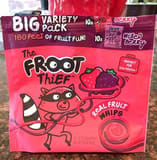 Big Variety Pack The Froot Thief Ultra-processedHigh in sugarContains added sugarsNo synthetic dyes Score 43 out of 100 Okay
 -
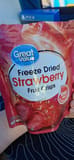 Freeze Dried Strawberry Fruit Crisps Great Value · 1 0Z/28 g High in sugarNo additives Score 79 out of 100 Good
 -
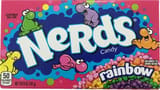 Nerds Candy - Rainbow Nerds · 141 g Dye with an EU warning labelContains synthetic dyesUltra-processedHigh in sugar Score 10 out of 100 Bad
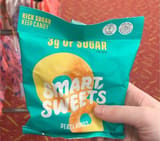
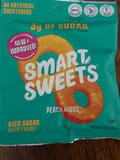
More from Smart Sweets
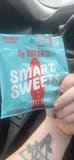

Sources
-
21 CFR 101.22 Foods; labeling of spices, flavorings, colorings and chemical preservatives
“whose significant function in food is flavoring rather than nutritional.”
ecfr.gov
-
WHO advises not to use non-sugar sweeteners for weight control in newly released guideline
“The recommendation is based on the findings of a systematic review of the available evidence which suggests that use of NSS does not confer any long-term benefit in reducing body fat in adults or children.”
who.int
-
Dietary Guidelines for Americans, 2025–2030
“Limit foods and beverages that include artificial flavors, petroleum-based dyes, artificial preservatives, and low-calorie non-nutritive sweeteners.”
cdn.realfood.gov
-
Guideline: sugars intake for adults and children
“In both adults and children, WHO recommends reducing the intake of free sugars to less than 10% of total energy intake”
who.int
-
“For adults, WHO recommends less than 2000 mg/day of sodium (equivalent to less than 5 g/day salt), or just under a teaspoon.”
who.int
-
“Greater exposure to ultra-processed food was associated with a higher risk of adverse health outcomes, especially cardiometabolic, common mental disorder, and mortality outcomes.”
doi.org