Teas
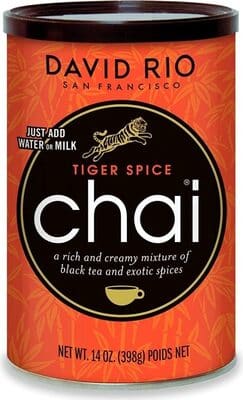
David Rio Tiger spice chai
398 g
Score
- Ultra-processed
- High in sugar
- High in saturated fat
- Contains added sugars
- Contains emulsifiers studied for gut effects
- Contains caffeine
- Seed-oil free
Why it scores 5
David Rio Tiger spice chai scores 5 out of 100 (Bad) under GoodSwap’s published rules. What moved the score most:
- minus 20 points Sugar: An added sugar. Strong
- minus 20 points Corn syrup solids: An added sugar. Strong
- minus 18 points Ultra-processed (NOVA 4): Classified NOVA 4: made with industrial ingredients and additives. Strong
Every line of the math is on The Receipt below, with its evidence tier and sources.
Better tea bags and loose tea
-
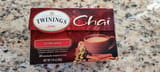 Chai Ultra Spice Tea Twinings · 20 tea bags / 1.41 oz Not ultra-processed · Less sugar Score 79 out of 100 , 74 points higher
 -
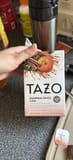 Pumpkin Spice Chai Tazo Less sugar · Less saturated fat Score 83 out of 100 , 78 points higher
 -
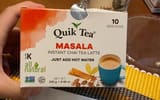 Masala instant chai tea latte 240 g Not ultra-processed · Less saturated fat Score 51 out of 100 , 46 points higher
 -
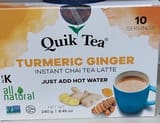 Turmeric ginger instant chai tea latte Quik Tea · 240 g Not ultra-processed · Less saturated fat Score 59 out of 100 , 54 points higher
 -
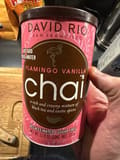 Chai FLAMINGO VANILLA David Rio · 337 g Less sugar · No added sugars Score 47 out of 100 , 42 points higher
The same kind of product, at least 10 points higher, sold in the US. Never paid placements.
The Receipt
Tiger spice chai
Ingredients
- Sugar minus 20 points
- Corn syrup solids minus 20 points
- Honey minus 10 points
Processing
- Ultra-processed (NOVA 4) minus 18 points
- 4 kinds of ultra-processing markers minus 4.5 points
Nutrition per 100 g
- Sugars 64.3 g / 100 g minus 14 points
- Saturated fat 7.1 g / 100 g minus 7 points
- Energy 429 kcal / 100 g minus 2 points
100 − 95.5 = 4.5 → 5
Can’t score above 79. Contains sugar, an ingredient of high concern. [1][2][3]
Can’t score above 79. High in saturated fat and sugars (above the front-of-pack "high" level). [6]
Nutrition per 100 g
| Energy | 429 kcal |
|---|---|
| Fat | 10.7 g |
| Saturated fat | 7.1 g |
| Trans fat | 0 g |
| Carbohydrates | 75 g |
| Sugars | 64.3 g |
| Fiber | 0 g |
| Protein | 3.6 g |
| Salt | 0.2 g |
Serving: 1 serving (28 g)
Ingredients
- CANE SUGAR (high concern)
- COCONUT OIL
- CORN SYRUP SOLIDS (high concern)
- HONEY GRANULES (high concern)
- BLACK TEA POWDER (4%)
- SODIUM CASEINATE (A MILK DERIVATIVE)
- NATURAL FLAVORS
- GROUND CINNAMON
- NATURAL SPICE BLEND
- EMULSIFIER (MONO- AND DIGLYCERIDES) (not recognized)
- STABILIZER (DIPOTASSIUM PHOSPHATE) (not recognized)
- EMULSIFIER (SOY LECITHIN) (not recognized)
Label text, as published
CANE SUGAR, COCONUT OIL, CORN SYRUP SOLIDS, HONEY GRANULES, BLACK TEA POWDER (4%), SODIUM CASEINATE (A MILK DERIVATIVE), NATURAL FLAVORS, GROUND CINNAMON, NATURAL SPICE BLEND, EMULSIFIER (MONO- AND DIGLYCERIDES), STABILIZER (DIPOTASSIUM PHOSPHATE), EMULSIFIER (SOY LECITHIN).
Allergens and diets
Contains: Milk, Soy
- Not vegan
- Palm-oil-free
Always check the package: recipes change.
Packaging
Metal, Plastic
Context only: no points in v1.
More teas on GoodSwap
-
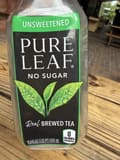 Pure Leaf Unsweetened Real Brewed Tea Pure Leaf · 500 mL Contains caffeine Score 100 out of 100 Excellent
 -
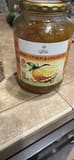 Honey Citron & Ginger Tea Balance Grow · 48 oz Ultra-processedHigh in sugarContains added sugarsContains emulsifiers studied for gut effects Score 18 out of 100 Bad
 -
 Skinny Chai Latte Tazo · 32 fl oz/1 Quart/946 mL Ultra-processedContains added sugarsContains caffeine Score 37 out of 100 Poor
 -
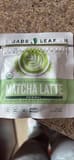 Matcha Latte Jade Leaf · 3.5 oz/100 g High in sugarContains added sugarsContains caffeineCertified organic Score 60 out of 100 Good
 -
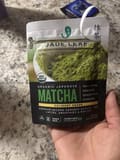 Matcha Tea Jade Leaf · 20 g Contains caffeineNo additives Score 100 out of 100 Excellent
 -
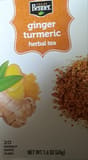 Ginger Turmeric Tea Benner Tea · 1.6 oz / 45 g No additives Score 79 out of 100 Good
Sources
-
Guideline: sugars intake for adults and children
“In both adults and children, WHO recommends reducing the intake of free sugars to less than 10% of total energy intake”
who.int
-
Dietary Guidelines for Americans, 2025–2030
“Limit foods and beverages that include artificial flavors, petroleum-based dyes, artificial preservatives, and low-calorie non-nutritive sweeteners.”
cdn.realfood.gov
-
Added and free sugars should be as low as possible
“Sugar consumption is a known cause of dental caries.”
efsa.europa.eu
-
Saturated fatty acid and trans-fatty acid intake for adults and children: WHO guideline
“WHO recommends that adults and children reduce saturated fatty acid intake to 10% of total energy intake (strong recommendation).”
who.int
-
“Table 3: Criteria for drinks (per 100ml)”
assets.publishing.service.gov.uk
-
“Greater exposure to ultra-processed food was associated with a higher risk of adverse health outcomes, especially cardiometabolic, common mental disorder, and mortality outcomes.”
doi.org
-
Dietary emulsifiers impact the mouse gut microbiota promoting colitis and metabolic syndrome
“carboxymethylcellulose and polysorbate-80, induced low-grade inflammation and obesity/metabolic syndrome in wild-type hosts and promoted robust colitis in mice predisposed to this disorder.”
doi.org
-
“Relative to control subjects, CMC consumption modestly increased postprandial abdominal discomfort and perturbed gut microbiota composition in a way that reduced its diversity.”
doi.org
-
“This study found positive associations between risk of CVD and intake of five individual and two groups of food additive emulsifiers widely used in industrial foods.”
doi.org
-
Spilling the Beans: How Much Caffeine is Too Much?
“For most adults, the FDA has cited 400 milligrams* a day — that's about two to three 12-fluid-ounce cups of coffee — as an amount not generally associated with negative effects.”
fda.gov
-
Regulation (EU) No 1169/2011, Annex III point 4.1 (beverages with high caffeine content)
“‘High caffeine content. Not recommended for children or pregnant or breast-feeding women’”
eur-lex.europa.eu