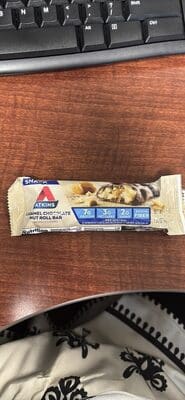
Protein bars
Atkins Protein Snack Bar
Score
- Ultra-processed
- High in saturated fat
- Contains non-nutritive sweeteners
- Contains emulsifiers studied for gut effects
- Contains palm oil
- Seed-oil free
Why it scores 50
Atkins Protein Snack Bar scores 50 out of 100 (Okay) under GoodSwap’s published rules. What moved the score most:
- minus 18 points Ultra-processed (NOVA 4): Classified NOVA 4: made with industrial ingredients and additives. Strong
- minus 9 points Saturated fat 13.6 g / 100 g: Very high in saturated fat. Strong
- minus 7.5 points Sucralose: In a 2022 randomized study, sucralose and saccharin altered the gut microbiome and impaired glucose responses in some people; a 2023 lab study raised questions about its by-product sucralose-6-acetate. Strong
Every line of the math is on The Receipt below, with its evidence tier and sources.
Better protein bars
-
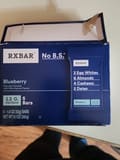 Blueberry RXBAR · 1.83 oz Not ultra-processed · Less saturated fat Score 79 out of 100 , 29 points higher
 -
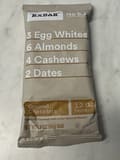 Coconut Chocolate RXBAR · 52 g Not ultra-processed · Less saturated fat Score 79 out of 100 , 29 points higher
 -
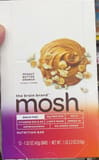 Mosh nutrition bars Not ultra-processed · No non-nutritive sweeteners Score 79 out of 100 , 29 points higher
 -
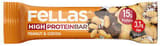 Fellas Peanut and Cocoa High-Protein Bar 45 g Fellas · 45 g Not ultra-processed · Less saturated fat Score 79 out of 100 , 29 points higher
 -
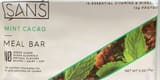 Mint Cacao Meal Bar Sans · 3 oz (85 g) Not ultra-processed · No non-nutritive sweeteners Score 75 out of 100 , 25 points higher
The same kind of product, at least 10 points higher, sold in the US. Never paid placements.
The Receipt
Protein Snack Bar
Ingredients
- Sucralose minus 7.5 points
- Inulin (chicory root fiber) minus 2.5 points
- Whey protein concentrate / isolate minus 2.5 points
- Palm oil minus 1.5 points
- Milk protein concentrate / isolate minus 1.5 points
- Soy lecithin minus 1.5 points
- Natural flavors minus 0.5 points
- Mono- and diglycerides minus 0.5 points
Processing
- Ultra-processed (NOVA 4) minus 18 points
- 5 kinds of ultra-processing markers minus 6 points
Nutrition per 100 g
- Saturated fat 13.6 g / 100 g minus 9 points
- Salt 0.8 g / 100 g minus 3 points
- Energy 409 kcal / 100 g minus 2 points
- Fiber 15.9 g / 100 g plus 4 points
- Protein 15.9 g / 100 g plus 2 points
100 − 50 = 50
Can’t score above 79. High in fat and saturated fat (above the front-of-pack "high" level). [14]
Nutrition per 100 g
| Energy | 409 kcal |
|---|---|
| Fat | 27.3 g |
| Saturated fat | 13.6 g |
| Carbohydrates | 45.5 g |
| Sugars | 4.5 g |
| Added sugars | 0 g |
| Fiber | 15.9 g |
| Protein | 15.9 g |
| Salt | 0.8 g |
Serving: 1 bar (44 g)
Ingredients
- peanut
- malitol (not recognized)
- inulin
- whey protein isolate
- palm kernel and palm oil
- cream
- nonfat milk
- less than 2%: salt
- cocoa powder
- milk protein isolate
- peanut oil
- soy lecithin
- natural flavor
- sucralose (moderate concern)
- mono and diglycerides
- mixed tocopherols (to maintain freshness)
Label text, as published
peanut, malitol, inulin, whey protein isolate, palm kernel and palm oil, cream, nonfat milk, less than 2%: salt, cocoa powder, milk protein isolate, peanut oil, soy lecithin, natural flavor, sucralose, mono and diglycerides, mixed tocopherols (to maintain freshness), contains peanuts, milk, soy, made in a facility that also uses wheat and tree nuts, product size is 44 grams
Allergens and diets
Contains: Milk, Peanuts, Tree nuts, Soy, Gluten
- Not vegan
- Not gluten-free
- Not palm-oil-free
Always check the package: recipes change.
More protein bars on GoodSwap
-
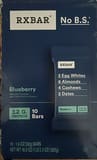 Blueberry RXBAR RXBAR · 52 g Ultra-processedHigh in sugarNo additives Score 64 out of 100 Good
 -
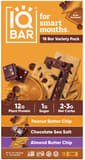 Iq Bar 18 Protein Bar Variety Pack IQ Bar · 816 g Seed-oil free Score 97 out of 100 Excellent
 -
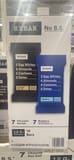 Protein Bars RXBAR Score 99 out of 100 Excellent
 -
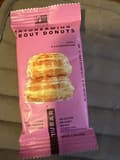 Trubar Daydreaming About Donuts · 1.76 oz Ultra-processedHigh in saturated fatContains added sugarsContains seed oils Score 47 out of 100 Okay
 -
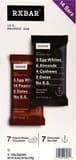 Protein Bar RXBAR Score 99 out of 100 Excellent
 -
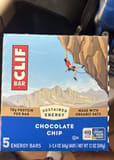 Chocolate Chip Clif Bar · 12 oz Ultra-processedHigh in sugarContains added sugarsContains seed oils Score 15 out of 100 Bad
More from Atkins
-
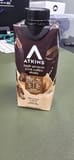 high protein iced coffee shake Mocha Latte Atkins · 11 fl oz/325 mL Score 37 out of 100 Poor
 -
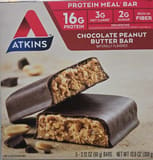 Meal bars Atkins · 10.6 oz/300 g Score 46 out of 100 Okay
 -
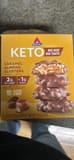 Caramel Almond Clusters Atkins · 0.92 oz Score 40 out of 100 Okay
 -
 Protein Snack Bar Caramel Chocolate Nut Roll Atkins · 7.76 oz/220 g Score 45 out of 100 Okay
Sources
-
Personalized microbiome-driven effects of non-nutritive sweeteners on human glucose tolerance
“As groups, each administered NNS distinctly altered stool and oral microbiome and plasma metabolome, whereas saccharin and sucralose significantly impaired glycemic responses.”
doi.org
-
“Sucralose-6-acetate significantly increased the expression of genes associated with inflammation, oxidative stress, and cancer”
doi.org
-
“EFSA’s experts concluded that the sweetener sucralose (E 955) continues to be safe for consumers for its currently authorised uses as a food additive.”
efsa.europa.eu
-
WHO advises not to use non-sugar sweeteners for weight control in newly released guideline
“The recommendation is based on the findings of a systematic review of the available evidence which suggests that use of NSS does not confer any long-term benefit in reducing body fat in adults or children.”
who.int
-
Dietary Guidelines for Americans, 2025–2030
“Limit foods and beverages that include artificial flavors, petroleum-based dyes, artificial preservatives, and low-calorie non-nutritive sweeteners.”
cdn.realfood.gov
-
Saturated fatty acid and trans-fatty acid intake for adults and children: WHO guideline
“WHO recommends that adults and children reduce saturated fatty acid intake to 10% of total energy intake (strong recommendation).”
who.int
-
Process contaminants in vegetable oils and foods
“The highest levels of GE, as well as 3-MCPD and 2-MCPD (including esters) were found in palm oils and palm fats, followed by other oils and fats.”
efsa.europa.eu
-
“Glycidyl fatty acid esters, expressed as glycidol”
eur-lex.europa.eu
-
21 CFR 101.22 Foods; labeling of spices, flavorings, colorings and chemical preservatives
“whose significant function in food is flavoring rather than nutritional.”
ecfr.gov
-
“This study found positive associations between risk of CVD and intake of five individual and two groups of food additive emulsifiers widely used in industrial foods.”
doi.org
-
Re-evaluation of mono- and di-glycerides of fatty acids (E 471) as food additives
“The available studies did not raise any concern with regard to genotoxicity.”
doi.org
-
“For adults, WHO recommends less than 2000 mg/day of sodium (equivalent to less than 5 g/day salt), or just under a teaspoon.”
who.int
-
“Table 3: Criteria for drinks (per 100ml)”
assets.publishing.service.gov.uk
-
“Greater exposure to ultra-processed food was associated with a higher risk of adverse health outcomes, especially cardiometabolic, common mental disorder, and mortality outcomes.”
doi.org
-
Dietary emulsifiers impact the mouse gut microbiota promoting colitis and metabolic syndrome
“carboxymethylcellulose and polysorbate-80, induced low-grade inflammation and obesity/metabolic syndrome in wild-type hosts and promoted robust colitis in mice predisposed to this disorder.”
doi.org
-
“Relative to control subjects, CMC consumption modestly increased postprandial abdominal discomfort and perturbed gut microbiota composition in a way that reduced its diversity.”
doi.org