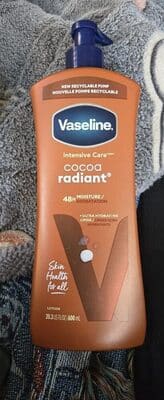
Cosmetic products
Vaseline Intensive Care Cocoa Radiant 48H Moisture/ Hydration Lotion
Score
- Contains parabens
- Contains fragrance
- May contain traces of 1,4-dioxane
Why it scores 86
Vaseline Intensive Care Cocoa Radiant 48H Moisture/ Hydration Lotion scores 86 out of 100 (Excellent) under GoodSwap’s published rules. What moved the score most:
- minus 5 points Fragrance (parfum): A single label term covers an undisclosed mixture. Regulatory
- minus 5 points Propylparaben: The EU limits propyl- and butylparaben (0.14% combined) and bans them in leave-on nappy-area products for children under 3 because a risk could not be excluded. Regulatory
- minus 1 points Polyethylene glycols (PEG) and ethoxylates: Ingredients named with PEG, -eth- or -oxynol- can carry trace 1,4-dioxane from manufacturing (IARC Group 2B). Strong
Every line of the math is on The Receipt below, with its evidence tier and sources.
Better lotions and moisturizers
-
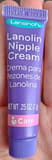 Lanolin Nipple Cream Lansinoh · 7 g No parabens · No fragrance Score 100 out of 100 , 14 points higher
 -
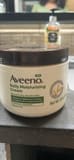 Daily Moisturizing Cream Aveeno No parabens · No fragrance Score 100 out of 100 , 14 points higher
 -
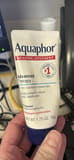 Healing ointment Aquaphor No parabens · No fragrance Score 99 out of 100 , 13 points higher
 -
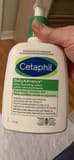 DailyAdvance Ultra Hydrating Lotion Cetaphil No parabens · No fragrance Score 99 out of 100 , 13 points higher
 -
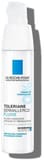 Toleriane Dermallergo Fluid La Roche-Posay No parabens · No fragrance Score 99 out of 100 , 13 points higher
The same kind of product, at least 10 points higher, sold in the US. Never paid placements.
The Receipt
Intensive Care Cocoa Radiant 48H Moisture/ Hydration Lotion
Ingredients
- Fragrance (parfum) minus 5 points
- Propylparaben minus 5 points
- Polyethylene glycols (PEG) and ethoxylates minus 1 points
- Methylparaben minus 0.5 points
- Coumarin minus 0.5 points
- Geraniol minus 0.5 points
- Hexyl cinnamal minus 0.5 points
- Hydroxycitronellal minus 0.5 points
- Linalool minus 0.5 points
100 − 14 = 86
Ingredients
- /INGREDIENS: VALE LAU GENERA AMERO LATUM (not recognized)
- SIEARIC ACID (not recognized)
- DIME HICONE (not recognized)
- BUTYLENE GLYCOE GLYCOL SABAKALE PEG-100 STEARATE ISOPROPYL MYRISTAIL
- HELIANTHUS ZINNUUS SUNFLOWER SEED OIL
- COCOS NUCIFERA (COCONUT) OIL
- GLYCERYL STEARATE THEOBROMA CACAO COCOA) SEED BUTTER
- PHENOXYETHANOL CETYL ALEOHOL MAGNESIUM ALUMINUM SILICATE
- FRAGRANCE (PARFUM) (moderate concern)
- METHYLPARABEN
- HYDROXYEIHY CELLULOSE
- XANTHAN GUM
- PROPYLPARABEN (moderate concern)
- DISODIUM EDTA
- STEARAMIDE AMP COUMARIN
- GERANIOL
- HEXYL CINNAMAL
- HYDROXYCITRONELLAL
- LIMONENC (not recognized)
- LINALOOL
- CARAMEL
Label text, as published
/INGREDIENS: VALE LAU GENERA AMERO LATUM, SIEARIC ACID, DIME HICONE, BUTYLENE GLYCOE GLYCOL SABAKALE PEG-100 STEARATE ISOPROPYL MYRISTAIL, HELIANTHUS ZINNUUS SUNFLOWER SEED OIL, COCOS NUCIFERA (COCONUT) OIL, GLYCERYL STEARATE THEOBROMA CACAO COCOA) SEED BUTTER, PHENOXYETHANOL CETYL ALEOHOL MAGNESIUM ALUMINUM SILICATE, FRAGRANCE (PARFUM), METHYLPARABEN, HYDROXYEIHY CELLULOSE, XANTHAN GUM, PROPYLPARABEN, DISODIUM EDTA, STEARAMIDE AMP COUMARIN, GERANIOL, HEXYL CINNAMAL, HYDROXYCITRONELLAL, LIMONENC, LINALOOL, CARAMEL
More cosmetic products on GoodSwap
More from Vaseline
Sources
-
“when their concentration exceeds 0,001 % in leave-on products and 0,01 % in rinse-off products.”
eur-lex.europa.eu
-
Regulation (EC) No 1223/2009 of 30 November 2009 on cosmetic products
“cosmetic products shall not contain any of the following: (a) prohibited substances — prohibited substances listed in Annex II”
eur-lex.europa.eu
-
fda.gov
-
“butylparaben and propylparaben should be prohibited in leave-on cosmetic products designed for application on the nappy area of children below three years.”
eur-lex.europa.eu
-
1,4-Dioxane in Cosmetics: A Manufacturing Byproduct
“1,4-dioxane forms as a byproduct during the manufacturing process of certain cosmetic ingredients.”
fda.gov
-
Agents Classified by the IARC Monographs, Volumes 1–142 (List of Classifications)
monographs.iarc.who.int
-
“for these compounds, the human risk cannot be evaluated.”
eur-lex.europa.eu
-
California AB 2762 (2020), Toxic-Free Cosmetics Act (Health and Safety Code §108980)
“Commencing January 1, 2025, no person or entity shall manufacture, sell, deliver, hold, or offer for sale, in commerce any cosmetic product that contains any of the following intentionally added ingredients”
leginfo.legislature.ca.gov