Canned soups
365 Everyday Value Organic low sodium vegetable broth, vegetable
32 fl oz
Score
- Ultra-processed
- Contains seed oils
- Certified organic
- No additives
Why it scores 88
365 Everyday Value Organic low sodium vegetable broth, vegetable scores 88 out of 100 (Excellent) under GoodSwap’s published rules. What moved the score most:
- minus 18 points Ultra-processed (NOVA 4): Classified NOVA 4: made with industrial ingredients and additives. Strong
- plus 5 points Certified organic: Carries a certified-organic label. Info
- plus 3 points No additives: No food additives in the ingredient list. Info
Every line of the math is on The Receipt below, with its evidence tier and sources.
Better broth, stock and bouillon
-
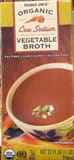 Organic Low Sodium vegetable broth Trader Joe's · 32 fl oz (1 qt) 946 mL Not ultra-processed · No seed oils Score 100 out of 100 , 12 points higher
 -
 Low Sodium Vegetable Broth Kettle and Fire · 32 oz Not ultra-processed · No seed oils Score 100 out of 100 , 12 points higher
 -
 Organic Vegetable Broth - No Salt Added Bonafide Provisions · 32 fl oz Not ultra-processed · No seed oils Score 100 out of 100 , 12 points higher
 -
 Bone broth chicken low sodium Dr. Kellyann · 32 fl oz/1 qt/946 mL Not ultra-processed · No seed oils Score 100 out of 100 , 12 points higher
 -
 Organic Vegetable Broth Bonafide Provisions · 32 fl oz Not ultra-processed · No seed oils Score 99 out of 100 , 11 points higher
The same kind of product, at least 10 points higher, sold in the US. Never paid placements.
The Receipt
Organic low sodium vegetable broth, vegetable
Ingredients
- Sunflower oil minus 2.5 points
Processing
- Ultra-processed (NOVA 4) minus 18 points
Bonuses
- Certified organic plus 5 points
- No additives plus 3 points
100 − 12.5 = 87.5 → 88
Nutrition per 100 g
| Energy | 2 kcal |
|---|---|
| Fat | 0 g |
| Saturated fat | 0 g |
| Trans fat | 0 g |
| Carbohydrates | 0.4 g |
| Sugars | 0.4 g |
| Added sugars | 0.4 g |
| Fiber | 0 g |
| Protein | 0 g |
| Salt | 0.1 g |
Serving: 1 cup (240 ml)
Ingredients
- ORGANIC VEGETABLE BROTH (FILTERED WATER, ORGANIC VEGETABLE FLAVOR ORGANIC CARROT, ORGANIC ONION, ORGANIC CELERY)
- ORGANIC TOMATO PURE
- ORGANIC CARROT JUICE CONCENTRATE
- ORGANIC CELERIAC JUICE CONCENTRATE
- SEA SALT
- ORGANIC ONION PASTE (ORGANIC ONION FLAVOR, ORGANIC SUNFLOWER OIL)
- ORGANIC ONION POWDER
- ORGANIC GARLIC POWDER
Label text, as published
ORGANIC VEGETABLE BROTH (FILTERED WATER, ORGANIC VEGETABLE FLAVOR ORGANIC CARROT, ORGANIC ONION, ORGANIC CELERY]), CONTAINS LESS THAN 2% OF: ORGANIC TOMATO PURE, ORGANIC CARROT JUICE CONCENTRATE, ORGANIC CELERIAC JUICE CONCENTRATE, SEA SALT, ORGANIC ONION PASTE (ORGANIC ONION FLAVOR, ORGANIC SUNFLOWER OIL*), ORGANIC ONION POWDER, ORGANIC GARLIC POWDER.
Allergens and diets
Contains: Celery
- Palm-oil-free
Always check the package: recipes change.
More canned soups on GoodSwap
-
 Minestrone Progresso · 19 oz Ultra-processedContains added sugarsContains seed oilsNo synthetic dyes Score 44 out of 100 Okay
 -
 Chicken Broth Swanson · 32 oz Ultra-processedContains nitrites or nitratesSeed-oil free Score 65 out of 100 Good
 -
 Chicken Broth Swanson · 32 oz Ultra-processedSeed-oil free Score 73 out of 100 Good
 - Organic Low Sodium Chicken Rice Soup Health Valley · 240 g Ultra-processedNo additives Score 85 out of 100 Excellent
- Organic Chicken Bone Broth Bare Bones · 16 oz/1 lb/454 g Ultra-processedCertified organic Score 87 out of 100 Excellent
-
 Organic chicken broth, chicken Organics · 32 oz Ultra-processedCertified organic Score 80 out of 100 Excellent
More from 365 Everyday Value
-
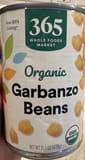 Organic garbanzo beans 365 Everyday Value · 15.5 oz/439 g Score 100 out of 100 Excellent
 -
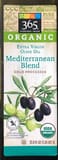 365 Everyday Value, 100% Mediterranean Blend Extra Virgin Olive Oil 365 Everyday Value · 33.8 fl oz/1.05 qt/1 L Score 100 out of 100 Excellent
 -
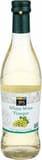 White wine vinegar 365 Everyday Value · 16.9 fl oz/1.05 PT/500 mL Score 100 out of 100 Excellent
 - Bread Crumbs 365 Everyday Value · 15 oz/425 g Score 96 out of 100 Excellent
Sources
-
“replacement of saturated fat in the diet with linoleic acid effectively lowers serum cholesterol but does not support the hypothesis that this translates to a lower risk of death from coronary heart disease or all causes.”
doi.org
-
“These data provide support for current recommendations to replace saturated fat with polyunsaturated fat for primary prevention of CHD.”
doi.org
-
7 CFR 205.102 Use of the term "organic" (National Organic Program)
“Any agricultural product that is sold, labeled, or represented as “100 percent organic,” “organic,” or “made with organic (specified ingredients or food group(s))” must be: (a) Produced in accordance with the requirements specified in § 205.101 or §§ 205.202 through 205.207”
ecfr.gov
-
“Greater exposure to ultra-processed food was associated with a higher risk of adverse health outcomes, especially cardiometabolic, common mental disorder, and mortality outcomes.”
doi.org