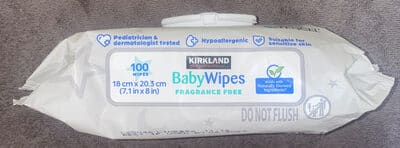
Food
Kirkland Signature BabyWipes
100
Score
- Ultra-processed
Why it scores 70
Kirkland Signature BabyWipes scores 70 out of 100 (Good) under GoodSwap’s published rules. What moved the score most:
- minus 18 points Ultra-processed (NOVA 4): Classified NOVA 4: made with industrial ingredients and additives. Strong
- minus 7.5 points Sodium benzoate: Benzoates can form small amounts of benzene in drinks that also contain ascorbic acid (vitamin C), especially with heat or light. Strong
- minus 2.5 points Xanthan gum: An ingredient class typical of ultra-processed foods (NOVA group 4). Info
Every line of the math is on The Receipt below, with its evidence tier and sources.
The Receipt
BabyWipes
Ingredients
- Sodium benzoate minus 7.5 points
- Xanthan gum minus 2.5 points
- Phenoxyethanol minus 2.5 points
Processing
- Ultra-processed (NOVA 4) minus 18 points
Nutrition
- Nutrition facts unavailable no points
100 − 30.5 = 69.5 → 70
Can’t score above 79. No nutrition facts on file, so we can't confirm excellent.
Ingredients
- water
- coco-glucoside
- glyceryl oleate
- citric acid
- sodium citrate
- tetrasodium glutamate diacetate
- xánthan gum
- phenoxyethanol
- sodium benzoate (moderate concern)
Label text, as published
water, coco-glucoside, glyceryl oleate, citric acid, sodium citrate, tetrasodium glutamate diacetate, xánthan gum, phenoxyethanol, sodium benzoate
Allergens and diets
- Palm-oil-free
Always check the package: recipes change.
More from Kirkland Signature
-
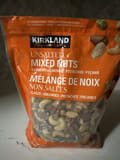 Unsalted Mixed Nuts Kirkland Signature · 1.13 kg Score 100 out of 100 Excellent
 -
 Purified Drinking Water Kirkland Signature · 500 mL Score 100 out of 100 Excellent
 -
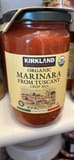 Organic Marinara Kirkland Signature · 680 g Score 99 out of 100 Excellent
 -
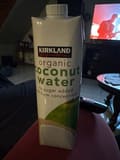 Organic Coconut Water Kirkland Signature Score 100 out of 100 Excellent
Sources
-
“Artificial colours or a sodium benzoate preservative (or both) in the diet result in increased hyperactivity in 3-year-old and 8/9-year-old children in the general population.”
doi.org
-
Re-evaluation of benzyl alcohol (E 1519) as food additive (records the 2016 benzoate re-evaluation)
“derived a group ADI of 5 mg/kg bw per day (expressed as benzoic acid) in accordance with the ADI previously derived by SCF and JECFA”
doi.org
-
Regulation (EC) No 1223/2009 of 30 November 2009 on cosmetic products
“cosmetic products shall not contain any of the following: (a) prohibited substances — prohibited substances listed in Annex II”
eur-lex.europa.eu
-
“Greater exposure to ultra-processed food was associated with a higher risk of adverse health outcomes, especially cardiometabolic, common mental disorder, and mortality outcomes.”
doi.org