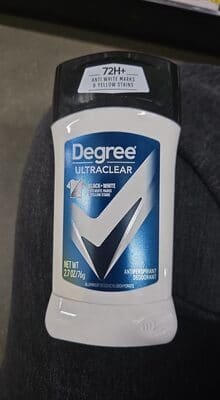
Open beauty facts
Unilever Degree Men Black and white
Score
- Contains fragrance
- May contain traces of 1,4-dioxane
- Contains cyclic silicones (D4/D5/D6)
Why it scores 88
Unilever Degree Men Black and white scores 88 out of 100 (Excellent) under GoodSwap’s published rules. What moved the score most:
- minus 5 points Cyclopentasiloxane (D5): Restricted in the EU (0.1%) in wash-off cosmetics since 2020 and in other cosmetics from 6 June 2027 because they persist and build up in the environment. Regulatory
- minus 5 points Fragrance (parfum): A single label term covers an undisclosed mixture. Regulatory
- minus 1 points Polyethylene glycols (PEG) and ethoxylates: Ingredients named with PEG, -eth- or -oxynol- can carry trace 1,4-dioxane from manufacturing (IARC Group 2B). Strong
Every line of the math is on The Receipt below, with its evidence tier and sources.
Better deodorant
-
 Toms Deodorant No ethoxylated ingredients · No D4, D5 or D6 Score 99 out of 100 , 11 points higher
 -
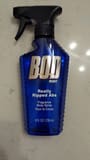 Really Ripped Abs Fragrance Body Spray BOD man · 8 oz 236 mL No fragrance · No ethoxylated ingredients Score 98 out of 100 , 10 points higher
 -
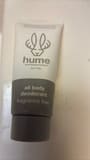 Supernatural All Body Deodorant Hume No fragrance · No ethoxylated ingredients Score 100 out of 100 , 12 points higher
 -
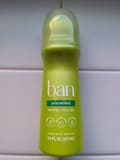 Ban Unscented Invisible Roll-On Ban · 3.5 fl oz (103 mL) No fragrance · No D4, D5 or D6 Score 99 out of 100 , 11 points higher
 -
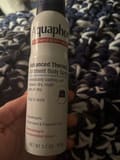 Aquaphor ointment body spray Aquaphor · 3.7 oz 105 g No fragrance · No ethoxylated ingredients Score 100 out of 100 , 12 points higher
The same kind of product, at least 10 points higher, sold in the US. Never paid placements.
The Receipt
Degree Men Black and white
Ingredients
- Cyclopentasiloxane (D5) minus 5 points
- Fragrance (parfum) minus 5 points
- Polyethylene glycols (PEG) and ethoxylates minus 1 points
- Mineral oil and petrolatum minus 0.5 points
- BHT (butylated hydroxytoluene) minus 0.5 points
100 − 12 = 88
Ingredients
- inactive ingrediets cyclopentasiloxane (moderate concern)
- ppg-14 butyl ether
- stearyl alcohol
- polyethylene
- hydrogenated castor oil
- peg-8 distearate
- fragrance (parfum) (moderate concern)
- silica
- caprylic/capric triglyceride
- sodium starch octenylsuccinate
- hydrated silica
- maltodextrin
- gelatin crosspolymer
- hydrolyzed corn starch
- bht
- cellulose gum
- aluminum ziconium (not recognized)
Label text, as published
inactive ingrediets cyclopentasiloxane, ppg-14 butyl ether, stearyl alcohol, polyethylene, hydrogenated castor oil, peg-8 distearate, fragrance (parfum), silica, caprylic/capric triglyceride, sodium starch octenylsuccinate, hydrated silica, maltodextrin, gelatin crosspolymer, hydrolyzed corn starch, bht, cellulose gum, aluminum ziconium
More from Unilever
-
 Caramel Cookie Crunch Unilever · 1 PT/473 mL Score 9 out of 100 Bad
 - Rice & Pasta Blend In A Creamy Chicken Flavored Sauce With Other Natural Flavor Unilever · 66 g Score 41 out of 100 Okay
-
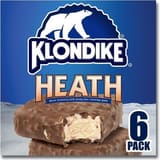 Heath frozen ice cream bars Unilever · 24 fl oz/708 mL Score 5 out of 100 Bad
 -
 Original Beauty Bar Unilever Score 93 out of 100 Excellent
Sources
-
“Shall not be placed on the market in wash-off cosmetic products in a concentration equal to or greater than 0,1 % by weight of either substance, after 31 January 2020.”
eur-lex.europa.eu
-
“for all cosmetic products other than the ones mentioned in paragraph 3(a), paragraph 1 shall apply after 6 June 2027”
eur-lex.europa.eu
-
“when their concentration exceeds 0,001 % in leave-on products and 0,01 % in rinse-off products.”
eur-lex.europa.eu
-
Regulation (EC) No 1223/2009 of 30 November 2009 on cosmetic products
“cosmetic products shall not contain any of the following: (a) prohibited substances — prohibited substances listed in Annex II”
eur-lex.europa.eu
-
fda.gov
-
1,4-Dioxane in Cosmetics: A Manufacturing Byproduct
“1,4-dioxane forms as a byproduct during the manufacturing process of certain cosmetic ingredients.”
fda.gov
-
Agents Classified by the IARC Monographs, Volumes 1–142 (List of Classifications)
monographs.iarc.who.int
-
“the use of Homosalate should be restricted to face products (non-spray and pump spray products) only, up to a maximum concentration of 7,34 %.”
eur-lex.europa.eu