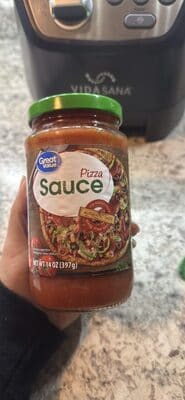
Pizza sauces
Great Value Pizza Sauce
14 oz
Score
- Contains seed oils
- No additives
Why it scores 92
Great Value Pizza Sauce scores 92 out of 100 (Excellent) under GoodSwap’s published rules. What moved the score most:
- minus 3 points Salt 1 g / 100 g: High in salt. Strong
- minus 2.5 points Soybean oil: High in omega-6 linoleic acid. Emerging
- minus 2.5 points Natural flavors: "Natural flavor" is a legal category (21 CFR 101.22(a)(3)): flavor substances from spices, fruits, vegetables, meat, dairy or fermentation. Info
Every line of the math is on The Receipt below, with its evidence tier and sources.
The Receipt
Pizza Sauce
Ingredients
- Soybean oil minus 2.5 points
- Natural flavors minus 2.5 points
Nutrition per 100 g
- Salt 1 g / 100 g minus 3 points
100 − 8 = 92
Nutrition per 100 g
| Energy | 41 kcal |
|---|---|
| Fat | 1.6 g |
| Saturated fat | 0 g |
| Trans fat | 0 g |
| Carbohydrates | 6.3 g |
| Sugars | 3.2 g |
| Added sugars | 0 g |
| Fiber | 1.6 g |
| Protein | 1.6 g |
| Salt | 1 g |
Serving: 1 serving (63 g)
Ingredients
- per INGREDIENTS TOMATO PUREE (WATER, TOMATO PASTE)
- SOYBEAN OIL SALT
- SPICES NATURAL FLAVORS
- OTRIC ACID (not recognized)
Label text, as published
per INGREDIENTS TOMATO PUREE (WATER, TOMATO PASTE), LESS THAN 2% OF: SOYBEAN OIL SALT, SPICES NATURAL FLAVORS, OTRIC ACID
Allergens and diets
- Vegan
- Vegetarian
Always check the package: recipes change.
More pizza sauces on GoodSwap
-
 Pizza Homemade Style Sauce Ragu · 63 g Ultra-processedContains seed oilsNo additives Score 74 out of 100 Good
 -
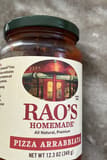 Pizza Arrabbiata Rao's Homemade · 349 g No additivesSeed-oil free Score 92 out of 100 Excellent
 -
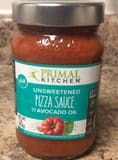 Unsweetened Red Pizza Sauce Primal Kitchen · 16 oz/1 lb/453 g Certified organicSeed-oil free Score 99 out of 100 Excellent
 -
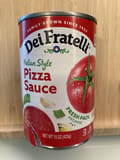 Pizza Sauce Dei Fratelli · 15 oz/425 g Ultra-processedContains added sugarsNo additivesSeed-oil free Score 57 out of 100 Okay
 -
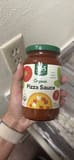 Pizza Sauce 365 Whole Foods Market · 14 oz/397 g Certified organicNo additivesSeed-oil free Score 94 out of 100 Excellent
 -
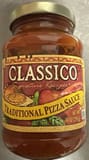 Traditional Pizza Sauce Classico · 14 oz Contains added sugarsNo additivesSeed-oil free Score 67 out of 100 Good
More from Great Value
-
 Purified Drinking Water Great Value · 16.9 fl oz (500 mL) Score 100 out of 100 Excellent
 -
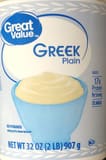 Greek Plain Great Value · 907 g Score 100 out of 100 Excellent
 -
 Buttermilk Ranch Dressing & Dip Great Value · 36 fl oz (1 qt 4 fl oz) 1.06 L Score 27 out of 100 Poor
 -
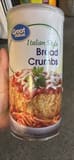 Italian Style Bread Crumbs Great Value · 1pcs Score 45 out of 100 Okay
Sources
-
“replacement of saturated fat in the diet with linoleic acid effectively lowers serum cholesterol but does not support the hypothesis that this translates to a lower risk of death from coronary heart disease or all causes.”
doi.org
-
“These data provide support for current recommendations to replace saturated fat with polyunsaturated fat for primary prevention of CHD.”
doi.org
-
21 CFR 101.22 Foods; labeling of spices, flavorings, colorings and chemical preservatives
“whose significant function in food is flavoring rather than nutritional.”
ecfr.gov
-
“For adults, WHO recommends less than 2000 mg/day of sodium (equivalent to less than 5 g/day salt), or just under a teaspoon.”
who.int