Canned soups
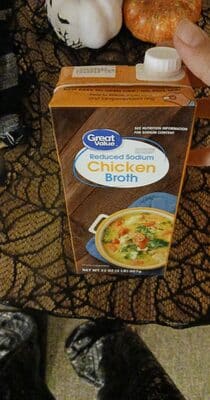
Great Value Chicken Broth
32 oz
Score
- Ultra-processed
- Contains nitrites or nitrates
- Seed-oil free
Why it scores 65
Great Value Chicken Broth scores 65 out of 100 (Good) under GoodSwap’s published rules. What moved the score most:
- minus 18 points Ultra-processed (NOVA 4): Classified NOVA 4: made with industrial ingredients and additives. Strong
- minus 7.5 points Cultured celery powder (natural nitrite source): Provides nitrite like synthetic curing salts. Regulatory
- minus 3 points Salt 0.6 g / 100 g: High in salt. Strong
Every line of the math is on The Receipt below, with its evidence tier and sources.
Better broth, stock and bouillon
-
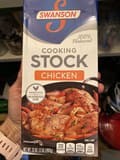 Chicken Stock Swanson · 32 oz Not ultra-processed · No nitrites or nitrates Score 100 out of 100 , 35 points higher
 -
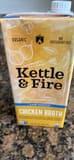 Chicken Broth Kettle & Fire · 32 oz Not ultra-processed · No nitrites or nitrates Score 100 out of 100 , 35 points higher
 -
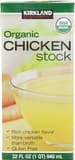 Organic chicken stock Kirkland · 32 fl oz Not ultra-processed · No nitrites or nitrates Score 100 out of 100 , 35 points higher
 -
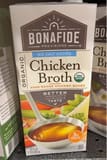 No salt added chicken broth Bonafide Provisions · 32 fl oz Not ultra-processed · No nitrites or nitrates Score 100 out of 100 , 35 points higher
 -
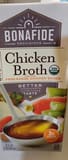 Bona-fide chicken broth Bonafide Provisions · 32 fl oz/1 Quart/946 mL Not ultra-processed · No nitrites or nitrates Score 99 out of 100 , 34 points higher
The same kind of product, at least 10 points higher, sold in the US. Never paid placements.
The Receipt
Chicken Broth
Ingredients
- Cultured celery powder (natural nitrite source) minus 7.5 points
- Natural flavors minus 2.5 points
- Yeast extract minus 2.5 points
Processing
- Ultra-processed (NOVA 4) minus 18 points
- 2 kinds of ultra-processing markers minus 1.5 points
Nutrition per 100 g
- Salt 0.6 g / 100 g minus 3 points
100 − 35 = 65
Nutrition per 100 g
| Energy | 4 kcal |
|---|---|
| Fat | 0 g |
| Saturated fat | 0 g |
| Trans fat | 0 g |
| Carbohydrates | 0 g |
| Sugars | 0 g |
| Added sugars | 0 g |
| Fiber | 0 g |
| Protein | 0.4 g |
| Salt | 0.6 g |
Serving: 1 portion (240 ml)
Ingredients
- CHICKEN BROTH
- FLAVORING (CHICKEN BROTH, NATURAL FLAVOR, WATER, YEAST EXTRACT, CHICKEN FAT, SALT)
- SEA SALT
- YEAST EXTRACT
- NATURAL FLAVOR
- CARROT JUICE CONCENTRATE
- ONION JUICE CONCENTRATE
- CELERY JUICE CONCENTRATE (moderate concern)
Label text, as published
CHICKEN BROTH, CONTAINS LESS THAN 2% OF: FLAVORING (CHICKEN BROTH, NATURAL FLAVOR, WATER, YEAST EXTRACT, CHICKEN FAT, SALT), SEA SALT, YEAST EXTRACT, NATURAL FLAVOR, CARROT JUICE CONCENTRATE, ONION JUICE CONCENTRATE, CELERY JUICE CONCENTRATE.
Allergens and diets
Contains: Celery
- Not vegan
- Not vegetarian
- Palm-oil-free
Always check the package: recipes change.
More canned soups on GoodSwap
-
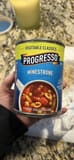 Minestrone Progresso · 19 oz Ultra-processedContains added sugarsContains seed oilsNo synthetic dyes Score 44 out of 100 Okay
 -
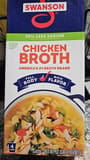 Chicken Broth Swanson · 32 oz Ultra-processedContains nitrites or nitratesSeed-oil free Score 65 out of 100 Good
 -
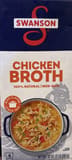 Chicken Broth Swanson · 32 oz Ultra-processedSeed-oil free Score 73 out of 100 Good
 -
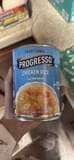 CHICKEN RICE with VEGETABLES Progresso · 19 oz Ultra-processedContains added sugarsNo synthetic dyes Score 42 out of 100 Okay
 -
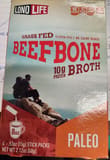 Sipping Bone Broth Grass Fed Beef Lono Life · 2.12 oz/60 g Ultra-processedHigh in saltHigh in saturated fat Score 57 out of 100 Okay
 -
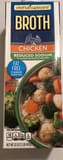 Chicken Broth Reduced Sodium Chef's · 32 oz Ultra-processedHigh in saltContains nitrites or nitratesContains added sugars Score 41 out of 100 Okay
More from Great Value
-
 Purified Drinking Water Great Value · 16.9 fl oz (500 mL) Score 100 out of 100 Excellent
 -
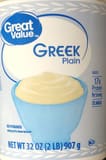 Greek Plain Great Value · 907 g Score 100 out of 100 Excellent
 -
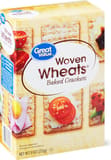 Woven Squares, Whole Grain Snack Crackers Great Value · 255 g Score 86 out of 100 Excellent
 -
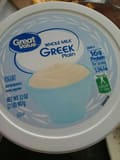 Greek yogurt Great Value · 32 oz Score 100 out of 100 Excellent
Sources
-
Agents Classified by the IARC Monographs, Volumes 1–142 (List of Classifications)
monographs.iarc.who.int
-
“the presence of nitrites and nitrates in foods can give rise to the formation of nitrosamines some of which are carcinogenic.”
eur-lex.europa.eu
-
21 CFR 101.22 Foods; labeling of spices, flavorings, colorings and chemical preservatives
“whose significant function in food is flavoring rather than nutritional.”
ecfr.gov
-
“For adults, WHO recommends less than 2000 mg/day of sodium (equivalent to less than 5 g/day salt), or just under a teaspoon.”
who.int
-
“Greater exposure to ultra-processed food was associated with a higher risk of adverse health outcomes, especially cardiometabolic, common mental disorder, and mortality outcomes.”
doi.org