Sodas
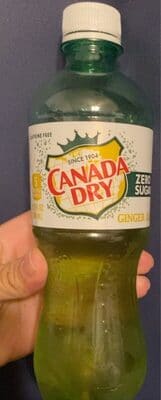
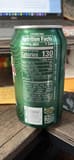
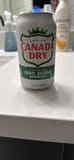
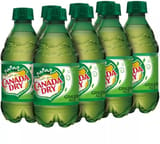
Canada Dry Ginger Ale Zero Sugar
16.9 fl oz
Score
- Ultra-processed
- Contains non-nutritive sweeteners
- No synthetic dyes
Why it scores 28
Canada Dry Ginger Ale Zero Sugar scores 28 out of 100 (Poor) under GoodSwap’s published rules. What moved the score most:
- minus 20 points Aspartame: Labels must warn people with phenylketonuria (PKU) because aspartame contains phenylalanine (US and EU). Regulatory
- minus 20 points Caramel color: The FDA says classes III and IV, which can contain 4-MEI, are the most commonly used food color additives by volume. Regulatory
- minus 18 points Ultra-processed (NOVA 4): Classified NOVA 4: made with industrial ingredients and additives. Strong
Every line of the math is on The Receipt below, with its evidence tier and sources.
Better sodas
-
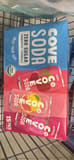 Zero Sugar Soda Cove Not ultra-processed · No aspartame Score 79 out of 100 , 51 points higher
 -
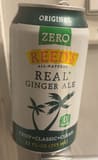 Zero Real Ginger Ale Reed's · 12 fl oz No aspartame · No caramel color Score 65 out of 100 , 37 points higher
 -
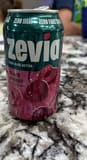 Black Cherry Soda Zero Sugar Zevia LLC · 12 fl oz/355 mL No aspartame · No caramel color Score 76 out of 100 , 48 points higher
 -
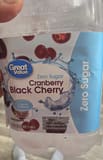 Zero Sugar Cranberry Black Cherry Great Value · 64 oz No aspartame · No caramel color Score 64 out of 100 , 36 points higher
 -
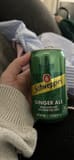 Ginger Ale Schweppes Not ultra-processed · No non-nutritive sweeteners Score 79 out of 100 , 51 points higher
The same kind of product, at least 10 points higher, sold in the US. Never paid placements.
The Receipt
Ginger Ale Zero Sugar
Ingredients
- Aspartame minus 20 points
- Caramel color minus 20 points
- Sodium benzoate minus 7.5 points
- Acesulfame potassium (Ace-K) minus 2.5 points
Processing
- Ultra-processed (NOVA 4) minus 18 points
- 4 kinds of ultra-processing markers minus 4.5 points
100 − 72.5 = 27.5 → 28
Can’t score above 79. Contains aspartame, an ingredient of high concern. [1][2][3][4][5][6][7][8][9][10][11][12][13]
Nutrition per 100 ml
| Energy | 1 kcal |
|---|---|
| Fat | 0 g |
| Saturated fat | 0 g |
| Carbohydrates | 0 g |
| Sugars | 0 g |
| Added sugars | 0 g |
| Fiber | 0 g |
| Protein | 0 g |
| Salt | 0.1 g |
Serving: 500 ml
Ingredients
- CARBONATED WATER
- GINGER EXTRACT
- NATURAL FLAVORS
- CITRIC ACID
- MALIC ACID
- SODIUM CITRATE
- SODIUM BENZOATE (PRESERVATIVE) (moderate concern)
- CALCIUM DISODIUM EDTA (TO PROTECT FLAVOR)
- ASPARTAME (high concern)
- ACESULFAME (moderate concern)
- POTASSIUM
- CARAMEL COLOR (high concern)
Label text, as published
CARBONATED WATER, LESS THAN 2% OF: GINGER EXTRACT, NATURAL FLAVORS, CITRIC ACID, MALIC ACID, SODIUM CITRATE, SODIUM BENZOATE (PRESERVATIVE), CALCIUM DISODIUM EDTA (TO PROTECT FLAVOR), ASPARTAME, ACESULFAME, POTASSIUM, CARAMEL COLOR
Allergens and diets
- Palm-oil-free
Always check the package: recipes change.
More sodas on GoodSwap
-
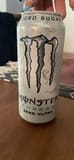 Zero Ultra Monster Energy · 1 can (16 oz) Ultra-processedContains non-nutritive sweetenersContains sugar alcoholsContains caffeine Score 51 out of 100 Okay
 -
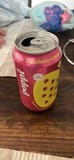 Strawberry Lemonade Prebiotic Soda Poppi · 355 mL / 12 oz Ultra-processedContains non-nutritive sweetenersContains added sugars Score 49 out of 100 Okay
 -
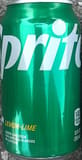 Soda Lemon-lime Sprite · 12 fl oz (355 mL) Ultra-processedContains added sugars Score 34 out of 100 Poor
 -
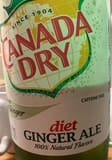 Caffeine free diet ginger ale Canada Dry · 2.1 qt Ultra-processedContains non-nutritive sweetenersNo synthetic dyes Score 28 out of 100 Poor
 -
 Watermelon Lime OLIPOP Contains non-nutritive sweeteners Score 91 out of 100 Excellent
 -
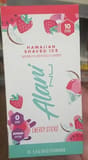 Energy sticks Alani · 58 g Ultra-processedContains non-nutritive sweetenersContains sugar alcoholsContains caffeine Score 42 out of 100 Okay
More from Canada Dry
Sources
-
Regulation (EU) No 1169/2011, Annex III point 2.3 (aspartame)
“‘contains a source of phenylalanine’ shall appear on the label in cases where aspartame/aspartame-acesulfame salt is designated in the list of ingredients by its specific name.”
eur-lex.europa.eu
-
Aspartame hazard and risk assessment results released (IARC, WHO and FAO joint news release)
“Citing “limited evidence” for carcinogenicity in humans, IARC classified aspartame as possibly carcinogenic to humans (IARC Group 2B) and JECFA reaffirmed the acceptable daily intake of 40 mg/kg body weight.”
who.int
-
Aspartame and Other Sweeteners in Food
“The FDA disagrees with IARC’s conclusion that these studies support classifying aspartame as a possible carcinogen to humans.”
fda.gov
-
“Aspartame and its breakdown products are safe for human consumption at current levels of exposure”
efsa.europa.eu
-
Artificial sweeteners and cancer risk: Results from the NutriNet-Santé population-based cohort study
“In this large cohort study, artificial sweeteners (especially aspartame and acesulfame-K), which are used in many food and beverage brands worldwide, were associated with increased cancer risk.”
doi.org
-
WHO advises not to use non-sugar sweeteners for weight control in newly released guideline
“The recommendation is based on the findings of a systematic review of the available evidence which suggests that use of NSS does not confer any long-term benefit in reducing body fat in adults or children.”
who.int
-
Dietary Guidelines for Americans, 2025–2030
“Limit foods and beverages that include artificial flavors, petroleum-based dyes, artificial preservatives, and low-calorie non-nutritive sweeteners.”
cdn.realfood.gov
-
Questions & Answers About 4-MEI
“Based on current science, the FDA has no reason to believe that there are any immediate or short-term health risks presented by 4-MEI at the levels expected in food.”
fda.gov
-
Agents Classified by the IARC Monographs, Volumes 1–142 (List of Classifications)
monographs.iarc.who.int
-
Proposition 65 List of Chemicals Known to the State to Cause Cancer or Reproductive Toxicity
“The date refers to the initial appearance of the chemical on the list.”
oehha.ca.gov
-
“Artificial colours or a sodium benzoate preservative (or both) in the diet result in increased hyperactivity in 3-year-old and 8/9-year-old children in the general population.”
doi.org
-
Re-evaluation of benzyl alcohol (E 1519) as food additive (records the 2016 benzoate re-evaluation)
“derived a group ADI of 5 mg/kg bw per day (expressed as benzoic acid) in accordance with the ADI previously derived by SCF and JECFA”
doi.org
-
Re-evaluation of acesulfame K (E 950) as food additive (plain language summary)
“The acceptable daily intake (ADI) considered safe for all population groups was set at 15 mg/kg body weight (bw) per day.”
efsa.europa.eu
-
“Greater exposure to ultra-processed food was associated with a higher risk of adverse health outcomes, especially cardiometabolic, common mental disorder, and mortality outcomes.”
doi.org