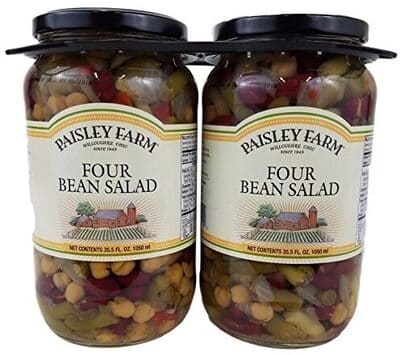
Prepared salads
Paisley Farm Four Bean Salad
1 L
Score
- Ultra-processed
- Contains added sugars
- No additives
Why it scores 36
Paisley Farm Four Bean Salad scores 36 out of 100 (Poor) under GoodSwap’s published rules. What moved the score most:
- minus 20 points Sugar: An added sugar. Strong
- minus 20 points Dextrose: An added sugar. Strong
- minus 18 points Ultra-processed (NOVA 4): Classified NOVA 4: made with industrial ingredients and additives. Strong
Every line of the math is on The Receipt below, with its evidence tier and sources.
The Receipt
Four Bean Salad
Ingredients
- Sugar minus 20 points
- Dextrose minus 20 points
Processing
- Ultra-processed (NOVA 4) minus 18 points
Nutrition per 100 g
- Sugars 11 g / 100 g minus 5 points
- Salt 0.7 g / 100 g minus 3 points
- Fiber 5 g / 100 g plus 2 points
100 − 64 = 36
Can’t score above 79. Contains sugar, an ingredient of high concern. [1][2][3]
Nutrition per 100 g
| Energy | 110 kcal |
|---|---|
| Fat | 0.5 g |
| Saturated fat | 0 g |
| Trans fat | 0 g |
| Carbohydrates | 24 g |
| Sugars | 11 g |
| Fiber | 5 g |
| Protein | 4 g |
| Salt | 0.7 g |
Serving: 0.5 cup (100 g)
Ingredients
- BEANS (GREEN, KIDNEY, CECI, WAX)
- SUGAR (high concern)
- ONIONS
- VINEGAR
- DEXTROSE (high concern)
- WATER
- RED PEPPERS
- SEA SALT
- SPICE
Label text, as published
BEANS (GREEN, KIDNEY, CECI, WAX), SUGAR, ONIONS, VINEGAR, DEXTROSE, WATER, RED PEPPERS, SEA SALT, SPICE.
Allergens and diets
- Palm-oil-free
Always check the package: recipes change.
More prepared salads on GoodSwap
-
 Mediterranean Crunch Chopped Kit Taylor Farms · 11 oz Ultra-processedContains added sugarsContains seed oilsContains palm oil Score 36 out of 100 Poor
 -
 Chopped Kit Asian Fresh Express · 12.0 oz Ultra-processedContains added sugarsContains seed oils Score 23 out of 100 Poor
 -
 Seaweed Salad Azuma Gourmet · 794 g Dye with an EU warning labelContains synthetic dyesUltra-processedContains added sugars Score 23 out of 100 Poor
 -
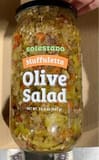 Muffuletta Olive Salad Sotestado High in saltNo additives Score 79 out of 100 Good
 -
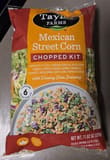 Mexican Street Corn Chopped Kit Taylor Farms Ultra-processed Score 74 out of 100 Good
 -
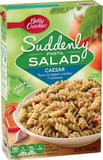 Suddenly Pasta Salad Caesar Betty Crocker · 7.25 oz Ultra-processedHigh in saltContains added sugarsContains seed oils Score 16 out of 100 Bad
Sources
-
Guideline: sugars intake for adults and children
“In both adults and children, WHO recommends reducing the intake of free sugars to less than 10% of total energy intake”
who.int
-
Dietary Guidelines for Americans, 2025–2030
“Limit foods and beverages that include artificial flavors, petroleum-based dyes, artificial preservatives, and low-calorie non-nutritive sweeteners.”
cdn.realfood.gov
-
Added and free sugars should be as low as possible
“Sugar consumption is a known cause of dental caries.”
efsa.europa.eu
-
“For adults, WHO recommends less than 2000 mg/day of sodium (equivalent to less than 5 g/day salt), or just under a teaspoon.”
who.int
-
“Greater exposure to ultra-processed food was associated with a higher risk of adverse health outcomes, especially cardiometabolic, common mental disorder, and mortality outcomes.”
doi.org