Dehydrated beverages
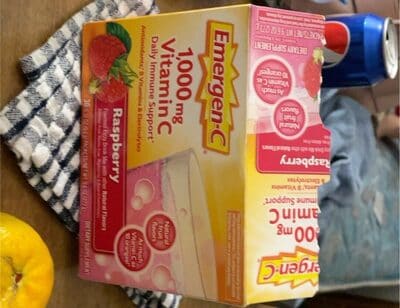
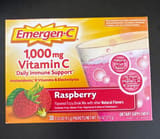
Emergen-C Raspberry
0.32 oz 9.1 g
Score
- Ultra-processed
- High in salt
- Contains added sugars
Why it scores 31
Emergen-C Raspberry scores 31 out of 100 (Poor) under GoodSwap’s published rules. What moved the score most:
- minus 20 points Sugar: An added sugar. Strong
- minus 20 points Fructose: An added sugar. Strong
- minus 18 points Ultra-processed (NOVA 4): Classified NOVA 4: made with industrial ingredients and additives. Strong
Every line of the math is on The Receipt below, with its evidence tier and sources.
The Receipt
Raspberry
Ingredients
- Sugar minus 20 points
- Fructose minus 20 points
- Maltodextrin minus 2.5 points
Processing
- Ultra-processed (NOVA 4) minus 18 points
Nutrition per 100 g
- Salt 27.2 g / 100 g minus 9 points
100 − 69.5 = 30.5 → 31
Can’t score above 79. Contains sugar, an ingredient of high concern. [1][2][3]
Can’t score above 79. High in salt (above the front-of-pack "high" level). [6]
Nutrition per 100 g
| Fat | 0 g |
|---|---|
| Saturated fat | 0 g |
| Trans fat | 0 g |
| Sugars | 0 g |
| Added sugars | 0 g |
| Fiber | 0 g |
| Protein | 0 g |
| Salt | 27.2 g |
Serving: 9.1g
Ingredients
Label text, as published
Sugar, Fructose, Citric Acid, Maltodextrin. Contains <2% of: Acacia, Beet Juice Concentrate (color), Caramel Color, Fruit Juice Concentrates (blackberry, raspberry, cherry) (color and flavor), Glycine, L-Aspartic Acid, Malic Acid, Natural Flavors, Rebaudioside A (extracted and purified from natural stevia leaf), Silicon Dioxide, Tartaric Acid. Caffeine-Free Gluten-Free Vegetarian Natural Sweeteners & Flavors Naturally-Sourced Colors
Allergens and diets
- Vegan
- Vegetarian
- Palm-oil-free
Always check the package: recipes change.
More dehydrated beverages on GoodSwap
-
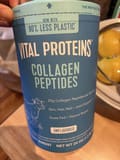 Collagen Peptides Vital Proteins · 24 oz No additives Score 100 out of 100 Excellent
 -
 Milk Chocolate Flavor Swiss Miss · 8.28 oz Ultra-processedHigh in sugarHigh in saturated fatContains added sugars Score 7 out of 100 Bad
 -
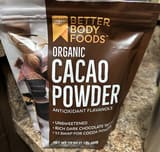 Organic Cacao Powder Better Body Foods · 16 oz Certified organicNo additives Score 100 out of 100 Excellent
 -
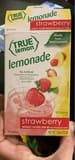 Strawberry Drink Mix True · 1.06 oz/30 g Ultra-processedHigh in sugarContains non-nutritive sweetenersContains added sugars Score 38 out of 100 Poor
 -
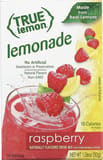 Raspberry lemonade packets in each box True Citrus Co. · 1.06 oz/30 g Ultra-processedHigh in sugarContains non-nutritive sweetenersContains added sugars Score 38 out of 100 Poor
 -
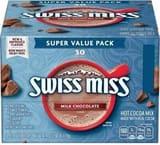 Swiss miss milk chocolate flavored hot cocoa Swiss Miss · 1.38 oz Ultra-processedHigh in sugarHigh in saturated fatContains added sugars Score 7 out of 100 Bad
More from Emergen-C
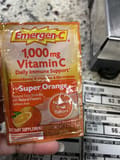
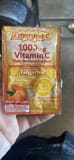
Sources
-
Guideline: sugars intake for adults and children
“In both adults and children, WHO recommends reducing the intake of free sugars to less than 10% of total energy intake”
who.int
-
Dietary Guidelines for Americans, 2025–2030
“Limit foods and beverages that include artificial flavors, petroleum-based dyes, artificial preservatives, and low-calorie non-nutritive sweeteners.”
cdn.realfood.gov
-
Added and free sugars should be as low as possible
“Sugar consumption is a known cause of dental caries.”
efsa.europa.eu
-
“For adults, WHO recommends less than 2000 mg/day of sodium (equivalent to less than 5 g/day salt), or just under a teaspoon.”
who.int
-
“Table 3: Criteria for drinks (per 100ml)”
assets.publishing.service.gov.uk
-
“Greater exposure to ultra-processed food was associated with a higher risk of adverse health outcomes, especially cardiometabolic, common mental disorder, and mortality outcomes.”
doi.org