Food
Sqwincher sqweeze
3 fl oz
Score
- Dye with an EU warning label
- Contains synthetic dyes
- Ultra-processed
- Contains added sugars
- Contains artificial flavors
Why it scores 23
Sqwincher sqweeze scores 23 out of 100 (Poor) under GoodSwap’s published rules. What moved the score most:
- minus 20 points Sugar: An added sugar. Strong
- minus 20 points Dextrose: An added sugar. Strong
- minus 18 points Ultra-processed (NOVA 4): Classified NOVA 4: made with industrial ingredients and additives. Strong
Every line of the math is on The Receipt below, with its evidence tier and sources.
The Receipt
Sqwincher sqweeze
Ingredients
- Sugar minus 20 points
- Dextrose minus 20 points
- Yellow 5 minus 10 points
Processing
- Ultra-processed (NOVA 4) minus 18 points
- 4 kinds of ultra-processing markers minus 4.5 points
Nutrition per 100 g
- Sugars 13.5 g / 100 g minus 5 points
100 − 77.5 = 22.5 → 23
Can’t score above 79. Contains sugar, an ingredient of high concern. [1][2][3][4][5][6][7][8][9]
Nutrition per 100 g
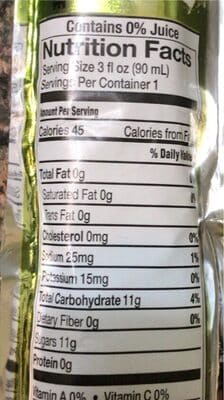
| Energy | 56 kcal |
|---|---|
| Fat | 0 g |
| Saturated fat | 0 g |
| Trans fat | 0 g |
| Carbohydrates | 13.5 g |
| Sugars | 13.5 g |
| Added sugars | 13.5 g |
| Fiber | 0 g |
| Protein | 0 g |
| Salt | 0.1 g |
Serving: 1 portion (89 ml)
Ingredients
- a day is used for general nutrition advice Water (not recognized)
- Sugar (high concern)
- Dextrose (high concern)
- Citric Acid
- Preservatives (Sodium Benzoate, Potassium Sorbate) (not recognized)
- Natural And Artificial Flavor
- Color (Yellow 5, Blue 1) (not recognized)
- Sucrose Acetate Isobutyrate
- Potassium Citrate
- Salt
- Sodium Citrate
- Potassium Phosphate
- Sodium Phosphate
- Calcium Phosphate
- Magnesium Carbonate A product of: Kent Precision Foods Group
- Inc Muscatine (not recognized)
- Latex Free (not recognized)
Label text, as published
Total Fat 0g Saturated Fat 0g Trans Fat 0r % Daily Value 0% 0% 0% 1% 4% 0% Auded Sugars 24% Vitamin D 0mcg Calcium 0mg Iron Omg Potassium 19mg 0% 0% 0% 0% *The % Daily Walue tells you how much a nutrient in a serving of food contributes to a daily diet 2,000 calories a day is used for general nutrition advice Water, Sugar, Dextrose, Citric Acid, Preservatives (Sodium Benzoate, Potassium Sorbate), Natural And Artificial Flavor, Color (Yellow 5, Blue 1), Sucrose Acetate Isobutyrate, Potassium Citrate, Salt, Sodium Citrate, Potassium Phosphate, Sodium Phosphate, Calcium Phosphate, Magnesium Carbonate A product of: Kent Precision Foods Group, Inc Muscatine, IA 52761 USA 800-654-1920 wwwsqwinchercom Instructions: Store in a cool dry place until ready to freeze Place in freezer and consume when frozen BPA Free • Latex Free • Nut Free Facility 75902 1402
Sources
-
Guideline: sugars intake for adults and children
“In both adults and children, WHO recommends reducing the intake of free sugars to less than 10% of total energy intake”
who.int
-
Dietary Guidelines for Americans, 2025–2030
“Limit foods and beverages that include artificial flavors, petroleum-based dyes, artificial preservatives, and low-calorie non-nutritive sweeteners.”
cdn.realfood.gov
-
Added and free sugars should be as low as possible
“Sugar consumption is a known cause of dental caries.”
efsa.europa.eu
-
Regulation (EC) No 1333/2008 of 16 December 2008 on food additives
“may have an adverse effect on activity and attention in children.”
eur-lex.europa.eu
-
“may have an adverse effect on activity and attention in children.”
legislation.gov.uk
-
“Artificial colours or a sodium benzoate preservative (or both) in the diet result in increased hyperactivity in 3-year-old and 8/9-year-old children in the general population.”
doi.org
-
Tracking Food Industry Pledges to Remove Petroleum Based Food Dyes
“FD&C Green No. 3, FD&C Red No. 40, FD&C Yellow No. 5, FD&C Yellow No. 6, FD&C Blue No. 1, and FD&C Blue No. 2—by the end of 2027.”
fda.gov
-
California AB 2316 (2024), Pupil nutrition: substances: prohibition
“beginning December 31, 2027, would prohibit a school district, county superintendent of schools, or charter school”
leginfo.legislature.ca.gov
-
21 CFR 74.705 FD&C Yellow No. 5
“shall specifically declare the presence of FD&C Yellow No. 5 by listing the color additive as FD&C Yellow No. 5 among the list of ingredients.”
ecfr.gov
-
HHS, FDA to Phase Out Petroleum-Based Synthetic Dyes in Nation’s Food Supply (press release)
“Initiating the process to revoke authorization for two synthetic food colorings—Citrus Red No. 2 and Orange B—within the coming months.”
fda.gov
-
“Greater exposure to ultra-processed food was associated with a higher risk of adverse health outcomes, especially cardiometabolic, common mental disorder, and mortality outcomes.”
doi.org