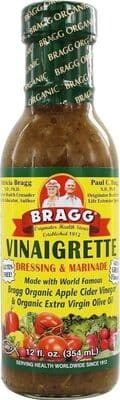
Salad dressings
Bragg Oil-Free Vinaigrette
12 fl oz/354 mL
Score
- Ultra-processed
- Contains added sugars
- Certified organic
Why it scores 58
Bragg Oil-Free Vinaigrette scores 58 out of 100 (Okay) under GoodSwap’s published rules. What moved the score most:
- minus 20 points Fruit juice concentrate (sweetener): An added sugar. Strong
- minus 18 points Ultra-processed (NOVA 4): Classified NOVA 4: made with industrial ingredients and additives. Strong
- minus 5 points Sugars 10 g / 100 g: High in sugar. Strong
Every line of the math is on The Receipt below, with its evidence tier and sources.
Better vinaigrettes and Italian dressings
-
 Sugar-Free Carrot Ginger Dressing Noble Made by The New Primal · 10 fl oz/295 mL Not ultra-processed · No added sugars Score 90 out of 100 , 32 points higher
 -
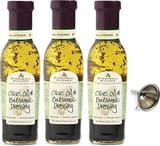 Olive oil balsamic dressing Stonewall Kitchen · 330 mL/11 fl oz Not ultra-processed · No added sugars Score 79 out of 100 , 21 points higher
 -
 Organic Fat Free Zesty Italian Dressing & Marinade Sprouts No added sugars · No fruit juice concentrate (sweetener) Score 74 out of 100 , 16 points higher
 -
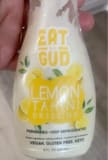 Lemon Tahini Dressing Eat Gud · 8 fl oz/237 mL Not ultra-processed · No added sugars Score 79 out of 100 , 21 points higher
 -
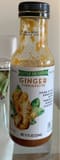 Ginger Vinaigrette Little Salad Bar · 11 fl oz Not ultra-processed · No added sugars Score 79 out of 100 , 21 points higher
The same kind of product, at least 10 points higher, sold in the US. Never paid placements.
The Receipt
Oil-Free Vinaigrette
Ingredients
- Fruit juice concentrate (sweetener) minus 20 points
- Xanthan gum minus 2.5 points
Processing
- Ultra-processed (NOVA 4) minus 18 points
- 2 kinds of ultra-processing markers minus 1.5 points
Nutrition per 100 g
- Sugars 10 g / 100 g minus 5 points
Bonuses
- Certified organic plus 5 points
100 − 42 = 58
Can’t score above 79. Contains fruit juice concentrate (sweetener), an ingredient of high concern. [1][2][3]
Nutrition per 100 g
| Energy | 50 kcal |
|---|---|
| Fat | 0 g |
| Saturated fat | 0 g |
| Trans fat | 0 g |
| Carbohydrates | 13.3 g |
| Sugars | 10 g |
| Added sugars | 10 g |
| Fiber | 0 g |
| Protein | 0 g |
| Salt | 0 g |
Serving: 2 Tbsp (30 ml)
Ingredients
- Purified Water
- Organic Apple Cider Vinegar
- Organic Apple Juice Concentrate (high concern)
- Organic Onion
- Organic Black Pepper
- Natural Xanthan
Label text, as published
Purified Water, Organic Apple Cider Vinegar, Organic Apple Juice Concentrate, Organic Onion, Organic Black Pepper, Natural Xanthan
Allergens and diets
- Vegan
- Vegetarian
- Palm-oil-free
Always check the package: recipes change.
More salad dressings on GoodSwap
-
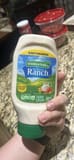 The Original Ranch Condiment & Dressing Hidden Valley · 16 fl oz Ultra-processedHigh in saltHigh in saturated fatContains added sugars Score 27 out of 100 Poor
 -
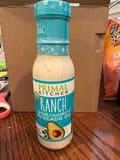 Ranch Dressing & Marinade Primal Kitchen · 8 oz Ultra-processedHigh in saltSeed-oil free Score 70 out of 100 Good
 -
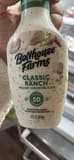 Classic Ranch Yogurt Dressing & Dip Bolthouse Farms · 12 fl oz/355 mL Ultra-processedHigh in saltContains added sugarsContains seed oils Score 34 out of 100 Poor
 -
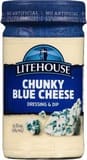 Chunky Blue Cheese Dressing & Dip Litehouse · 13 fl oz/384 mL Ultra-processedHigh in saltContains added sugarsContains emulsifiers studied for gut effects Score 33 out of 100 Poor
 -
 Walden farms, blue cheese dressing Walden Farms · 12 fl oz/355 mL Not permitted in some countriesUltra-processedHigh in saltContains non-nutritive sweeteners Score 25 out of 100 Poor
 -
 The Original Ranch Homestyle Hidden Valley · 2 × 1.18 L Ultra-processedHigh in saltContains added sugarsContains seed oils Score 32 out of 100 Poor
More from Bragg
-
 12000436 Bragg Organic Apple Cider Vinegar Bragg · 32 fl oz Score 100 out of 100 Excellent
 -
 Apple Cider Vinegar Bragg · 16 fl oz (473 mL) Score 100 out of 100 Excellent
 -
 Organic extra virgin olive oil Bragg · 16 fl oz/1 PT/473 mL Score 100 out of 100 Excellent
 -
 Organic Extra Virgin Olive Oil Bragg · 32 fl oz/1 Quart/946 mL Score 100 out of 100 Excellent
Sources
-
Guideline: sugars intake for adults and children
“In both adults and children, WHO recommends reducing the intake of free sugars to less than 10% of total energy intake”
who.int
-
Dietary Guidelines for Americans, 2025–2030
“Limit foods and beverages that include artificial flavors, petroleum-based dyes, artificial preservatives, and low-calorie non-nutritive sweeteners.”
cdn.realfood.gov
-
Added and free sugars should be as low as possible
“Sugar consumption is a known cause of dental caries.”
efsa.europa.eu
-
7 CFR 205.102 Use of the term "organic" (National Organic Program)
“Any agricultural product that is sold, labeled, or represented as “100 percent organic,” “organic,” or “made with organic (specified ingredients or food group(s))” must be: (a) Produced in accordance with the requirements specified in § 205.101 or §§ 205.202 through 205.207”
ecfr.gov
-
“Greater exposure to ultra-processed food was associated with a higher risk of adverse health outcomes, especially cardiometabolic, common mental disorder, and mortality outcomes.”
doi.org