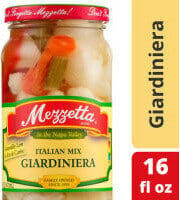
Pickled vegetables
Mezzetta Giardiniera pickled vegetables
16 fl oz (473 mL)
Score
- Ultra-processed
- High in salt
Why it scores 59
Mezzetta Giardiniera pickled vegetables scores 59 out of 100 (Okay) under GoodSwap’s published rules. What moved the score most:
- minus 18 points Ultra-processed (NOVA 4): Classified NOVA 4: made with industrial ingredients and additives. Strong
- minus 9 points Salt 3.2 g / 100 g: Very high in salt. Strong
- minus 7.5 points Sodium metabisulfite: Sulfites must be declared above 10 mg/kg in the EU and UK and at 10 ppm or more in the US because some people, especially people with asthma, react to them. Regulatory
Every line of the math is on The Receipt below, with its evidence tier and sources.
Better relish, peppers and pickled vegetables
-
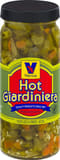 Hot Giardiniera Vienna · 16 fl oz/1 PT/.473 L Not ultra-processed · No sodium metabisulfite Score 79 out of 100 , 20 points higher
 -
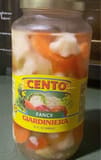 Giardiniera Cento · 32 fl oz Not ultra-processed · No sodium metabisulfite Score 79 out of 100 , 20 points higher
 -
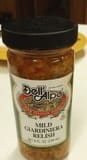 Mild Giardiniera Relish Rubinelli Inc Not ultra-processed · No sodium metabisulfite Score 79 out of 100 , 20 points higher
 -
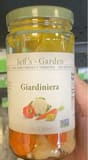 Giardiniera Jeff's Garden · 12 fl oz/354 mL Not ultra-processed · No sodium metabisulfite Score 79 out of 100 , 20 points higher
 -
 The original chicago style giardiniera Marconi · 16 fl oz/1 PT/473 mL Not ultra-processed · Less salt Score 77 out of 100 , 18 points higher
The same kind of product, at least 10 points higher, sold in the US. Never paid placements.
The Receipt
Giardiniera pickled vegetables
Ingredients
- Sodium metabisulfite minus 7.5 points
- Calcium chloride minus 2.5 points
- Natural flavors minus 2.5 points
Processing
- Ultra-processed (NOVA 4) minus 18 points
- 2 kinds of ultra-processing markers minus 1.5 points
Nutrition per 100 g
- Salt 3.2 g / 100 g minus 9 points
100 − 41 = 59
Can’t score above 79. High in salt (above the front-of-pack "high" level). [7]
Nutrition per 100 g
| Energy | 16 kcal |
|---|---|
| Fat | 0 g |
| Saturated fat | 0 g |
| Trans fat | 0 g |
| Carbohydrates | 3.1 g |
| Sugars | 0 g |
| Added sugars | 0 g |
| Fiber | 0 g |
| Protein | 0 g |
| Salt | 3.2 g |
Serving: 5 PIECES | ABOUT (32 g)
Ingredients
- VEGETABLE MIX (CAULIFLOWER, CARROTS, CELERY, RED BELL PEPPERS, ONIONS, PICKLES, GREEK PEPPERS)
- WATER
- SEA SALT
- SODIUM METABISULFITE (ADDED AS A COLOR STABILIZER) (moderate concern)
Label text, as published
VEGETABLE MIX (CAULIFLOWER, CARROTS, CELERY, RED BELL PEPPERS, ONIONS, PICKLES [CUCUMBERS, WATER, DISTILLED VINEGAR, SALT, CALCIUM CHLORIDE, NATURAL FLAVORS, TURMERIC], GREEK PEPPERS), WATER, SEA SALT, SODIUM METABISULFITE (ADDED AS A COLOR STABILIZER).
Allergens and diets
Contains: Celery, Sulphites
- Palm-oil-free
Always check the package: recipes change.
More pickled vegetables on GoodSwap
-
 Dilly Bites Dill Pickle Snacking Chips Oh Snap! · 3.25 fl oz Ultra-processedHigh in saltContains emulsifiers studied for gut effectsMay contain traces of 1,4-dioxane Score 54 out of 100 Okay
 -
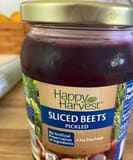 Sliced Beets Pickled Aldi Ultra-processedContains added sugarsNo additives Score 61 out of 100 Good
 -
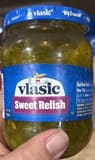 Sweet Relish Vlasic · 330 g Ultra-processedHigh in saltContains added sugarsContains emulsifiers studied for gut effects Score 17 out of 100 Bad
 -
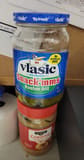 Snack'mms Kosher Dill Vlasic · 16 fl oz Ultra-processedHigh in saltContains emulsifiers studied for gut effectsMay contain traces of 1,4-dioxane Score 50 out of 100 Okay
 -
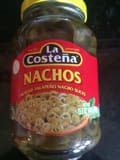 Nachos Pickled Jalapeño Peppers La Costena · 385 g High in salt Score 79 out of 100 Good
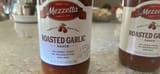
More from Mezzetta
Sources
-
Regulation (EU) No 1169/2011 of 25 October 2011 on the provision of food information to consumers
“ANNEX II SUBSTANCES OR PRODUCTS CAUSING ALLERGIES OR INTOLERANCES 1. Cereals containing gluten, namely: wheat, rye, barley, oats, spelt, kamut or their hybridised strains”
eur-lex.europa.eu
-
“1. Cereals containing gluten, namely: wheat (such as spelt and khorasan wheat), rye, barley, oats or their hybridised strains, and products thereof”
legislation.gov.uk
-
21 CFR 101.22 Foods; labeling of spices, flavorings, colorings and chemical preservatives
“whose significant function in food is flavoring rather than nutritional.”
ecfr.gov
-
“For adults, WHO recommends less than 2000 mg/day of sodium (equivalent to less than 5 g/day salt), or just under a teaspoon.”
who.int
-
“Table 3: Criteria for drinks (per 100ml)”
assets.publishing.service.gov.uk
-
“Greater exposure to ultra-processed food was associated with a higher risk of adverse health outcomes, especially cardiometabolic, common mental disorder, and mortality outcomes.”
doi.org
-
Dietary Guidelines for Americans, 2025–2030
“Limit foods and beverages that include artificial flavors, petroleum-based dyes, artificial preservatives, and low-calorie non-nutritive sweeteners.”
cdn.realfood.gov