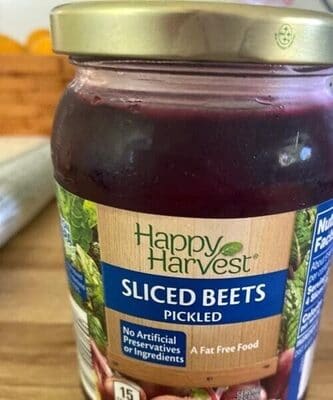
Pickled vegetables
Aldi Sliced Beets Pickled
Score
- Ultra-processed
- Contains added sugars
- No additives
Why it scores 61
Aldi Sliced Beets Pickled scores 61 out of 100 (Good) under GoodSwap’s published rules. What moved the score most:
- minus 20 points High fructose corn syrup: An added sugar. Strong
- minus 18 points Ultra-processed (NOVA 4): Classified NOVA 4: made with industrial ingredients and additives. Strong
- minus 3 points Sugars 8 g / 100 g: Contains some sugar. Strong
Every line of the math is on The Receipt below, with its evidence tier and sources.
Better canned vegetables
-
 Sliced Beets Del Monte Not ultra-processed · No added sugars Score 99 out of 100 , 38 points higher
 -
 Sliced Beets 365 Whole Foods Market · 15 oz Not ultra-processed · No added sugars Score 100 out of 100 , 39 points higher
 -
 Sliced Beets Bowl & Basket · 15 oz/425 g Not ultra-processed · No added sugars Score 100 out of 100 , 39 points higher
 -
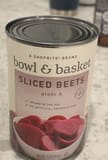 Sliced Beets Shoprite · 15 oz Not ultra-processed · No added sugars Score 100 out of 100 , 39 points higher
 -
 Sliced Water Chestnuts Kroger · 30 g Not ultra-processed · No added sugars Score 100 out of 100 , 39 points higher
The same kind of product, at least 10 points higher, sold in the US. Never paid placements.
The Receipt
Sliced Beets Pickled
Ingredients
- High fructose corn syrup minus 20 points
Processing
- Ultra-processed (NOVA 4) minus 18 points
Nutrition per 100 g
- Sugars 8 g / 100 g minus 3 points
- Salt 0.5 g / 100 g minus 1 points
Bonuses
- No additives plus 3 points
100 − 39 = 61
Can’t score above 79. Contains high fructose corn syrup, an ingredient of high concern. [1][2][3][4]
Nutrition per 100 g
| Energy | 52 kcal |
|---|---|
| Fat | 0 g |
| Saturated fat | 0 g |
| Carbohydrates | 13.8 g |
| Sugars | 8 g |
| Fiber | 1.5 g |
| Protein | 0 g |
| Salt | 0.5 g |
Ingredients
Label text, as published
beets, water, high fructose corn syrup, vinegar, salt, spice
Allergens and diets
- Vegan
- Vegetarian
- Palm-oil-free
Always check the package: recipes change.
More pickled vegetables on GoodSwap
-
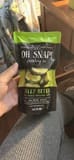 Dilly Bites Dill Pickle Snacking Chips Oh Snap! · 3.25 fl oz Ultra-processedHigh in saltContains emulsifiers studied for gut effectsMay contain traces of 1,4-dioxane Score 54 out of 100 Okay
 -
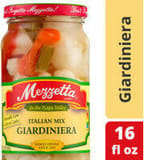 Giardiniera pickled vegetables Mezzetta · 16 fl oz (473 mL) Ultra-processedHigh in salt Score 59 out of 100 Okay
 -
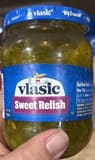 Sweet Relish Vlasic · 330 g Ultra-processedHigh in saltContains added sugarsContains emulsifiers studied for gut effects Score 17 out of 100 Bad
 -
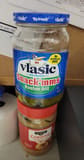 Snack'mms Kosher Dill Vlasic · 16 fl oz Ultra-processedHigh in saltContains emulsifiers studied for gut effectsMay contain traces of 1,4-dioxane Score 50 out of 100 Okay
 -
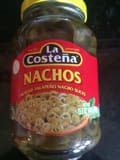 Nachos Pickled Jalapeño Peppers La Costena · 385 g High in salt Score 79 out of 100 Good
More from Aldi
-
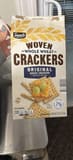 Woven Whole Wheat Crackers Aldi · 9 oz (255 g) Score 81 out of 100 Excellent
 -
 Purified Water minerals added for tasted Aldi Score 100 out of 100 Excellent
 -
 Beef and cheese chimichanga Aldi · 142 g Score 27 out of 100 Poor
 -
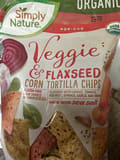 Organic Veggie & Flaxseed Corn Tortilla Chips Flavored With Carrot, Tomato, Red Beet, Spinach, Garlic And Onion, Carrot, Tomato, Red Beet, Spinach, Garlic And Onion Aldi Score 79 out of 100 Good
Sources
-
Guideline: sugars intake for adults and children
“In both adults and children, WHO recommends reducing the intake of free sugars to less than 10% of total energy intake”
who.int
-
Dietary Guidelines for Americans, 2025–2030
“Limit foods and beverages that include artificial flavors, petroleum-based dyes, artificial preservatives, and low-calorie non-nutritive sweeteners.”
cdn.realfood.gov
-
Added and free sugars should be as low as possible
“Sugar consumption is a known cause of dental caries.”
efsa.europa.eu
-
21 CFR 184.1866 High fructose corn syrup
“a sweet, nutritive saccharide mixture containing either approximately 42 or 55 percent fructose”
ecfr.gov
-
“For adults, WHO recommends less than 2000 mg/day of sodium (equivalent to less than 5 g/day salt), or just under a teaspoon.”
who.int
-
“Greater exposure to ultra-processed food was associated with a higher risk of adverse health outcomes, especially cardiometabolic, common mental disorder, and mortality outcomes.”
doi.org