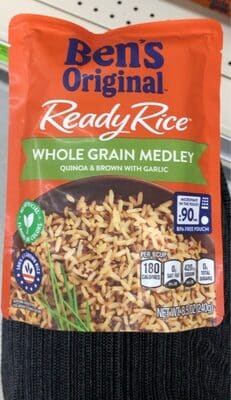
Meals
Ben's Original Ready Rice Whole Grain Medley Quinoa & Brown with Garlic
8.5 oz
Score
- Contains seed oils
- Contains whole grains
Why it scores 90
Ben's Original Ready Rice Whole Grain Medley Quinoa & Brown with Garlic scores 90 out of 100 (Excellent) under GoodSwap’s published rules. What moved the score most:
- minus 3 points Salt 0.8 g / 100 g: High in salt. Strong
- minus 2.5 points Canola oil: High in omega-6 linoleic acid. Emerging
- minus 2.5 points Maltodextrin: An additive class typical of ultra-processed foods (NOVA group 4). Info
Every line of the math is on The Receipt below, with its evidence tier and sources.
Better quinoa, couscous and other grains
-
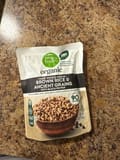 Hundred percent whole grain brown rice with ancient grains Simple Truth Organic · 8.8 oz No maltodextrin Score 100 out of 100 , 10 points higher
 -
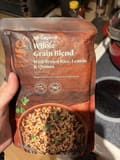 Whole Grain Blend With Brown Rice, Lentils & Quinoa Good & Gather · 8.8 oz/249 g No maltodextrin Score 100 out of 100 , 10 points higher
 -
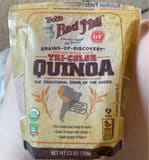 Organic Whole Grain Tri-Color Quinoa Bob's Red Mill · 13 oz No seed oils · No maltodextrin Score 100 out of 100 , 10 points higher
 -
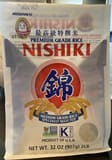 Sushi Rice Nishiki · 32 oz No seed oils · No maltodextrin Score 100 out of 100 , 10 points higher
 -
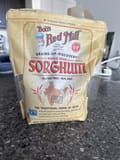 Whole Grain Sorghum Bob's Red Mill · 24 oz (1 lb 8 oz) 680 g No seed oils · No maltodextrin Score 100 out of 100 , 10 points higher
The same kind of product, at least 10 points higher, sold in the US. Never paid placements.
The Receipt
Ready Rice Whole Grain Medley Quinoa & Brown with Garlic
Ingredients
- Canola oil minus 2.5 points
- Maltodextrin minus 2.5 points
- Natural flavors minus 2.5 points
Nutrition per 100 g
- Salt 0.8 g / 100 g minus 3 points
100 − 10.5 = 89.5 → 90
Nutrition per 100 g
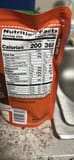
| Energy | 128 kcal |
|---|---|
| Fat | 1.8 g |
| Saturated fat | 0 g |
| Trans fat | 0 g |
| Carbohydrates | 24.8 g |
| Sugars | 0 g |
| Added sugars | 0 g |
| Fiber | 0.7 g |
| Protein | 2.8 g |
| Salt | 0.8 g |
Serving: 1 pouch (240 g)
Ingredients
- WATER
- PARBOILED WHOLE GRAIN BROWN RICE
- BLEND OF QUINOA (WHOLE GRAIN BLACK QUINOA, WHOLE GRAIN RED QUINOA)
- CANOLA OIL
- GARLIC
- SALT
- MALTODEXTRIN
- POTASSIUM CHLORIDE
- ONION POWDER
- RICE STARCH
- PARSLEY
- SPICE
- CITRIC ACID
- NATURAL FLAVORS
- CHILI PEPPER
- DRIED (not recognized)
- ADDS A TRIVIAL AMOUNT OF SATURATED FAT (not recognized)
Label text, as published
WATER, PARBOILED WHOLE GRAIN BROWN RICE, BLEND OF QUINOA (WHOLE GRAIN BLACK QUINOA, WHOLE GRAIN RED QUINOA), LESS THAN 2% OF: CANOLA OIL, GARLIC*, SALT, MALTODEXTRIN, POTASSIUM CHLORIDE, ONION POWDER, RICE STARCH, PARSLEY*, SPICE, CITRIC ACID, NATURAL FLAVORS, CHILI PEPPER, *DRIED, ADDS A TRIVIAL AMOUNT OF SATURATED FAT
Allergens and diets
- Palm-oil-free
Always check the package: recipes change.
More meals on GoodSwap
-
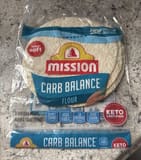 Carb Balance Flour Tortilla Wraps Mission · 340 g Ultra-processedHigh in saltContains non-nutritive sweetenersContains emulsifiers studied for gut effects Score 46 out of 100 Okay
 -
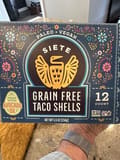 Grain Free Taco Shells Siete · 5.5 oz/156 g Ultra-processedNo additivesSeed-oil free Score 72 out of 100 Good
 -
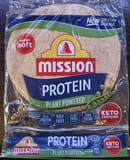 Tortilla Wraps Mission · 9 oz Ultra-processedHigh in saltContains non-nutritive sweetenersContains emulsifiers studied for gut effects Score 30 out of 100 Poor
 -
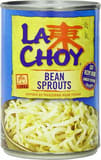 Bean sprouts La Choy · 14 oz Score 100 out of 100 Excellent
 -
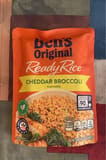 CHEDDAR BROCCOLI flavored Ready Rice Ben's Original · 8.5 oz (240 g) Contains added sugarsContains seed oilsNo synthetic dyes Score 44 out of 100 Okay
 -
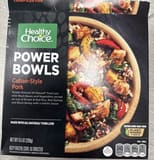 Power Bowls Cuban-Style Pork Healthy Choice · 1 meal (269 g) Ultra-processedContains added sugarsContains seed oilsContains palm oil Score 50 out of 100 Okay
More from Ben's Original
Sources
-
“replacement of saturated fat in the diet with linoleic acid effectively lowers serum cholesterol but does not support the hypothesis that this translates to a lower risk of death from coronary heart disease or all causes.”
doi.org
-
“These data provide support for current recommendations to replace saturated fat with polyunsaturated fat for primary prevention of CHD.”
doi.org
-
21 CFR 101.22 Foods; labeling of spices, flavorings, colorings and chemical preservatives
“whose significant function in food is flavoring rather than nutritional.”
ecfr.gov
-
“For adults, WHO recommends less than 2000 mg/day of sodium (equivalent to less than 5 g/day salt), or just under a teaspoon.”
who.int
-
Dietary Guidelines for Americans, 2025–2030
“Limit foods and beverages that include artificial flavors, petroleum-based dyes, artificial preservatives, and low-calorie non-nutritive sweeteners.”
cdn.realfood.gov