Meats
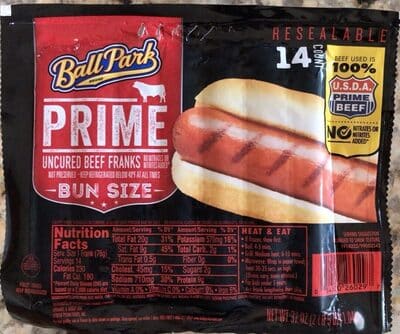
Ball Park Prime Uncured Beef Franks
37 oz
Score
- Ultra-processed
- High in salt
- High in saturated fat
- Contains added sugars
- No synthetic dyes
Why it scores 44
Ball Park Prime Uncured Beef Franks scores 44 out of 100 (Okay) under GoodSwap’s published rules. What moved the score most:
- minus 20 points Dextrose: An added sugar. Strong
- minus 18 points Ultra-processed (NOVA 4): Classified NOVA 4: made with industrial ingredients and additives. Strong
- minus 7 points Salt 2.3 g / 100 g: Very high in salt. Strong
Every line of the math is on The Receipt below, with its evidence tier and sources.
Better hot dogs
-
 Uncured beef Franks Market side uncured · 4 oz Not ultra-processed · Less salt Score 79 out of 100 , 35 points higher
 -
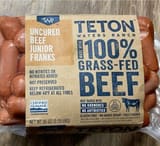 Uncured Beef Junior Franks 36 oz Not ultra-processed · No added sugars Score 79 out of 100 , 35 points higher
 -
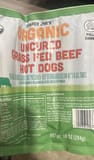 Organic Uncured Grass Fed Beef Hot Dogs Trader Joe's · 47 g Not ultra-processed · No added sugars Score 79 out of 100 , 35 points higher
 -
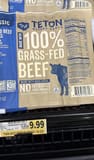 Uncured Beef Hot Dogs Teton Waters Ranch Not ultra-processed · No added sugars Score 79 out of 100 , 35 points higher
 -
 Uncured Beef Hot Dog Applegate Organics · 10 oz Not ultra-processed · Less salt Score 79 out of 100 , 35 points higher
The same kind of product, at least 10 points higher, sold in the US. Never paid placements.
The Receipt
Prime Uncured Beef Franks
Ingredients
- Dextrose minus 20 points
- Natural flavors minus 2.5 points
- Sodium phosphate minus 2.5 points
Processing
- Ultra-processed (NOVA 4) minus 18 points
- 3 kinds of ultra-processing markers minus 3 points
Nutrition per 100 g
- Saturated fat 11.8 g / 100 g minus 4.5 points
- Salt 2.3 g / 100 g minus 7 points
- Energy 303 kcal / 100 g minus 0.5 points
- Protein 11.8 g / 100 g plus 2 points
100 − 56 = 44
Can’t score above 79. Contains dextrose, an ingredient of high concern. [1][2][3]
Can’t score above 79. High in fat, saturated fat and salt (above the front-of-pack "high" level). [9]
Nutrition per 100 g
| Energy | 303 kcal |
|---|---|
| Fat | 26.3 g |
| Saturated fat | 11.8 g |
| Carbohydrates | 2.6 g |
| Sugars | 2.6 g |
| Protein | 11.8 g |
| Salt | 2.3 g |
Ingredients
- USDA PRIME BEEF
- WATER
- DEXTROSE (high concern)
- POTASSIUM LACTATE
- SALT
- NATURAL FLAVOR ICELERY)
- SODIUM PHOSPHATE
- SODIUM DIACETATE
- SEA SALT
- EXTRACTIVES OF PAPRIKA
Label text, as published
USDA PRIME BEEF, WATER, DEXTROSE, POTASSIUM LACTATE, SALT, NATURAL FLAVOR ICELERY), SODIUM PHOSPHATE, SODIUM DIACETATE, SEA SALT, EXTRACTIVES OF PAPRIKA.
Allergens and diets
- Not vegan
- Not vegetarian
- Palm-oil-free
Always check the package: recipes change.
More meats on GoodSwap
-
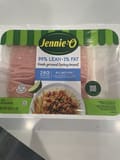 1% Fat Ground Turkey Breast Extra Lean Jennie-O · 112 g Score 100 out of 100 Excellent
 - Organic Tofu Firm 365 Everyday Value Certified organic Score 100 out of 100 Excellent
-
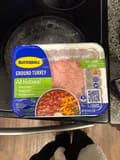 Ground Turkey Butterball · 112 g Ultra-processed Score 85 out of 100 Excellent
 -
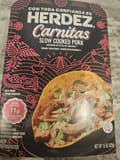 Carnitas Slow Cooked Pork Herdez · 15 oz Ultra-processedHigh in salt Score 77 out of 100 Good
 -
 Honey Roasted Turkey Breast Member's Mark High in saltContains nitrites or nitratesContains added sugars Score 35 out of 100 Poor
More from Ball Park



Sources
-
Guideline: sugars intake for adults and children
“In both adults and children, WHO recommends reducing the intake of free sugars to less than 10% of total energy intake”
who.int
-
Dietary Guidelines for Americans, 2025–2030
“Limit foods and beverages that include artificial flavors, petroleum-based dyes, artificial preservatives, and low-calorie non-nutritive sweeteners.”
cdn.realfood.gov
-
Added and free sugars should be as low as possible
“Sugar consumption is a known cause of dental caries.”
efsa.europa.eu
-
21 CFR 101.22 Foods; labeling of spices, flavorings, colorings and chemical preservatives
“whose significant function in food is flavoring rather than nutritional.”
ecfr.gov
-
EFSA issues new advice on phosphates
“We estimated that dietary exposure to phosphates may exceed the new ADI for infants, toddlers and children with average consumption of phosphates in their diet.”
efsa.europa.eu
-
Saturated fatty acid and trans-fatty acid intake for adults and children: WHO guideline
“WHO recommends that adults and children reduce saturated fatty acid intake to 10% of total energy intake (strong recommendation).”
who.int
-
“For adults, WHO recommends less than 2000 mg/day of sodium (equivalent to less than 5 g/day salt), or just under a teaspoon.”
who.int
-
“Table 3: Criteria for drinks (per 100ml)”
assets.publishing.service.gov.uk
-
“Greater exposure to ultra-processed food was associated with a higher risk of adverse health outcomes, especially cardiometabolic, common mental disorder, and mortality outcomes.”
doi.org