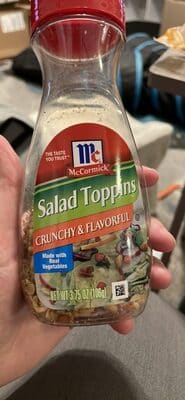
Sauces
Mccormick Salad Toppins
3.75 oz/106 g
Score
- Not permitted in some countries
- Contains synthetic dyes
- Ultra-processed
- High in salt
- Contains added sugars
- Contains seed oils
- Contains artificial flavors
Why it scores 14
Mccormick Salad Toppins scores 14 out of 100 (Bad) under GoodSwap’s published rules. What moved the score most:
- minus 20 points Sugar: An added sugar. Strong
- minus 20 points Malt syrup: An added sugar. Strong
- minus 18 points Ultra-processed (NOVA 4): Classified NOVA 4: made with industrial ingredients and additives. Strong
Every line of the math is on The Receipt below, with its evidence tier and sources.
The Receipt
Salad Toppins
Ingredients
- Sugar minus 20 points
- Malt syrup minus 20 points
- Caramel color minus 10 points
Processing
- Ultra-processed (NOVA 4) minus 18 points
- 4 kinds of ultra-processing markers minus 4.5 points
Nutrition per 100 g
- Sugars 14.3 g / 100 g minus 8 points
- Salt 2.3 g / 100 g minus 7 points
- Energy 500 kcal / 100 g minus 3 points
- Fiber 7.8 g / 100 g plus 4 points
100 − 86.5 = 13.5 → 14
Can’t score above 25. Contains Red 3, whose use in food has been revoked in the US. [10]
Can’t score above 79. Contains sugar, an ingredient of high concern. [1][2][3][4][5][6][7][10][11][12][13]
Can’t score above 79. High in fat and salt (above the front-of-pack "high" level). [14]
Nutrition per 100 g
| Energy | 500 kcal |
|---|---|
| Fat | 21.4 g |
| Saturated fat | 0 g |
| Carbohydrates | 42.9 g |
| Sugars | 14.3 g |
| Added sugars | 0 g |
| Fiber | 7.8 g |
| Protein | 28.6 g |
| Salt | 2.3 g |
Serving: 1 1/3 Tbsp (7 g)
Ingredients
- SUNFLOWER SEEDS
- SOYBEANS
- TEXTURED SOY FLOUR
- RICE
- ONION
- CARROTS
- CANOLA OIL
- RED AND GREEN BELL PEPPERS
- SALT
- SUGAR (high concern)
- PARSLEY
- BARLEY MALT EXTRACT (high concern)
- CARAMEL COLOR (high concern)
- NATURAL AND ARTIFICIAL FLAVOR
- LACTIC ACID
- YEAST EXTRACT
- DISODIUM INOSINATE AND DISODIUM GUANYLATE (FLAVOR ENHANCERS)
- FD&C RED #3 (high concern)
Label text, as published
SUNFLOWER SEEDS, SOYBEANS, TEXTURED SOY FLOUR, RICE, ONION, CARROTS, CANOLA OIL, RED AND GREEN BELL PEPPERS, SALT, SUGAR, PARSLEY, BARLEY MALT EXTRACT, CARAMEL COLOR, NATURAL AND ARTIFICIAL FLAVOR, LACTIC ACID, YEAST EXTRACT, DISODIUM INOSINATE AND DISODIUM GUANYLATE (FLAVOR ENHANCERS), AND FD&C RED #3.
Allergens and diets
Contains: Soy, Gluten
- Not gluten-free
- Palm-oil-free
Always check the package: recipes change.
More sauces on GoodSwap
-
 Original Sloppy Joe Sauce Manwich · 15 oz Ultra-processedContains added sugars Score 43 out of 100 Okay
 -
 Spicy Chili Crisp Laoganma · 7.41 oz Ultra-processedHigh in saltHigh in saturated fatContains added sugars Score 26 out of 100 Poor
 -
 Red Enchilada Sauce Old El Paso · 10 oz Ultra-processedContains added sugarsNo synthetic dyes Score 46 out of 100 Okay
 -
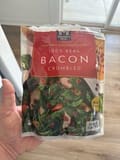 100% Real Crumbled Bacon Member's Mark · 20 oz High in saltHigh in saturated fatContains nitrites or nitratesContains added sugars Score 34 out of 100 Poor
 -
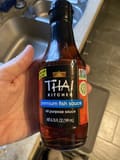 Fish Sauce Thai Kitchen · 6.76 fl oz (199 mL) High in saltContains added sugarsNo additives Score 62 out of 100 Good
 -
 Tzatziki with Feta Cedar's · 12 oz Ultra-processedHigh in salt Score 75 out of 100 Good
More from Mccormick
Sources
-
Guideline: sugars intake for adults and children
“In both adults and children, WHO recommends reducing the intake of free sugars to less than 10% of total energy intake”
who.int
-
Dietary Guidelines for Americans, 2025–2030
“Limit foods and beverages that include artificial flavors, petroleum-based dyes, artificial preservatives, and low-calorie non-nutritive sweeteners.”
cdn.realfood.gov
-
Added and free sugars should be as low as possible
“Sugar consumption is a known cause of dental caries.”
efsa.europa.eu
-
Questions & Answers About 4-MEI
“Based on current science, the FDA has no reason to believe that there are any immediate or short-term health risks presented by 4-MEI at the levels expected in food.”
fda.gov
-
Agents Classified by the IARC Monographs, Volumes 1–142 (List of Classifications)
monographs.iarc.who.int
-
Proposition 65 List of Chemicals Known to the State to Cause Cancer or Reproductive Toxicity
“The date refers to the initial appearance of the chemical on the list.”
oehha.ca.gov
-
“For adults, WHO recommends less than 2000 mg/day of sodium (equivalent to less than 5 g/day salt), or just under a teaspoon.”
who.int
-
“This order is effective January 15, 2027, except for amendatory instruction 4, which is effective January 18, 2028.”
federalregister.gov
-
“Studies in other animals or in humans did not show the same effect and there is no evidence showing FD&C Red No. 3 causes cancer in humans.”
fda.gov
-
“E 127 Erythrosine 200 only cocktail cherries and candied cherries”
eur-lex.europa.eu
-
California AB 418 (2023), the California Food Safety Act (Health and Safety Code §109025)
“Commencing January 1, 2027, a person or entity shall not manufacture, sell, deliver, distribute, hold, or offer for sale, in commerce a food product for human consumption that contains any of the following substances”
leginfo.legislature.ca.gov
-
“Table 3: Criteria for drinks (per 100ml)”
assets.publishing.service.gov.uk
-
“titanium dioxide (E 171) can no longer be considered safe when used as a food additive.”
eur-lex.europa.eu
-
Revocation of Authorization for Use of Brominated Vegetable Oil in Food (89 FR 55040)
“This action is being taken because there is no longer a reasonable certainty of no harm from the continued use of BVO in food.”
federalregister.gov
-
Regulation (EC) No 1223/2009 of 30 November 2009 on cosmetic products
“cosmetic products shall not contain any of the following: (a) prohibited substances — prohibited substances listed in Annex II”
eur-lex.europa.eu
-
Tracking Food Industry Pledges to Remove Petroleum Based Food Dyes
“FD&C Green No. 3, FD&C Red No. 40, FD&C Yellow No. 5, FD&C Yellow No. 6, FD&C Blue No. 1, and FD&C Blue No. 2—by the end of 2027.”
fda.gov
-
HHS, FDA to Phase Out Petroleum-Based Synthetic Dyes in Nation’s Food Supply (press release)
“Initiating the process to revoke authorization for two synthetic food colorings—Citrus Red No. 2 and Orange B—within the coming months.”
fda.gov
-
California AB 2316 (2024), Pupil nutrition: substances: prohibition
“beginning December 31, 2027, would prohibit a school district, county superintendent of schools, or charter school”
leginfo.legislature.ca.gov
-
“Greater exposure to ultra-processed food was associated with a higher risk of adverse health outcomes, especially cardiometabolic, common mental disorder, and mortality outcomes.”
doi.org
-
“replacement of saturated fat in the diet with linoleic acid effectively lowers serum cholesterol but does not support the hypothesis that this translates to a lower risk of death from coronary heart disease or all causes.”
doi.org
-
“These data provide support for current recommendations to replace saturated fat with polyunsaturated fat for primary prevention of CHD.”
doi.org