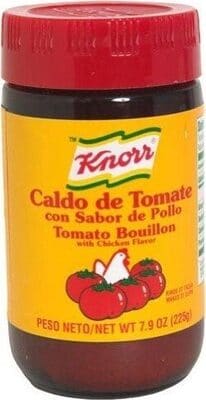
Bouillon cubes
Knorr Tomato Bouillon with Chicken Flavor
7.9 oz/225 g
Score
- Dye with an EU warning label
- Contains synthetic dyes
- Ultra-processed
- High in salt
- Contains added sugars
- Contains palm oil
- Seed-oil free
Why it scores 16
Knorr Tomato Bouillon with Chicken Flavor scores 16 out of 100 (Bad) under GoodSwap’s published rules. What moved the score most:
- minus 20 points Sugar: An added sugar. Strong
- minus 20 points Caramel color: The FDA says classes III and IV, which can contain 4-MEI, are the most commonly used food color additives by volume. Regulatory
- minus 18 points Ultra-processed (NOVA 4): Classified NOVA 4: made with industrial ingredients and additives. Strong
Every line of the math is on The Receipt below, with its evidence tier and sources.
Better broth, stock and bouillon
-
 Culinary concentrate chicken base Zoup! · 8 oz No EU warning-label dyes · No synthetic dyes Score 66 out of 100 , 50 points higher
 -
 Chicken Bone Broth Fond · 14 fl oz/400 mL No EU warning-label dyes · No synthetic dyes Score 79 out of 100 , 63 points higher
 -
 Chicken broth Friendly Farms · 32 oz No EU warning-label dyes · No synthetic dyes Score 79 out of 100 , 63 points higher
 -
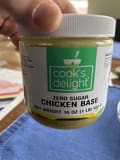 Chicken Base 16 oz No EU warning-label dyes · No synthetic dyes Score 79 out of 100 , 63 points higher
 -
 Chicken concentrate stock Knorr · 8.45 fl oz/250 mL No EU warning-label dyes · No synthetic dyes Score 55 out of 100 , 39 points higher
The same kind of product, at least 10 points higher, sold in the US. Never paid placements.
The Receipt
Tomato Bouillon with Chicken Flavor
Ingredients
- Sugar minus 20 points
- Caramel color minus 20 points
- Yellow 5 minus 10 points
Processing
- Ultra-processed (NOVA 4) minus 18 points
- 5 kinds of ultra-processing markers minus 6 points
Nutrition per 100 g
- Salt 56.9 g / 100 g minus 9 points
- Energy 250 kcal / 100 g minus 1 points
100 − 84 = 16
Can’t score above 79. Contains sugar, an ingredient of high concern. [1][2][3][4][5][6][7][8][9][10][11][12][13][16]
Can’t score above 79. High in salt (above the front-of-pack "high" level). [17]
Nutrition per 100 g
| Energy | 250 kcal |
|---|---|
| Fat | 0 g |
| Carbohydrates | 25 g |
| Added sugars | 8.2 g |
| Protein | 0 g |
| Salt | 56.9 g |
Serving: 1 tsp (4 g)
Ingredients
- SALT
- MONOSODIUM STARCH
- SUGAR (high concern)
- PALM OIL
- TOMATO POWDER
- POTASSIUM CHLORIDE
- NATURAL FLAVOR
- CHICKEN FAT
- CITRIC ACID
- MALTODEXTRIN
- SILICON DIOXIDE (PREVENTS CAKING POWDERED COOKED CHICKEN, CARAMEL COLOR (CONTAINS SULFITES), DISODIUM GUANYLATE, DISODIUM INOSINATE TURMERIC (COLOR), ANNATTO (COLOR), DEHYDRATED PARSLEY, YELLOW 5, YELLOW 6, RED 40)
Label text, as published
SALT, MONOSODIUM STARCH, SUGAR, PALM OIL, TOMATO POWDER, POTASSIUM CHLORIDE, NATURAL FLAVOR, CHICKEN FAT, CITRIC ACID, MALTODEXTRIN, SILICON DIOXIDE (PREVENTS CAKING POWDERED COOKED CHICKEN, CARAMEL COLOR (CONTAINS SULFITES), DISODIUM GUANYLATE, DISODIUM INOSINATE TURMERIC (COLOR), ANNATTO (COLOR), DEHYDRATED PARSLEY, YELLOW 5, YELLOW 6, RED 40
Allergens and diets
Contains: Gluten, Sulphites
- Not vegan
- Not vegetarian
- Not gluten-free
- Not palm-oil-free
Always check the package: recipes change.
More bouillon cubes on GoodSwap
-
 Roasted Chicken Base Better Than Bouillon · 21 oz Ultra-processedHigh in saltContains added sugarsCertified organic Score 32 out of 100 Poor
 -
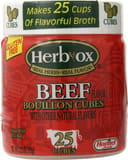 Beef Bouillon Cubes Herb-Ox Ultra-processedHigh in sugarHigh in saltContains added sugars Score 7 out of 100 Bad
 -
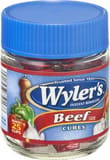 Wyler's instant bouillon beef cubes Wyler's · 25pcs Dye with an EU warning labelContains synthetic dyesUltra-processedHigh in salt Score 15 out of 100 Bad
More from Knorr
-
 Chicken Flavor Bouillon Knorr · 32 oz Score 21 out of 100 Poor
 -
 Caldo con sabor de pollo Knorr Score 30 out of 100 Poor
 -
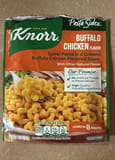 Spiral Pasta in a Creamy Buffalo Chicken Flavored Sauce Knorr · 121 g Score 63 out of 100 Good
 -
 Creamy Chicken flavor Rotini in a Creamy Chicken Flavored Sauce Knorr · 63 g Score 37 out of 100 Poor
Sources
-
Guideline: sugars intake for adults and children
“In both adults and children, WHO recommends reducing the intake of free sugars to less than 10% of total energy intake”
who.int
-
Dietary Guidelines for Americans, 2025–2030
“Limit foods and beverages that include artificial flavors, petroleum-based dyes, artificial preservatives, and low-calorie non-nutritive sweeteners.”
cdn.realfood.gov
-
Added and free sugars should be as low as possible
“Sugar consumption is a known cause of dental caries.”
efsa.europa.eu
-
Questions & Answers About 4-MEI
“Based on current science, the FDA has no reason to believe that there are any immediate or short-term health risks presented by 4-MEI at the levels expected in food.”
fda.gov
-
Agents Classified by the IARC Monographs, Volumes 1–142 (List of Classifications)
monographs.iarc.who.int
-
Proposition 65 List of Chemicals Known to the State to Cause Cancer or Reproductive Toxicity
“The date refers to the initial appearance of the chemical on the list.”
oehha.ca.gov
-
Regulation (EC) No 1333/2008 of 16 December 2008 on food additives
“may have an adverse effect on activity and attention in children.”
eur-lex.europa.eu
-
“may have an adverse effect on activity and attention in children.”
legislation.gov.uk
-
“Artificial colours or a sodium benzoate preservative (or both) in the diet result in increased hyperactivity in 3-year-old and 8/9-year-old children in the general population.”
doi.org
-
Tracking Food Industry Pledges to Remove Petroleum Based Food Dyes
“FD&C Green No. 3, FD&C Red No. 40, FD&C Yellow No. 5, FD&C Yellow No. 6, FD&C Blue No. 1, and FD&C Blue No. 2—by the end of 2027.”
fda.gov
-
California AB 2316 (2024), Pupil nutrition: substances: prohibition
“beginning December 31, 2027, would prohibit a school district, county superintendent of schools, or charter school”
leginfo.legislature.ca.gov
-
21 CFR 74.705 FD&C Yellow No. 5
“shall specifically declare the presence of FD&C Yellow No. 5 by listing the color additive as FD&C Yellow No. 5 among the list of ingredients.”
ecfr.gov
-
“For adults, WHO recommends less than 2000 mg/day of sodium (equivalent to less than 5 g/day salt), or just under a teaspoon.”
who.int
-
List of Select Chemicals in the Food Supply Under FDA Review
“The table below includes select food ingredients (including food and color additives), food contact substances, and contaminants under FDA review as of May 12, 2026 .”
fda.gov
-
“Table 3: Criteria for drinks (per 100ml)”
assets.publishing.service.gov.uk
-
HHS, FDA to Phase Out Petroleum-Based Synthetic Dyes in Nation’s Food Supply (press release)
“Initiating the process to revoke authorization for two synthetic food colorings—Citrus Red No. 2 and Orange B—within the coming months.”
fda.gov
-
“Greater exposure to ultra-processed food was associated with a higher risk of adverse health outcomes, especially cardiometabolic, common mental disorder, and mortality outcomes.”
doi.org
-
“Glycidyl fatty acid esters, expressed as glycidol”
eur-lex.europa.eu