Corn flatbreads
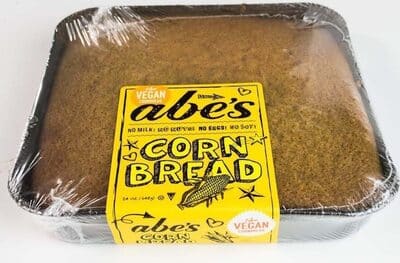
Abe's Muffins Corn Bread
24 oz/648 g
Score
- High in sugar
- Contains added sugars
- Contains seed oils
- Contains whole grains
Why it scores 45
Abe's Muffins Corn Bread scores 45 out of 100 (Okay) under GoodSwap’s published rules. What moved the score most:
- minus 20 points Sugar: An added sugar. Strong
- minus 14 points Sugars 30.9 g / 100 g: Very high in sugar. Strong
- minus 8 points Processed (NOVA 3): Classified NOVA 3: processed with added salt, sugar or oil. Emerging
Every line of the math is on The Receipt below, with its evidence tier and sources.
Better tortillas and wraps
-
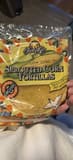 Sprouted Corn Tortillas Food For Life · 10 oz Less sugar · No added sugars Score 96 out of 100 , 51 points higher
 -
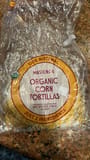 Organic corn tortillas Masienda · 9 oz Less sugar · No added sugars Score 100 out of 100 , 55 points higher
 -
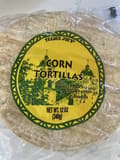 Corn Tortilla Trader Joe's · 12 oz Less sugar · No added sugars Score 100 out of 100 , 55 points higher
 -
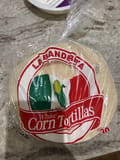 Corn Tortillas La Bonita · 24.9 oz/705 g Less sugar · No added sugars Score 87 out of 100 , 42 points higher
 -
 Organic Corn Tortillas Mi Rancho · 9.33 oz/256 g Less sugar · No added sugars Score 86 out of 100 , 41 points higher
The same kind of product, at least 10 points higher, sold in the US. Never paid placements.
The Receipt
Corn Bread
Ingredients
- Sugar minus 20 points
- Canola oil minus 2.5 points
- Safflower oil minus 2.5 points
- Sunflower oil minus 1.5 points
- Calcium phosphate minus 1.5 points
Processing
- Processed (NOVA 3) minus 8 points
Nutrition per 100 g
- Sugars 30.9 g / 100 g minus 14 points
- Salt 0.9 g / 100 g minus 3 points
- Energy 382 kcal / 100 g minus 2 points
100 − 55 = 45
Can’t score above 79. Contains sugar, an ingredient of high concern. [1][2][3]
Can’t score above 79. High in fat and sugars (above the front-of-pack "high" level). [11]
Nutrition per 100 g
| Energy | 382 kcal |
|---|---|
| Fat | 18.2 g |
| Saturated fat | 0.9 g |
| Trans fat | 0 g |
| Carbohydrates | 56.4 g |
| Sugars | 30.9 g |
| Added sugars | 30.9 g |
| Fiber | 0 g |
| Protein | 3.6 g |
| Salt | 0.9 g |
Serving: 55 g
Ingredients
- Non-gmo sugar (high concern)
- non-gmo and organic rice milk (filtered water, brown rice [partially milled], expeller pressed canola oil, safflower oil, sunflower oil, tricalcium phosphate, sea salt, vitamin a palmitate, vitamin d2, vitamin b12)
- non-gmo unenriched flour
- non-gmo canola oil
- water
- non-gmo corn meal
- salt
- non-gmo baking powder (monocalcium phosphate, sodium bicarbonate [baking soda], non-gmo corn starch)
- baking soda (sodium bicarbonate)
Label text, as published
Non-gmo sugar, non-gmo and organic rice milk (filtered water, brown rice [partially milled], expeller pressed canola oil and/or safflower oil and/or sunflower oil, tricalcium phosphate, sea salt, vitamin a palmitate, vitamin d2, vitamin b12), non-gmo unenriched flour, non-gmo canola oil, water, non-gmo corn meal, salt, non-gmo baking powder (monocalcium phosphate, sodium bicarbonate [baking soda], non-gmo corn starch), baking soda (sodium bicarbonate).
Allergens and diets
Contains: Wheat
- Vegan
- Vegetarian
- Not gluten-free
- Palm-oil-free
Always check the package: recipes change.
More corn flatbreads on GoodSwap
-
 Yellow Corn Tortillas Mission · 16 oz Ultra-processedContains emulsifiers studied for gut effects Score 64 out of 100 Good
 -
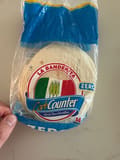 Street Taco Tortillas La Banderita Carb Count · 10.2 oz/288 g Ultra-processedHigh in saltContains emulsifiers studied for gut effectsSeed-oil free Score 59 out of 100 Okay
 -
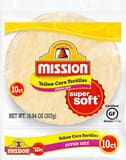 Yellow Corn Tortillas Mission · 10.84 oz Ultra-processedContains emulsifiers studied for gut effects Score 66 out of 100 Good
 -
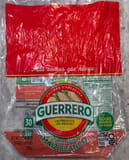 White Corn Tortillas Guerrero · 47 g Ultra-processedContains emulsifiers studied for gut effects Score 61 out of 100 Good
 -
 Corn/Maiz Tortillas El Milagro · 10 oz No additives Score 100 out of 100 Excellent
 -
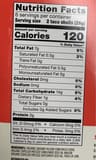 Organic Yellow Corn Taco Shells 365 Whole Foods Market · 12, 156 g Contains seed oilsCertified organic Score 79 out of 100 Good
Also popular on GoodSwap
Sources
-
Guideline: sugars intake for adults and children
“In both adults and children, WHO recommends reducing the intake of free sugars to less than 10% of total energy intake”
who.int
-
Dietary Guidelines for Americans, 2025–2030
“Limit foods and beverages that include artificial flavors, petroleum-based dyes, artificial preservatives, and low-calorie non-nutritive sweeteners.”
cdn.realfood.gov
-
Added and free sugars should be as low as possible
“Sugar consumption is a known cause of dental caries.”
efsa.europa.eu
-
“replacement of saturated fat in the diet with linoleic acid effectively lowers serum cholesterol but does not support the hypothesis that this translates to a lower risk of death from coronary heart disease or all causes.”
doi.org
-
“These data provide support for current recommendations to replace saturated fat with polyunsaturated fat for primary prevention of CHD.”
doi.org
-
EFSA issues new advice on phosphates
“We estimated that dietary exposure to phosphates may exceed the new ADI for infants, toddlers and children with average consumption of phosphates in their diet.”
efsa.europa.eu
-
“For adults, WHO recommends less than 2000 mg/day of sodium (equivalent to less than 5 g/day salt), or just under a teaspoon.”
who.int
-
“Table 3: Criteria for drinks (per 100ml)”
assets.publishing.service.gov.uk