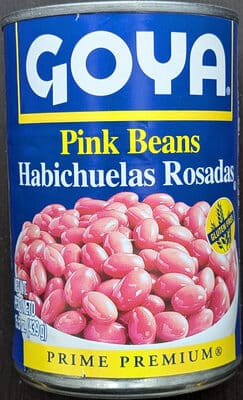
Canned common beans
Goya Pink Beans
15.5 oz
Score
Why it scores 94
Goya Pink Beans scores 94 out of 100 (Excellent) under GoodSwap’s published rules. What moved the score most:
- minus 3 points Salt 0.7 g / 100 g: High in salt. Strong
- minus 2.5 points Calcium chloride: An additive class typical of ultra-processed foods (NOVA group 4). Info
- minus 2.5 points Calcium disodium EDTA: An ingredient class typical of ultra-processed foods (NOVA group 4). Info
Every line of the math is on The Receipt below, with its evidence tier and sources.
The Receipt
Pink Beans
Ingredients
- Calcium chloride minus 2.5 points
- Calcium disodium EDTA minus 2.5 points
Nutrition per 100 g
- Salt 0.7 g / 100 g minus 3 points
- Fiber 3.2 g / 100 g plus 2 points
100 − 6 = 94
Nutrition per 100 g
| Energy | 81 kcal |
|---|---|
| Fat | 0 g |
| Saturated fat | 0 g |
| Trans fat | 0 g |
| Carbohydrates | 15.3 g |
| Sugars | 0.8 g |
| Added sugars | 0 g |
| Fiber | 3.2 g |
| Protein | 4.8 g |
| Salt | 0.7 g |
Serving: 1 serving (124 g)
Ingredients
- PINK BEANS
- WATER
- SALT
- CALCIUM CHLORIDE ADDED AS A FIRMING AGENT
- CALCIUM DISODIUM EDTA ADDED TO PROMOTE COLOR RETENTION
Label text, as published
PINK BEANS, WATER, SALT, CALCIUM CHLORIDE ADDED AS A FIRMING AGENT, AND CALCIUM DISODIUM EDTA ADDED TO PROMOTE COLOR RETENTION.
Allergens and diets
- Vegan
- Vegetarian
- Gluten-free
- Palm-oil-free
Always check the package: recipes change.
Packaging
Paper, Metal
Context only: no points in v1.
More canned common beans on GoodSwap
-
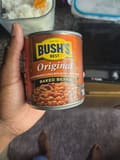 Baked Beans, Original Bush's Best · 16 oz Ultra-processedContains added sugarsNo synthetic dyes Score 23 out of 100 Poor
 -
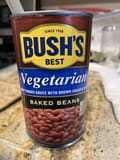 Vegetarian Baked Beans Bush's Best · 130 g Ultra-processedContains added sugarsNo synthetic dyes Score 48 out of 100 Okay
 -
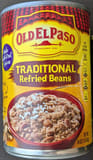 Traditional Refried Beans Old El Paso · 16 oz (1 lb) 453 g Ultra-processedContains added sugarsNo additivesSeed-oil free Score 59 out of 100 Okay
 -
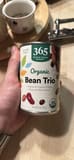 Organic Bean Trio 365 Whole Foods Market · 15 oz Certified organicNo additives Score 100 out of 100 Excellent
 -
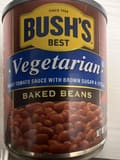 Vegetarian Baked Beans Bush's Best · 8.3 oz Ultra-processedContains added sugarsNo synthetic dyes Score 48 out of 100 Okay
 -
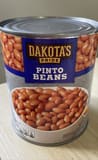 Pinto Beans Dakota's Pride · 29 oz Score 88 out of 100 Excellent
More from Goya
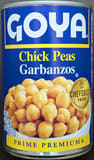
Sources
-
“For adults, WHO recommends less than 2000 mg/day of sodium (equivalent to less than 5 g/day salt), or just under a teaspoon.”
who.int
-
Dietary Guidelines for Americans, 2025–2030
“Limit foods and beverages that include artificial flavors, petroleum-based dyes, artificial preservatives, and low-calorie non-nutritive sweeteners.”
cdn.realfood.gov