Condiments
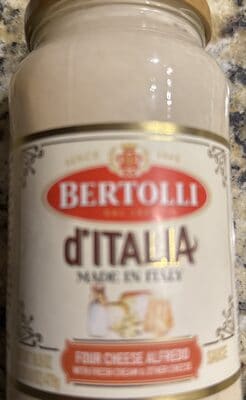
Bertolli D’Italia Four Cheese Alfredo
16.9 oz/479 g
Score
- Ultra-processed
- High in salt
- High in saturated fat
- Contains added sugars
- Contains seed oils
Why it scores 41
Bertolli D’Italia Four Cheese Alfredo scores 41 out of 100 (Okay) under GoodSwap’s published rules. What moved the score most:
- minus 20 points Corn syrup solids: An added sugar. Strong
- minus 18 points Ultra-processed (NOVA 4): Classified NOVA 4: made with industrial ingredients and additives. Strong
- minus 7 points Saturated fat 6.7 g / 100 g: Very high in saturated fat. Strong
Every line of the math is on The Receipt below, with its evidence tier and sources.
Better pasta sauces
-
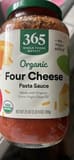 Four Cheese Pasta Sauce 365 Whole Foods Market · 25 oz Not ultra-processed · Less salt Score 94 out of 100 , 53 points higher
 -
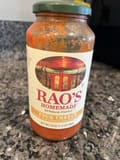 Four Cheese Rao's Homemade · 24 oz Less salt · Less saturated fat Score 78 out of 100 , 37 points higher
 -
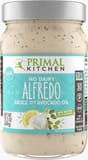 Vegan Alfredo Pasta Sauce Primal Kitchen · 15 oz/425 g Not ultra-processed · Less salt Score 87 out of 100 , 46 points higher
 -
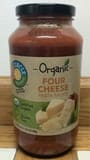 Four Cheese Pasta Sauce Full Circle Not ultra-processed · Less salt Score 94 out of 100 , 53 points higher
 -
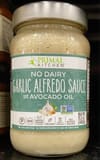 Vegan Garlic Alfredo Pasta Sauce Primal Kitchen · 15 oz/425 g Not ultra-processed · Less salt Score 87 out of 100 , 46 points higher
The same kind of product, at least 10 points higher, sold in the US. Never paid placements.
The Receipt
D’Italia Four Cheese Alfredo
Ingredients
- Corn syrup solids minus 20 points
- Canola oil minus 2.5 points
- Modified starch minus 2.5 points
- Sodium hexametaphosphate minus 1.5 points
Processing
- Ultra-processed (NOVA 4) minus 18 points
- 3 kinds of ultra-processing markers minus 3 points
Nutrition per 100 g
- Saturated fat 6.7 g / 100 g minus 7 points
- Salt 1.6 g / 100 g minus 5 points
100 − 59.5 = 40.5 → 41
Can’t score above 79. Contains corn syrup solids, an ingredient of high concern. [1][2][3]
Can’t score above 79. High in saturated fat and salt (above the front-of-pack "high" level). [12]
Nutrition per 100 g
| Energy | 133 kcal |
|---|---|
| Fat | 11.7 g |
| Saturated fat | 6.7 g |
| Trans fat | 0 g |
| Carbohydrates | 3.3 g |
| Sugars | 0 g |
| Added sugars | 0 g |
| Fiber | 1.7 g |
| Protein | 3.3 g |
| Salt | 1.6 g |
Serving: 0.25 cup (60 g)
Ingredients
- a day is used for general nutriton edients: water (not recognized)
- cream
- butter
- parmigiano reggiano p.d.o. cheese (cow's milk, sea salt, rennet, vegetable ean and or canola oil)
- modified food starch
- pecorino romano p.d.o. cheese made from sheep's milk sheeps ee coultures (lactic ferments])
- fontal cheese (pasteurized cultured milk, salt, rennet)
- cheese blend we with egg preservative])
- enzyme modified egg yolk powder (egg yolks, salt, corn syrup solids, enne pasteurized cow's milk, cheese cultures, sea salt, enzymes, penicillium roqueforti)
- sodium citre s rc powder
- sodium hexametaphosphate. de dans egg
- milk buted by mizkan america
- inc. prospect (not recognized)
- il 60056 (not recognized)
- usa ct of italy ans a bioengineered food ingredient. best if used by date on cap. reject if safety button on t refrigerate
Label text, as published
ving nut facts total fat 7g saturated fat 4g 20% 9% total carbohydr dietary fiber trans fat og per container about 8 servings total sugars cholesterol 35mg 12% includes og sodium 380mg 17% protein 20 serving size 1/4 cup (60g) calories per serving 80 vitamin d 1.3mcg 6% calcium 40mg 4% iron 0mg 0% *the % daily value (dv) tells you how much a nutrient in a sen to a daily diet. 2,000 calories a day is used for general nutriton edients: water, cream, butter, parmigiano reggiano p.d.o. cheese (cow's milk, sea salt, rennet, vegetable ean and or canola oil), modified food starch, pecorino romano p.d.o. cheese made from sheep's milk sheeps ee coultures (lactic ferments]), fontal cheese (pasteurized cultured milk, salt, rennet), cheese blend we with egg preservative]), enzyme modified egg yolk powder (egg yolks, salt, corn syrup solids, enne pasteurized cow's milk, cheese cultures, sea salt, enzymes, penicillium roqueforti), sodium citre s rc powder, sodium hexametaphosphate. de dans egg, milk buted by mizkan america, inc. prospect, il 60056, usa ct of italy ans a bioengineered food ingredient. best if used by date on cap. reject if safety button on t refrigerate
Allergens and diets
Contains: Milk, Egg
- Not vegan
Always check the package: recipes change.
More condiments on GoodSwap
-
 Original Creole Seasoning Tony Chachere's · 227 g Score 87 out of 100 Excellent
 -
 Baking Powder Clabber Girl · 8.1 oz (230 g) High in salt Score 79 out of 100 Good
 -
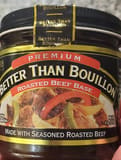 Roasted Beef Base Better Than Bouillon · 8 oz Ultra-processedHigh in saltContains added sugarsContains seed oils Score 8 out of 100 Bad
 -
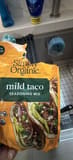 Mild Taco Seasoning Mix Simply Organic · 1.00 oz Ultra-processedHigh in saltContains added sugarsCertified organic Score 46 out of 100 Okay
 -
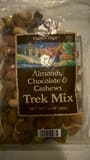 Almonds, Chocolate & Cashews Trek Mix Trader Joe's · 14 oz Ultra-processedHigh in saltHigh in saturated fatContains added sugars Score 50 out of 100 Okay
 -
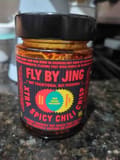 Xtra Spicy Chili Crisp Fly By Jing · 6 oz High in saltContains seed oilsNo additives Score 74 out of 100 Good
More from Bertolli
-
 Extra Virgin Olive Oil Bertolli · 500 mL Score 100 out of 100 Excellent
 -
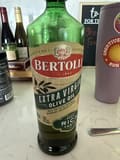 Bertolli rich extra virgin olive oil Bertolli · 25.36 fl oz Score 100 out of 100 Excellent
 -
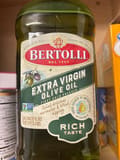 Extra Virgin Olive Oil Bertolli · 15 mL Score 100 out of 100 Excellent
 -
 Organic Extra Virgin Olive Oil Bertolli · 15 mL Score 100 out of 100 Excellent
Sources
-
Guideline: sugars intake for adults and children
“In both adults and children, WHO recommends reducing the intake of free sugars to less than 10% of total energy intake”
who.int
-
Dietary Guidelines for Americans, 2025–2030
“Limit foods and beverages that include artificial flavors, petroleum-based dyes, artificial preservatives, and low-calorie non-nutritive sweeteners.”
cdn.realfood.gov
-
Added and free sugars should be as low as possible
“Sugar consumption is a known cause of dental caries.”
efsa.europa.eu
-
“replacement of saturated fat in the diet with linoleic acid effectively lowers serum cholesterol but does not support the hypothesis that this translates to a lower risk of death from coronary heart disease or all causes.”
doi.org
-
“These data provide support for current recommendations to replace saturated fat with polyunsaturated fat for primary prevention of CHD.”
doi.org
-
EFSA issues new advice on phosphates
“We estimated that dietary exposure to phosphates may exceed the new ADI for infants, toddlers and children with average consumption of phosphates in their diet.”
efsa.europa.eu
-
Saturated fatty acid and trans-fatty acid intake for adults and children: WHO guideline
“WHO recommends that adults and children reduce saturated fatty acid intake to 10% of total energy intake (strong recommendation).”
who.int
-
“For adults, WHO recommends less than 2000 mg/day of sodium (equivalent to less than 5 g/day salt), or just under a teaspoon.”
who.int
-
“Table 3: Criteria for drinks (per 100ml)”
assets.publishing.service.gov.uk
-
“Greater exposure to ultra-processed food was associated with a higher risk of adverse health outcomes, especially cardiometabolic, common mental disorder, and mortality outcomes.”
doi.org