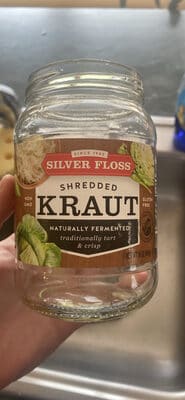
Fermented vegetables
Silver Floss Shredded Kraut
16 oz/1 lb/454 g
Score
Why it scores 82
Silver Floss Shredded Kraut scores 82 out of 100 (Excellent) under GoodSwap’s published rules. What moved the score most:
- minus 8 points Processed (NOVA 3): Classified NOVA 3: processed with added salt, sugar or oil. Emerging
- minus 7.5 points Sodium benzoate: Benzoates can form small amounts of benzene in drinks that also contain ascorbic acid (vitamin C), especially with heat or light. Strong
- minus 5 points Salt 1.3 g / 100 g: High in salt. Strong
Every line of the math is on The Receipt below, with its evidence tier and sources.
Better relish, peppers and pickled vegetables
-
 Beat Kraut Pickled Planet Llc No sodium benzoate Score 99 out of 100 , 17 points higher
 -
 Shredded Sauerkraut Silver Floss · 30 g No sodium benzoate Score 99 out of 100 , 17 points higher
 -
 Chile Kraut Real Pickles No sodium benzoate Score 94 out of 100 , 12 points higher
 -
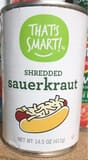 SHREDDED sauerkraut That's Smart! No sodium benzoate Score 92 out of 100 , 10 points higher
The same kind of product, at least 10 points higher, sold in the US. Never paid placements.
The Receipt
Shredded Kraut
Ingredients
- Sodium benzoate minus 7.5 points
Processing
- Processed (NOVA 3) minus 8 points
Nutrition per 100 g
- Salt 1.3 g / 100 g minus 5 points
- Fiber 3.3 g / 100 g plus 2 points
100 − 18.5 = 81.5 → 82
Nutrition per 100 g
| Energy | 17 kcal |
|---|---|
| Fat | 0 g |
| Saturated fat | 0 g |
| Carbohydrates | 3.3 g |
| Sugars | 0 g |
| Fiber | 3.3 g |
| Protein | 0 g |
| Salt | 1.3 g |
Serving: 1 ONZ (30 g)
Ingredients
- CABBAGE
- WATER
- SALT
- SODIUM BENZOATE (PRESERVATIVE) AND SODIUM BISULFITE (TO PROMOTE COLOR RETENTION) (moderate concern)
Label text, as published
CABBAGE, WATER, SALT, SODIUM BENZOATE (PRESERVATIVE) AND SODIUM BISULFITE (TO PROMOTE COLOR RETENTION).
Allergens and diets
- Vegan
- Vegetarian
- Gluten-free
- Palm-oil-free
Always check the package: recipes change.
More fermented vegetables on GoodSwap
-
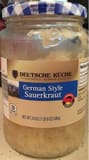 German Style Sauerkraut Deutsche Küche · 24 oz No additives Score 92 out of 100 Excellent
 -
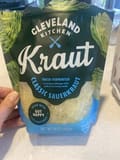 Classic Sauerkraut Cleveland Kitchen · 16 oz/454 g High in saltNo additives Score 79 out of 100 Good
 -
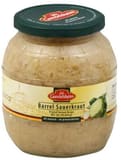 Traditional german barrel sauerkraut Carl Kuhne Kg · 28.5 oz/810 g No additives Score 90 out of 100 Excellent
 -
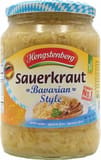 Sauerkraut Bavarian Style Hengstenberg · 130 g Score 87 out of 100 Excellent
Sources
-
“Artificial colours or a sodium benzoate preservative (or both) in the diet result in increased hyperactivity in 3-year-old and 8/9-year-old children in the general population.”
doi.org
-
Re-evaluation of benzyl alcohol (E 1519) as food additive (records the 2016 benzoate re-evaluation)
“derived a group ADI of 5 mg/kg bw per day (expressed as benzoic acid) in accordance with the ADI previously derived by SCF and JECFA”
doi.org
-
“For adults, WHO recommends less than 2000 mg/day of sodium (equivalent to less than 5 g/day salt), or just under a teaspoon.”
who.int
-
Dietary Guidelines for Americans, 2025–2030
“Limit foods and beverages that include artificial flavors, petroleum-based dyes, artificial preservatives, and low-calorie non-nutritive sweeteners.”
cdn.realfood.gov