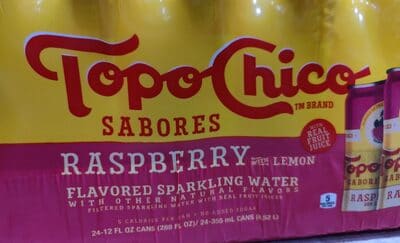
Flavored sparkling waters
Topo Chico Sabores Raspberry With Lemon Flavored Sparkling Water
12 fl oz
Score
- Ultra-processed
- Contains added sugars
Why it scores 49
Topo Chico Sabores Raspberry With Lemon Flavored Sparkling Water scores 49 out of 100 (Okay) under GoodSwap’s published rules. What moved the score most:
- minus 20 points Fruit juice concentrate (sweetener): An added sugar. Strong
- minus 18 points Ultra-processed (NOVA 4): Classified NOVA 4: made with industrial ingredients and additives. Strong
- minus 7.5 points Sodium benzoate: Benzoates can form small amounts of benzene in drinks that also contain ascorbic acid (vitamin C), especially with heat or light. Strong
Every line of the math is on The Receipt below, with its evidence tier and sources.
Better sparkling water
-
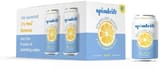 Lemon Sparkling Water & Real Squeezed Fruit Spindrift · 96 fl oz/2.84 L Not ultra-processed · No added sugars Score 100 out of 100 , 51 points higher
 -
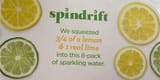 Unsweetened Lemonade Sparkling Water Lemon Limeade Spindrift · 96 fl oz/2.84 L Not ultra-processed · No added sugars Score 100 out of 100 , 51 points higher
 -
 Raspberry Lime Seltzer Polar · 96 fl oz Not ultra-processed · No added sugars Score 100 out of 100 , 51 points higher
 -
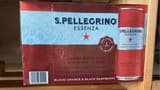 Blood orange and black raspberry Sanpellegrino · 89.2 fl oz/2.64 L Not ultra-processed · No added sugars Score 100 out of 100 , 51 points higher
 -
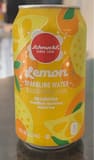 Lemon Sparkling water Schnucks · 12 fl oz/355 mL Not ultra-processed · No added sugars Score 100 out of 100 , 51 points higher
The same kind of product, at least 10 points higher, sold in the US. Never paid placements.
The Receipt
Raspberry With Lemon Flavored Sparkling Water
Ingredients
- Fruit juice concentrate (sweetener) minus 20 points
- Sodium benzoate minus 7.5 points
- Natural flavors minus 2.5 points
- Potassium sorbate minus 1.5 points
Processing
- Ultra-processed (NOVA 4) minus 18 points
- 2 kinds of ultra-processing markers minus 1.5 points
100 − 51 = 49
Can’t score above 79. Contains fruit juice concentrate (sweetener), an ingredient of high concern. [1][2][3]
Nutrition per 100 ml
| Energy | 1 kcal |
|---|---|
| Fat | 0 g |
| Saturated fat | 0 g |
| Carbohydrates | 0.3 g |
| Sugars | 0.3 g |
| Added sugars | 0 g |
| Fiber | 0 g |
| Protein | 0 g |
| Salt | 0 g |
Serving: 355 ml
Ingredients
- Filtered carbonated water
- raspberry juice from concentrate
- apple juice from concentrate (high concern)
- lemon juice from concentrate
- natural flavors
- potassium sorbate
- sodium benzoate (moderate concern)
- citric acid
- magnesium chloride
- potassium chloride
Label text, as published
Filtered carbonated water, raspberry juice from concentrate, apple juice from concentrate, lemon juice from concentrate, natural flavors, potassium sorbate, sodium benzoate, citric acid, magnesium chloride, potassium chloride.
Allergens and diets
- Palm-oil-free
Always check the package: recipes change.
More flavored sparkling waters on GoodSwap
-
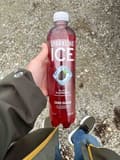 Black Raspberry Flavored Sparkling Water Sparkling Ice · 240 mL Ultra-processedContains non-nutritive sweetenersContains caffeineNo synthetic dyes Score 59 out of 100 Okay
 -
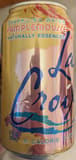 Naturally Essenced Pamplemousse Sparkling Water La Croix · 12 fl oz No additives Score 100 out of 100 Excellent
 -
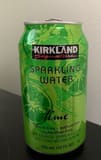 Lime Sparkling Water Kirkland Signature · 355 mL Ultra-processedNo additives Score 83 out of 100 Excellent
 -
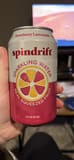 Strawberry Lemonade Spindrift · 12 fl oz No additives Score 100 out of 100 Excellent
 -
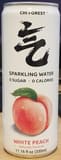 Sparkling White Peach Flavour Sparkling Water Beverage Genki Forest · 11.16 fl oz (330 mL) Ultra-processedContains non-nutritive sweetenersContains sugar alcohols Score 60 out of 100 Good
 -
 Berry Lemonade Flavored Sparkling Water Sparkling Ice · 17 fl oz Ultra-processedContains non-nutritive sweetenersContains caffeineNo synthetic dyes Score 52 out of 100 Okay
Sources
-
Guideline: sugars intake for adults and children
“In both adults and children, WHO recommends reducing the intake of free sugars to less than 10% of total energy intake”
who.int
-
Dietary Guidelines for Americans, 2025–2030
“Limit foods and beverages that include artificial flavors, petroleum-based dyes, artificial preservatives, and low-calorie non-nutritive sweeteners.”
cdn.realfood.gov
-
Added and free sugars should be as low as possible
“Sugar consumption is a known cause of dental caries.”
efsa.europa.eu
-
“Artificial colours or a sodium benzoate preservative (or both) in the diet result in increased hyperactivity in 3-year-old and 8/9-year-old children in the general population.”
doi.org
-
Re-evaluation of benzyl alcohol (E 1519) as food additive (records the 2016 benzoate re-evaluation)
“derived a group ADI of 5 mg/kg bw per day (expressed as benzoic acid) in accordance with the ADI previously derived by SCF and JECFA”
doi.org
-
21 CFR 101.22 Foods; labeling of spices, flavorings, colorings and chemical preservatives
“whose significant function in food is flavoring rather than nutritional.”
ecfr.gov
-
“By applying a default uncertainty factor of 100, the Panel established a group ADI expressed as 11 mg sorbic acid/kg bw per day for sorbic acid (E 200) and its potassium salt (E 202).”
doi.org
-
21 CFR 182.3640 Potassium sorbate
ecfr.gov
-
“Greater exposure to ultra-processed food was associated with a higher risk of adverse health outcomes, especially cardiometabolic, common mental disorder, and mortality outcomes.”
doi.org