Frozen snacks and starters
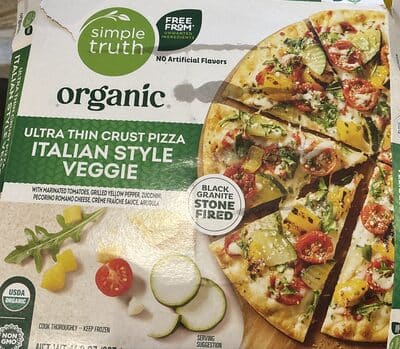
Simple Truth Ultra thin crust Italian style veggie
112 g
Score
- Contains added sugars
- Contains seed oils
Why it scores 42
Simple Truth Ultra thin crust Italian style veggie scores 42 out of 100 (Okay) under GoodSwap’s published rules. What moved the score most:
- minus 20 points Sugar: An added sugar. Strong
- minus 20 points Fruit juice concentrate (sweetener): An added sugar. Strong
- minus 8 points Processed (NOVA 3): Classified NOVA 3: processed with added salt, sugar or oil. Emerging
Every line of the math is on The Receipt below, with its evidence tier and sources.
Better frozen snacks and appetizers
-
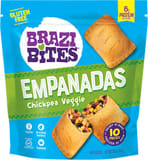 Empanadas chickpea veggie Brazi Bites · 10 oz/283 g No added sugars · No sugar Score 91 out of 100 , 49 points higher
 -
 Veggie Spring Rolls Lucky Foods No fruit juice concentrate (sweetener) Score 73 out of 100 , 31 points higher
 -
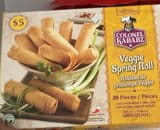 Veggie Spring Roll Kaiser · 600 g/21.1 oz No added sugars · No seed oils Score 79 out of 100 , 37 points higher
The same kind of product, at least 10 points higher, sold in the US. Never paid placements.
The Receipt
Ultra thin crust Italian style veggie
Ingredients
- Sugar minus 20 points
- Fruit juice concentrate (sweetener) minus 20 points
- Canola oil minus 2.5 points
Processing
- Processed (NOVA 3) minus 8 points
Nutrition per 100 g
- Sugars 6.3 g / 100 g minus 3 points
- Saturated fat 3.1 g / 100 g minus 3 points
- Salt 1.2 g / 100 g minus 5 points
- Energy 205 kcal / 100 g minus 1 points
- Fiber 6.3 g / 100 g plus 4 points
100 − 58.5 = 41.5 → 42
Can’t score above 79. Contains sugar, an ingredient of high concern. [1][2][3]
Nutrition per 100 g
| Energy | 205 kcal |
|---|---|
| Fat | 8 g |
| Saturated fat | 3.1 g |
| Trans fat | 0 g |
| Carbohydrates | 28.6 g |
| Sugars | 6.3 g |
| Added sugars | 1.8 g |
| Fiber | 6.3 g |
| Protein | 6.3 g |
| Salt | 1.2 g |
Serving: 112g
Ingredients
- CRUST: organic wheat flour
- water
- organic salt
- organic yeast
- organic sugar (high concern)
- organic canola oil
- extra virgin olive oil
- Crème fraîche sauce: pasteurized organic cream
- crème fraîche
- water
- organic wheat starch
- organic cheese cultures
- salt
- organic olives
- marinated semi-dried cherry
- organic tomatoes
- organic spices
- organic garlic
- organic grilled yellow pepper
- organic grilled zucchini
- tomato sauce: organic sugar
- water
- organic tomato purée
- organic balsamic vinegar
- organic wine vinegar
- organic grape must (high concern)
- organic olive oil
- organic wheat starch
- salt
- organic garlic
- organic onion powder
- organic white pepper
- organic low-moisture part-skim mozzarella cheese: pasteurized organic part-skim milk
- salt
- cheese cultures
- enzymes
- organic pecorino Romano cheese made from sheep's milk: organic sheep's milk
- salt
- cheese cultures
- rennet
- organic arugula
- organic parsley
Label text, as published
CRUST: organic wheat flour, water, organic salt, organic yeast, organic sugar, organic canola oil, extra virgin olive oil; Crème fraîche sauce: pasteurized organic cream, crème fraîche, water, organic wheat starch, organic cheese cultures, salt, organic olives, marinated semi-dried cherry; organic tomatoes, organic spices, organic garlic; organic grilled yellow pepper, organic grilled zucchini; tomato sauce: organic sugar, water, organic tomato purée, organic balsamic vinegar, organic wine vinegar, organic grape must, organic olive oil, organic wheat starch, salt, organic garlic, organic onion powder, organic white pepper; organic low-moisture part-skim mozzarella cheese: pasteurized organic part-skim milk, salt, cheese cultures, enzymes; organic pecorino Romano cheese made from sheep's milk: organic sheep's milk, salt, cheese cultures, rennet; organic arugula, organic parsley. CONTAINS: wheat, milk.
Allergens and diets
Contains: Milk, Wheat, Gluten
- Not vegan
- Not gluten-free
- Palm-oil-free
Always check the package: recipes change.
More frozen snacks and starters on GoodSwap
-
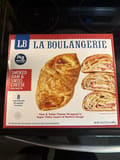 Smoked Ham & Swiss Cheese Pockets La Boulangerie · 85 g Ultra-processedHigh in saturated fatContains nitrites or nitratesContains added sugars Score 13 out of 100 Bad
 -
 Breaded Mozzarella Sticks Farm Rich · 48 oz Ultra-processedHigh in saltHigh in saturated fatContains added sugars Score 19 out of 100 Bad
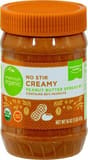
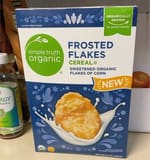
More from Simple Truth
Sources
-
Guideline: sugars intake for adults and children
“In both adults and children, WHO recommends reducing the intake of free sugars to less than 10% of total energy intake”
who.int
-
Dietary Guidelines for Americans, 2025–2030
“Limit foods and beverages that include artificial flavors, petroleum-based dyes, artificial preservatives, and low-calorie non-nutritive sweeteners.”
cdn.realfood.gov
-
Added and free sugars should be as low as possible
“Sugar consumption is a known cause of dental caries.”
efsa.europa.eu
-
“replacement of saturated fat in the diet with linoleic acid effectively lowers serum cholesterol but does not support the hypothesis that this translates to a lower risk of death from coronary heart disease or all causes.”
doi.org
-
“These data provide support for current recommendations to replace saturated fat with polyunsaturated fat for primary prevention of CHD.”
doi.org
-
Saturated fatty acid and trans-fatty acid intake for adults and children: WHO guideline
“WHO recommends that adults and children reduce saturated fatty acid intake to 10% of total energy intake (strong recommendation).”
who.int
-
“For adults, WHO recommends less than 2000 mg/day of sodium (equivalent to less than 5 g/day salt), or just under a teaspoon.”
who.int