Chicken salads
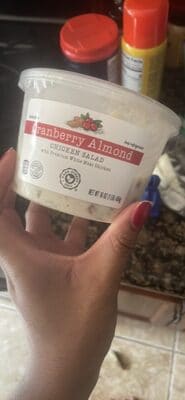
ALDI Twice as Nice Chicken salad with cranberry almond
16 oz, 1 lb, 454 g
Score
- Contains added sugars
- Contains seed oils
Why it scores 22
ALDI Twice as Nice Chicken salad with cranberry almond scores 22 out of 100 (Poor) under GoodSwap’s published rules. What moved the score most:
- minus 20 points Corn syrup: An added sugar. Strong
- minus 20 points Sugar: An added sugar. Strong
- minus 18 points Ultra-processed (NOVA 4, estimated): No NOVA group on file; estimated from 3 kinds of ultra-processing markers. Strong
Every line of the math is on The Receipt below, with its evidence tier and sources.
Better almonds
-
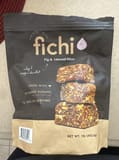 Fig & Almond Bites Fichi No added sugars · No seed oils Score 79 out of 100 , 57 points higher
 -
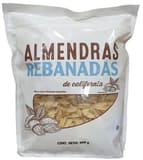 California Sliced Almonds Costco · 908 g No added sugars · No seed oils Score 100 out of 100 , 78 points higher
 -
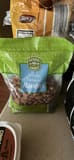 Whole Natural Almonds Southern Grove · 14 oz No added sugars · No seed oils Score 100 out of 100 , 78 points higher
 -
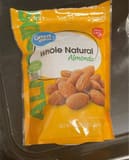 Whole Natural Almonds Great Value · 16 oz No added sugars · No seed oils Score 100 out of 100 , 78 points higher
 -
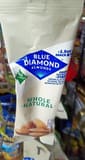 Whole Natural Almonds Blue Diamond · 1.5 oz/43 g No added sugars · No seed oils Score 100 out of 100 , 78 points higher
The same kind of product, at least 10 points higher, sold in the US. Never paid placements.
The Receipt
Chicken salad with cranberry almond
Ingredients
- Corn syrup minus 20 points
- Sugar minus 20 points
- Sodium phosphate minus 2.5 points
- Soybean oil minus 1.5 points
- Calcium disodium EDTA minus 1.5 points
- Sunflower oil minus 1.5 points
- Modified starch minus 0.5 points
Processing
- Ultra-processed (NOVA 4, estimated) minus 18 points
- 3 kinds of ultra-processing markers minus 3 points
Nutrition per 100 g
- Sugars 9.2 g / 100 g minus 5 points
- Saturated fat 4 g / 100 g minus 3 points
- Salt 0.9 g / 100 g minus 3 points
- Energy 301 kcal / 100 g minus 1 points
- Protein 8.1 g / 100 g plus 2 points
100 − 78.5 = 21.5 → 22
Can’t score above 79. Contains corn syrup, an ingredient of high concern. [1][2][3]
Can’t score above 79. High in fat (above the front-of-pack "high" level). [12]
Nutrition per 100 g
| Energy | 301 kcal |
|---|---|
| Fat | 25.4 g |
| Saturated fat | 4 g |
| Trans fat | 0 g |
| Carbohydrates | 17.3 g |
| Sugars | 9.2 g |
| Added sugars | 7.5 g |
| Fiber | 1.2 g |
| Protein | 8.1 g |
| Salt | 0.9 g |
Serving: 0.33 cup (93 g)
Ingredients
- 12% baluing 200 vitamin d 0%
- calcium 2%
- iron 2%
- potassium 49% per serving nebert cone whte meat chicken (cooked white meat chicken, water, contains 2% or less salt, ro stach sodum phosphates)
- mayonnaise (soybean oil, water, corn syrup, egg yolks, imld nebr, contans 2% or less muštard seed, salt, calcium disodium edta added to protećt eair cer shetebed dred cranberries, almonds, sugar, oaszn cles bread crumbs, distilled vinegar, luon deda lactone, modifed food starch, salt, black pepper, amonds, egs, soy, wheat udasdbrusie beald, batama, il 60510 discard seal, rinse tub, replace lid aldi twite as nice guarantee plastic ac-b item replaced money refunded tub how2recycle, info)
Label text, as published
nutrition amount/serving facts about 5 servings per container serving size 18 сир (939) % dv amount/serving total fat 22g saturated fat 3,5g 18% dietary fiber 1a % dv 28% total carbohydrate 13g 5% 4% trans fat 0g cholesterol 35mg sodium 300mg total sugars 8g incl, 6g added sugars 13% 11% 13% protein 6g 12% baluing 200 vitamin d 0% • calcium 2% • iron 2% • potassium 49% per serving nebert cone whte meat chicken (cooked white meat chicken, water, contains 2% or less salt, ro stach sodum phosphates), mayonnaise (soybean oil, water, corn syrup, egg yolks, imld nebr, contans 2% or less muštard seed, salt, calcium disodium edta added to protećt eair cer shetebed dred cranberries (cranberries , sugar, sunflower oil), almonds, sugar, oaszn cles bread crumbs (bleached wheat flour, sugar, yeast, salt), distilled vinegar, luon deda lactone, modifed food starch, salt, black pepper, amonds, egs, soy, wheat udasdbrusie beald, batama, il 60510 discard seal, rinse tub , replace lid aldi twite as nice guarantee plastic ac-b item replaced money refunded tub how2recycle,info
Allergens and diets
Contains: Tree nuts, Soy, Wheat, Gluten, Egg, Mustard
- Not vegan
- Not vegetarian
- Not gluten-free
Always check the package: recipes change.
Packaging
Plastic
Context only: no points in v1.
More chicken salads on GoodSwap
More from ALDI Twice as Nice
Sources
-
Guideline: sugars intake for adults and children
“In both adults and children, WHO recommends reducing the intake of free sugars to less than 10% of total energy intake”
who.int
-
Dietary Guidelines for Americans, 2025–2030
“Limit foods and beverages that include artificial flavors, petroleum-based dyes, artificial preservatives, and low-calorie non-nutritive sweeteners.”
cdn.realfood.gov
-
Added and free sugars should be as low as possible
“Sugar consumption is a known cause of dental caries.”
efsa.europa.eu
-
EFSA issues new advice on phosphates
“We estimated that dietary exposure to phosphates may exceed the new ADI for infants, toddlers and children with average consumption of phosphates in their diet.”
efsa.europa.eu
-
“replacement of saturated fat in the diet with linoleic acid effectively lowers serum cholesterol but does not support the hypothesis that this translates to a lower risk of death from coronary heart disease or all causes.”
doi.org
-
“These data provide support for current recommendations to replace saturated fat with polyunsaturated fat for primary prevention of CHD.”
doi.org
-
Saturated fatty acid and trans-fatty acid intake for adults and children: WHO guideline
“WHO recommends that adults and children reduce saturated fatty acid intake to 10% of total energy intake (strong recommendation).”
who.int
-
“For adults, WHO recommends less than 2000 mg/day of sodium (equivalent to less than 5 g/day salt), or just under a teaspoon.”
who.int
-
“Table 3: Criteria for drinks (per 100ml)”
assets.publishing.service.gov.uk